What Is Qi? A Beginner's Guide to Your Body's Vital Energy
Have you ever had one of those days where you feel perfectly fine — not sick, not tired in the usual way — but somehow off? Sluggish. Foggy. Like your body is running on a weak battery?
In Traditional Chinese Medicine, this feeling has a name: your Qi (pronounced “chee”) may be a little low or stuck. And the beautiful thing is, you can learn to work with it.
Let’s explore what Qi really is, and how understanding it can change the way you think about your energy.
What Exactly Is Qi?
Think of Qi as the vital energy that flows through all living things. It’s the invisible force that animates your body — the warmth in your hands, the spark in your eyes, the quiet hum of your digestion working behind the scenes.
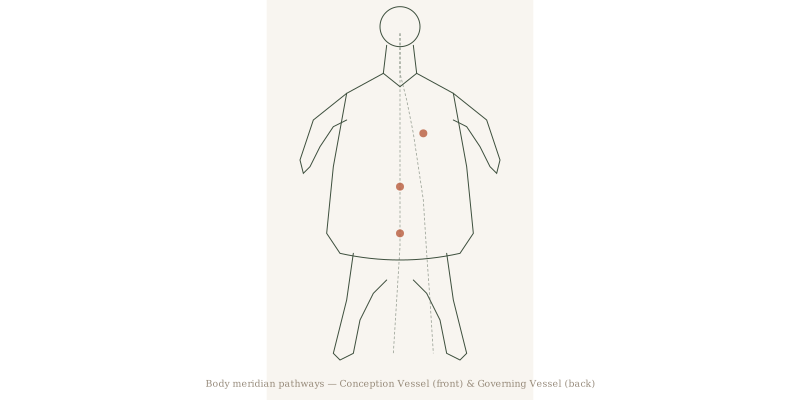
In TCM, Qi is everything. It moves through your body along pathways called meridians, nourishing your organs, muscles, and tissues. When Qi flows freely, you feel vibrant, clear, and balanced. When it’s sluggish or depleted, you feel… well, like you’ve been running on that weak battery.
A simple way to imagine it: Qi is to your body what a breeze is to a room. You can’t see it, but you feel it. A gentle breeze keeps the air fresh and moving. Stagnant air feels heavy. The same goes for your energy.
Your Body’s Energy Highways
Qi travels through 12 main meridians in your body — think of them as subtle energy highways. Each meridian is connected to a different organ system and carries Qi to every corner of your being.
There’s nothing mystical or complicated about it. You experience your Qi every day. The surge of alertness when you take a deep breath? That’s Qi. The warmth in your palms when you rest them over your belly? That’s Qi too.
The TCM view is that when these meridians are clear and open, your body’s natural intelligence can do what it does best: keep everything humming along.
How to Tell If Your Qi Needs Support
You might notice these gentle signals from your body:
- Feeling tired even after a full night’s rest
- Digestion feels sluggish or irregular
- You catch every cold that goes around the office
- Your mood feels flat or heavy
- Cold hands and feet, even in warm weather
- Brain fog in the afternoon
These aren’t concerns in a clinical sense. They’re your body’s way of saying, “Hey, my energy could use a little attention today.” And that’s a good thing — because it means you know exactly where to focus your self-care.
Simple Ways to Nurture Your Qi
The best part? You don’t need special tools or hours of time. Small, consistent practices make a real difference.
Breathe deeply for 60 seconds. Sit comfortably, place your hands on your belly, and take slow, full breaths. Imagine your breath traveling down to your lower belly and back up. This simple act helps move Qi through your body.
Rest when you need to. In TCM, rest isn’t lazy — it’s restorative. Even five minutes of quiet with your eyes closed allows your Qi to replenish.
Warm your center. Place a warm palm over your lower belly (the area just below your belly button). Breathe gently for a minute or two. In TCM, this area is called the Dantian — your body’s energy reservoir.
Move gently. A short walk, gentle stretching, or a few rounds of shoulder rolls can get Qi moving when it feels stuck. You don’t need a workout — you need movement that feels good.
Eat warm, simple foods. Think soups, stews, cooked vegetables, and warm teas. In TCM, raw and cold foods require more energy to digest, so warm foods are considered Qi-supportive.
Your Qi Is Always Speaking to You
Learning to listen to your Qi is like learning a new language — the language of your own body. And like any language, it gets easier with practice.
Start small. Tomorrow morning, take three deep breaths before you get out of bed. Place your hand on your belly. Notice how you feel. That’s you, connecting with your Qi.
When you’re ready to go deeper, explore acupressure points, meridian stretches, or seasonal eating — all rooted in the same beautiful wisdom that understands you as a whole person, not just a collection of parts.
🌿 A gentle note from us
The practices shared here are rooted in Traditional Chinese Medicine traditions that have been passed down for thousands of years. We share them as educational resources — not as prescriptions or medical advice.
Every body is different. What brings balance to one person may not be right for another. Please listen to your body, go gently, and check with a qualified healthcare provider before trying any new wellness practice — especially if you are pregnant, managing a chronic condition, or have specific health concerns.
Some links on this site are affiliate links. If you choose to purchase through them, we may earn a small commission at no extra cost to you. This helps us continue sharing ancient wisdom for modern wellness. Thank you for your trust.