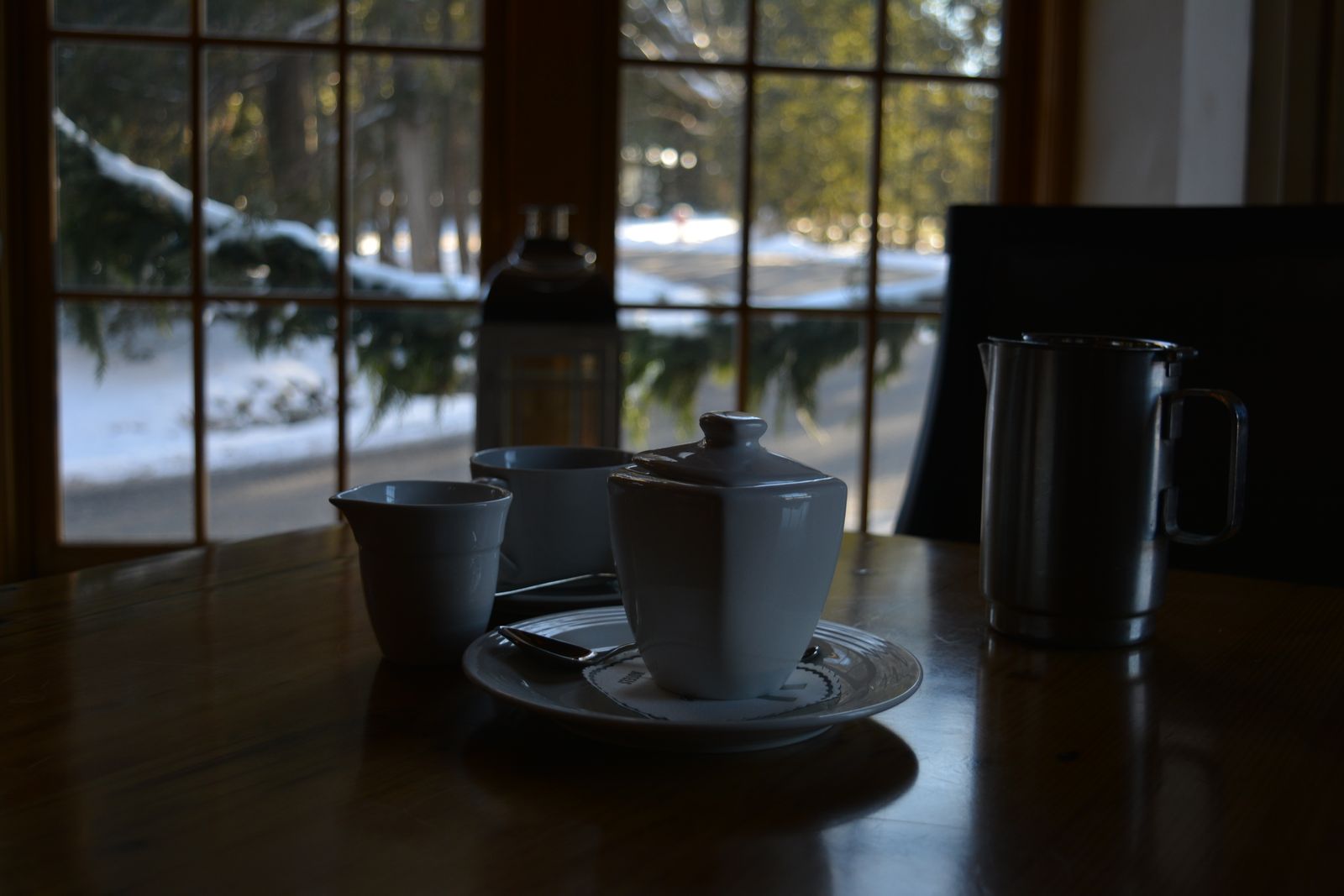
TCM Winter Wellness Guide 2026: Lidong, Kidney Yang, Warming Foods, and Acupressure for the Cold Months
Cover image source: Pexels (photo by Golnar Sabzpoush Rashidi)
🌿 A gentle note from us
The practices shared here are rooted in Traditional Chinese Medicine traditions that have been passed down for thousands of years. We share them as educational resources — not as prescriptions or medical advice.
Every body is different. What brings balance to one person may not be right for another. Please listen to your body, go gently, and check with a qualified healthcare provider before trying any new wellness practice — especially if you are pregnant, managing a chronic condition, or have specific health concerns.
Some links on this site are affiliate links. If you choose to purchase through them, we may earn a small commission at no extra cost to you. This helps us continue sharing ancient wisdom for modern wellness. Thank you for your trust.
Late October brings that first genuinely cold morning: you reach for thicker socks, the kitchen floor feels unfamiliar, and in parts of the northern hemisphere it is already dark by 5 p.m. Your schedule may be unchanged, even as the weather makes ordinary errands feel more demanding.
Traditional Chinese medicine (TCM) treats winter as a season for storing rather than spending. Lidong, the Start of Winter solar term, falls on 7 November in 2026. It offers a useful reminder to prepare before cold weather becomes your daily background.
This guide turns that seasonal idea into meals, rest, clothing, and gentle self-care. For readers in Australia, November is spring: keep the cultural date in context and save the cold-month routine for your local winter. Your climate and health matter more than following a calendar literally.
What TCM Means by Winter
In the traditional five-phase framework, winter corresponds to Water and the Kidney system. Here, capitalized “Kidney” describes a historical network of functions and associations; it is not a measurement of your anatomical kidneys or their filtering capacity.
The Huangdi Neijing, in Suwen, chapter 2, says: “冬三月,此謂閉藏.” A plain English rendering is: “The three months of winter are called closing and storing.” The character 藏 (cang) conveys keeping something in reserve. In this framework, warmth, quieter evenings, and adequate rest protect what you will draw on later.
You can use that image without treating it as a proven physiological mechanism. “Storage” might mean leaving space between commitments, eating regularly rather than skipping lunch, or ending work before you are exhausted. It does not require inactivity, deliberate weight gain, or a cupboard of tonics.
Unlike an autumn routine centred on dryness, a winter routine asks how to maintain warmth and activity while allowing recovery. Dry skin or a dry throat may still need attention; the calendar does not erase them.
Reading Your Own Pattern
TCM practitioners distinguish patterns by considering symptoms together. These descriptions explain the tradition; they are not a self-diagnosis checklist or a reason to start herbs.
- Kidney yang deficiency: traditionally associated with persistent chilliness, cold or aching lower back and knees, fatigue, frequent pale urination, and sometimes loose stools. Warmth may feel welcome.
- Kidney yin deficiency: traditionally associated with dryness, night sweats, and heat sensations, especially in the palms or soles. Someone may feel both tired and uncomfortably warm at night.
- Cold-damp: traditionally describes coldness accompanied by heaviness, stiffness, bloating, or loose stools, sometimes felt more strongly in damp weather. It is not automatically the same pattern as Kidney yang deficiency.
These categories overlap, and symptoms can change with medication, sleep, food, or illness. A review of Kidney yang deficiency research explores proposed links with nervous, hormonal, and immune systems. Such research does not make a traditional pattern equivalent to a laboratory diagnosis or establish that winter fatigue needs a warming formula.
Thyroid disorders, anaemia, diabetes, depression, and perimenopause can produce overlapping symptoms. Persistent or new symptoms need medical assessment, with blood tests or other investigations where appropriate. Depression and perimenopause also require clinical history, not simply a blood-test checklist. Increased thirst with frequent urination, unexplained weight change, or drenching night sweats deserves attention rather than seasonal reassurance.
Keep brief notes about sleep, energy, bowel habits, and temperature comfort. Record what actually happens instead of assigning yourself a pattern label.
Food and Drink for Cold Months
Make a warm meal nutritionally complete
TCM winter eating commonly favours cooked, warm meals over predominantly raw, chilled food. A soup, stew, or bowl of congee can make that preference practical. Serving temperature and traditional “warming” properties are different ideas: food can be physically hot without being classified as warming in TCM.
A review of cold and hot properties in Chinese medicines examines traditional classifications and proposed biological explanations, including experimental research. It is not a clinical trial showing that a winter menu corrects Kidney yang deficiency. Use the framework as context for food choices, with ordinary nutrition still doing the essential work.
Build meals around vegetables, adequate protein, and fibre. Try black bean and root-vegetable soup; congee with tofu or egg and greens; or a vegetable-rich lamb stew if you eat meat. Rice porridge alone may leave you hungry, so include a protein source and vegetables alongside it. Whole grains and pulses help keep fibre in the routine.
Black beans and walnuts have traditional Kidney associations, but you can value them as familiar foods without expecting organ-specific effects. Add walnuts to porridge if you tolerate nuts. Use ginger, cinnamon, or goji berries as optional culinary ingredients, not concentrated extracts or medicinal doses. If you take medication, check unfamiliar herbs and regularly used botanical ingredients with a pharmacist.
Season gently. Salty flavours have symbolic associations with Water in TCM, but this is no reason to increase salt. Stock cubes, packaged broths, and sauces can make a homemade soup surprisingly salty. Follow any existing kidney, heart, or diabetes dietary plan rather than replacing it with seasonal food lists.
Avoid tonic overloading
“More heat” is not automatically better. You do not need lamb, ginger drinks, cinnamon supplements, and spicy hotpot in the same day. If rich or strongly spiced meals worsen reflux, thirst, or nighttime discomfort, simplify the meal instead of interpreting discomfort as a beneficial reaction.
Alcohol is not a winter tonic or a safe way to keep warm. A varied diet with comfortable portions is a more useful foundation than chasing a warming sensation. Keep fruit and vegetables you enjoy; winter eating need not become a restrictive rulebook.
Everyday Warming Habits
Keep your lower back, feet, and neck comfortably covered when temperatures drop. Choose layers you can remove indoors and footwear that stays dry. Change damp socks promptly, and dry your hair thoroughly after washing before going into the cold. These are comfort measures within a traditional warmth-focused routine, not guarantees against infection.
Try warm water rather than iced drinks if you find it more pleasant. Allow drinks to cool enough to sip comfortably, and follow prescribed fluid restrictions if you have them. There is no need to force extra water as a cleansing ritual.
Ventilate rooms briefly when outdoor conditions allow, without leaving someone vulnerable sitting in a cold draught. Keep indoor warmth comfortable rather than excessively hot, especially if you wake sweaty or thirsty. Avoid sealing yourself into a stuffy room all winter.
Pacing means adjusting effort, not abandoning movement. Break errands into manageable trips, warm up gradually, and leave time to recover after demanding days. If ordinary tasks suddenly exhaust you, arrange an assessment instead of continually pushing through or blaming the season.
Acupressure for the Cold Months
Treat acupressure as an optional comfort practice. Evidence that pressing these five points improves winter health or corrects a Kidney pattern is limited. NCCIH’s acupuncture overview discusses evidence for particular conditions; research on needles cannot simply be transferred to self-administered finger pressure.
Sit securely and use a thumb pad or relaxed fingertips, not nails or hard tools. Start with 30–60 seconds per point, extending to up to two minutes only if comfortable. Use gentle steady pressure or small circles. Work on both sides for paired points; CV 4 is a single midline point. Stop if pressure hurts, causes tingling, or makes you feel unwell.
Avoid broken skin, inflamed areas, recent injuries, and areas with reduced sensation. If you are pregnant or have neuropathy, a bleeding disorder, or significant illness, ask your clinician before trying a point routine.
KI 3 — Taixi
Find the hollow between the prominent inner ankle bone and the Achilles tendon, approximately level with the ankle bone’s highest prominence. Support your foot with one hand and apply light thumb-pad circles with the other. Repeat on the other ankle. Do not dig into a pulse or a sore tendon.
KI 1 — Yongquan
On the sole, gently curling the toes reveals a depression just behind the ball of the foot. It lies roughly one-third of the way from the base of the toes toward the heel, along a line toward the space between the second and third toes. Cradle the foot and use a thumb pad for light pressure. Avoid standing on a hard massage ball to force the point.
CV 4 — Guanyuan
This point lies on the abdominal midline, three proportional cun below the navel: about three-fifths of the distance from the navel to the upper border of the pubic bone. A cun is a body-proportional measure, not a fixed inch. Use only light fingertip contact; do not press deeply. Skip abdominal acupressure during pregnancy, and avoid this area with unexplained abdominal pain, a hernia, or recent surgery.
BL 23 — Shenshu
BL 23 is a paired lower-back point, traditionally located 1.5 proportional cun to either side of the lower border of the second lumbar vertebra’s spinous process. Finding that landmark yourself is difficult. Ask a trained practitioner to show a partner the location; the partner can then use broad, gentle thumb-pad contact while you sit supported. Avoid forceful twisting to reach it, pressure directly on the spine, or digging with knuckles. Skip it if back pain is acute or unexplained.
ST 36 — Zusanli
Find the depression just below and outside the kneecap, beside the patellar tendon. ST 36 is about four of your own finger-widths below that hollow, in muscle just outside the shinbone’s front edge. With your leg relaxed, use a thumb pad for gentle circles on each side. Press the soft tissue, not the sharp bony ridge.
Moxibustion, Herbs, and What the Evidence Supports
Moxibustion traditionally applies heat from burning moxa near selected points for patterns described as cold. It carries real burn, fire, and smoke risks. If you are considering it, consult a trained practitioner; this winter routine does not include home moxa treatment. Never use it over numb skin or neuropathy, where you may not recognize excessive heat. Avoid abdominal and lower-back moxibustion during pregnancy, and discuss smoke sensitivity or respiratory disease beforehand.
Herbal formulas require individual assessment by a qualified practitioner and an interaction check with your pharmacist or prescribing clinician. Ask about ingredients, sourcing, and quality testing; do not assume a product marketed for “Kidney yang” is appropriate because you feel cold.
NCCIH’s TCM guidance reports mixed findings for Chinese herbal products and concerns including contamination and incorrect ingredients. Neither a traditional rationale nor laboratory findings establish that a product prevents winter illness. Complementary care should not replace prescribed treatment or delay investigation.
Sleep, Light, and Mood in the Dark Months
Allow an earlier bedtime if you are sleepy, while keeping your wake time reasonably consistent. Make the evening quieter: finish demanding tasks earlier where possible and leave a short transition between work and bed. The storage principle can mean protecting enough time for sleep without spending much of the day in bed.
Seek morning daylight, ideally outdoors when conditions are safe. A ten-minute walk is a manageable starting habit, not a prescribed treatment dose. If you leave home before sunrise, plan a daylight break later in the morning. Keep some social contact and movement in the week, even when staying indoors feels easier.
Low mood, loss of interest, or marked changes in sleep and appetite that persist for around two weeks, interfere with daily life, or recur each winter warrant assessment. Seek help sooner if symptoms are severe; thoughts of self-harm need immediate support through local emergency or crisis services. Seasonal depression is not a failure to preserve yang.
The NIH vitamin D consumer guidance explains dietary sources, supplements, and the risks of excessive intake. Fatty fish and appropriately fortified foods can contribute. Discuss supplement decisions with a clinician in light of your diet, location, and health. Morning daylight is not a guarantee of adequate vitamin D, and supplements are not a substitute for treating depression.
Cold-Weather Safety
Cold exposure can strain the cardiovascular system, especially when combined with sudden strenuous effort. Dress for conditions and approach tasks such as snow clearing cautiously; people with heart disease should discuss suitable exertion with their clinician. Do not dismiss chest discomfort as a cold pattern.
Choose shoes with grip, use handrails, and plan around icy paths. Keep medicines and inhalers within the storage conditions on their labels; avoid leaving them in freezing cars or directly against heaters. Ask a pharmacist if a product has frozen or been exposed to unsuitable temperatures.
Check on older neighbours or relatives, especially during cold spells. Practical help with heating, food, and collecting prescriptions can matter more than another wellness remedy.
Red flags: seek urgent medical care. Chest pain or pressure, sudden weakness or speech difficulty, severe breathlessness, or confusion can signal an emergency: call your local emergency number. A numb white or blue finger that does not rewarm also needs urgent assessment. Do not try to manage these symptoms at home with acupressure, moxa, herbs, or hot water.
A Practical 7-Day Winter Start
Use the first week to make a few changes you can repeat:
- Day 1: Plan one warm cooked meal each day, with protein and vegetables.
- Day 2: Add ten minutes of morning daylight when weather and mobility allow.
- Day 3: Try five minutes of gentle acupressure using a few comfortable points; you need not cover all five.
- Day 4: Warm your feet before bed with dry, comfortably fitting socks rather than intense direct heat.
- Day 5: Protect one rest block in your calendar and keep it free of chores.
- Day 6: Check winter footwear, heating arrangements, and medication storage instructions.
- Day 7: Review what felt helpful. Continue brief symptom notes for two weeks and seek assessment for persistent concerns; do not wait if warning signs appear.
Key Takeaways
- Lidong is a seasonal prompt to prepare; adapt the routine to your local winter.
- TCM’s storage principle favours warmth, rest, and sustainable effort within a traditional framework.
- Kidney yang, Kidney yin, and cold-damp descriptions cannot diagnose medical conditions.
- Choose balanced warm meals without overloading on spices, alcohol, or tonics.
- Keep acupressure gentle; discuss herbs and moxibustion with qualified professionals.
- Protect sleep, daylight, and social contact, and seek medical help for persistent symptoms or urgent warning signs.