TCM for Rosacea: Wind-Heat, Blood Heat, and Spleen-Stomach Damp-Heat — Facial Acupressure, Cooling Food Therapy, and What the 2026 Evidence Actually Shows (2026 Guide)
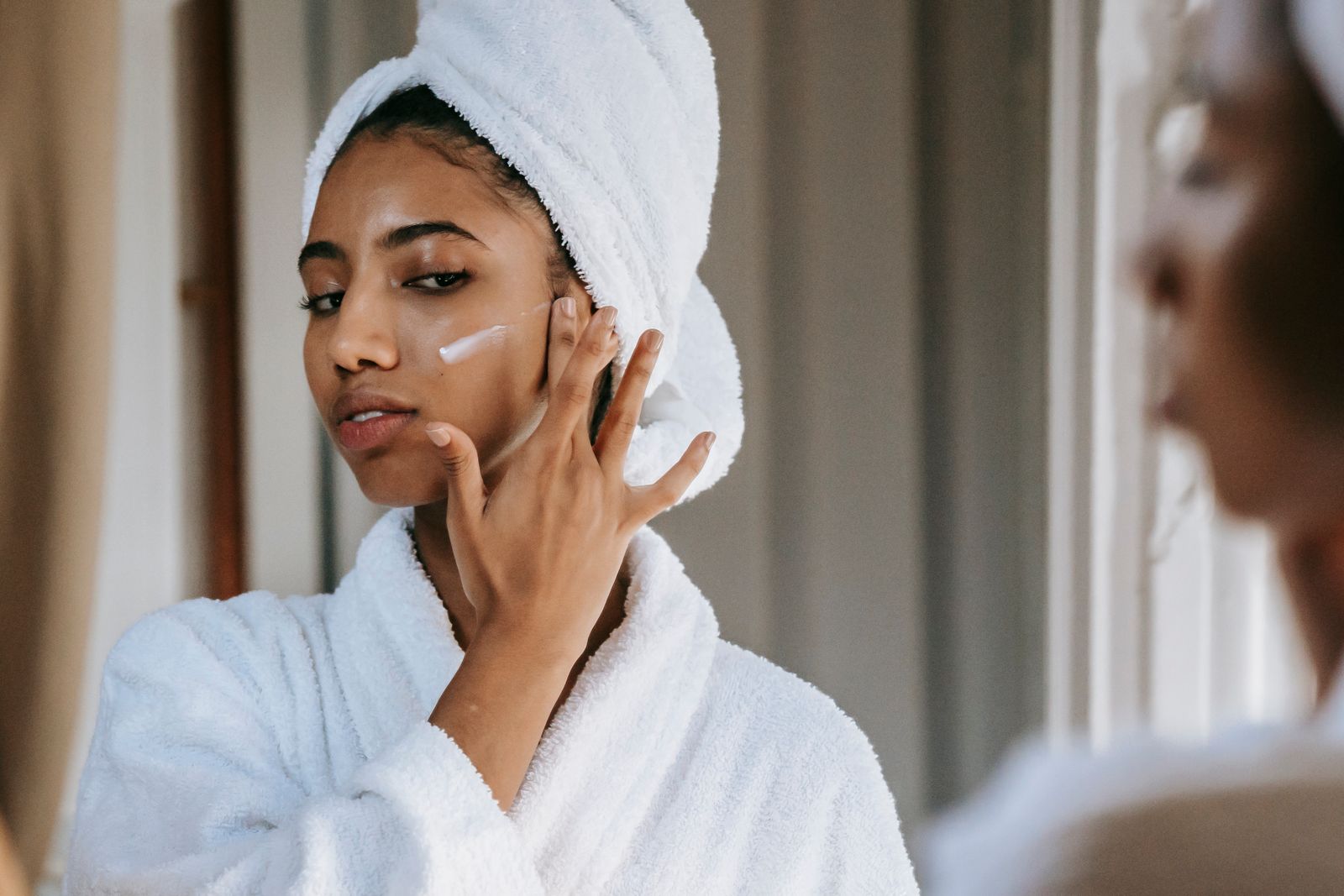
Cover image source: Pexels (photo by Sora Shimazaki)
🌿 A gentle note from us
The practices shared here are rooted in Traditional Chinese Medicine traditions that have been passed down for thousands of years. We share them as educational resources — not as prescriptions or medical advice.
Every body is different. What brings balance to one person may not be right for another. Please listen to your body, go gently, and check with a qualified healthcare provider before trying any new wellness practice — especially if you are pregnant, managing a chronic condition, or have specific health concerns.
Some links on this site are affiliate links. If you choose to purchase through them, we may earn a small commission at no extra cost to you. This helps us continue sharing ancient wisdom for modern wellness. Thank you for your trust.
October can make your face feel caught between climates. Outside, a cold wind bites your cheeks; inside, the heater is running and a steaming drink promises comfort. Then your skin starts burning. Redness spreads across your nose and cheeks, and small bumps appear where yesterday there were none.
Rosacea is often mistaken for acne or sensitive skin; readers exploring TCM’s approach to acne should keep that distinction in mind. Repeated flushing, visible facial vessels, and heat-triggered burning, however, deserve an assessment for rosacea. Scrubbing harder or layering on acne treatments can leave already reactive skin more uncomfortable.
Traditional Chinese medicine offers a vocabulary for these patterns and some potential supportive tools. The useful question is which approaches have clinical evidence, which remain traditional practices, and how to use either without delaying dermatology care. This guide separates those categories and turns them into a manageable autumn routine.
What is rosacea?
Rosacea is a chronic inflammatory condition affecting facial skin and sometimes the eyes. Common presentations include:
- Erythematotelangiectatic: recurrent flushing, persistent redness, and visible dilated vessels.
- Papulopustular: inflammatory papules and pustules against a red background, often mistaken for acne.
- Phymatous: thickened, irregular skin, especially around the nose.
- Ocular: irritated, dry, gritty, or inflamed eyes and eyelids.
These traditional subtype labels describe overlapping features, rather than mutually exclusive diagnoses. Rosacea is neither contagious nor a hygiene failure. According to the American Academy of Dermatology, it has no current cure, can resemble acne, eczema, or seborrheic dermatitis, and may progress and become harder to treat when care is delayed. Treatment can control symptoms; eye involvement needs attention even when facial redness seems mild.
Why autumn can trigger flushing
Autumn is not universally the worst season. It creates rapid transitions between wind, cold air, heated rooms, and hot drinks.
In the NRS trigger survey of 1,066 patients, reported triggers included sun exposure at 81%, wind at 57%, cold weather at 46%, indoor heating at 41%, and heated beverages at 36% (National Rosacea Society).
A separate survey of 852 respondents found that nearly 90% noticed seasonal effects. Summer was worst for 58%, versus winter for 29% (National Rosacea Society).
Among 424 respondents in the winter heat survey, indoor overheating affected 56%, hot baths 53%, and hot drinks 42% (National Rosacea Society). These are self-reported triggers, not predictions for every patient.
The biology helps explain temperature sensitivity. A systematic review covering 14 studies discusses temperature-sensitive TRPV1/TRPV4 channels and overactivity of the TLR2–KLK5–LL-37 inflammatory pathway. Barrier impairment, with increased water loss and reduced surface hydration, can compound irritation. These mechanisms support gentle temperature transitions and barrier care; they do not prove that TCM “heat” is a measurable inflammatory marker.
How TCM describes rosacea patterns
In traditional theory, yang channels converge at the face, and the Stomach channel travels across it. Related traditions of TCM face mapping associate facial regions with internal organ systems. Practitioners interpret facial changes alongside digestion, sleep, thirst, tongue appearance, and pulse. These are TCM pattern terms, not biomedical diagnoses; a tongue photograph cannot diagnose rosacea or internal organ disease.
Wind-Heat: sudden, reactive flares
Presentation: redness that comes on quickly, with burning and sensitivity to wind or warmth.
Tongue/pulse: traditionally described as a reddish tongue with a thin yellow coating and a floating, rapid pulse.
Principle: disperse Wind and clear Heat. Practically, reduce abrupt weather exposure and avoid hot facial treatments. These traditional signs are illustrative, not a validated self-diagnostic checklist.
Blood Heat: persistent redness
Presentation: sustained facial redness, conspicuous superficial vessels, and worsening after heat, alcohol, or spicy meals.
Tongue/pulse: a red or deep-red tongue and a rapid pulse are traditional clues.
Principle: cool the Blood and clear Heat. This terminology does not mean your blood is literally overheated, nor does it establish that herbs will remove visible vessels.
Spleen-Stomach Damp-Heat: inflamed bumps and digestive clues
Presentation: papules or pustules, oiliness, a sticky mouth sensation, and sticky stools.
Tongue/pulse: a red tongue with a greasy yellow coating and a slippery, rapid pulse.
Principle: clear Heat and resolve Dampness while supporting digestion. Avoid translating this into restrictive diets or self-prescribed purges.
Secondary patterns
Qi-Yin Deficiency with Internal Heat describes chronic dryness and burning, sometimes with a red, sparsely coated tongue and a thin, rapid pulse. The traditional aim is to support Qi and nourish Yin.
Blood Stasis describes longstanding dusky redness and sometimes nasal thickening, with a dusky or purple tongue and a traditionally “choppy” pulse. Its principle is to move Blood. Nasal tissue growth still requires dermatologic assessment; it should never be managed through pattern identification alone.
The key auricular acupressure evidence
The 2026 JAMA Dermatology trial, from a dermatology team at Xi’an Jiaotong University’s Second Affiliated Hospital, enrolled 204 patients already receiving standard first-line treatment. Randomization was 1:1.
Active treatment used Vaccaria segetalis seeds on both cavum conchae; sham placement used the superior margin of the auricular tubercle. After 8 weeks, Investigator Global Assessment success—IGA 0 or 1—occurred in 58 patients (56.9%) versus 36 (35.3%). The relative risk was 1.61 (95% CI 1.18–2.20; P = .003), with a number needed to treat of 5.
Immediate vascular improvement was 59.3% versus 7.4% (P < .001). Serum LL-37, CGRP, TNF-α, and IL-6 declined more in the active group. Lower IGA and Clinical Erythema Assessment scores persisted at week 20; no serious adverse events were reported.
This is encouraging adjunctive evidence, with limits: a single center, a short treatment period, and continued first-line therapy. It does not establish ear seeds as a replacement for medication or prove that facial self-massage has equivalent benefits.
How to approach ear seeds at home
Have a licensed acupuncturist demonstrate placement before attempting home maintenance. The cavum conchae is the lower bowl-shaped hollow beside the ear canal opening, below the cartilage ridge dividing the concha. Nothing should enter the canal.
- Check the skin. Start with clean hands and intact, dry outer-ear skin. Pregnancy, ear wounds, infection, or adhesive sensitivity warrant discussion with your treating clinician first.
- Use prepared seed patches. Vaccaria seeds, called wang bu liu xing, are held against the skin with adhesive. Do not substitute loose seeds pushed into the ear.
- Press gently. The trial used three daily sessions of 30 seconds, with additional pressing during flares. Pressure should be tolerable; stop for pain, dizziness, or worsening symptoms.
- Inspect and replace thoughtfully. Check daily. Replace whenever the patch is wet, dirty, or loose, and follow the product’s wear limit and your practitioner’s schedule. The accessible trial abstract does not specify a replacement interval, so a universal schedule cannot be attributed to it.
- Let irritated skin recover. Remove patches for itching, rash, swelling, or tenderness. Do not immediately retape the same irritated area. Avoid patches altogether if adhesives repeatedly cause dermatitis.
Facial and distal acupressure
These traditional points and brief timings are optional relaxation suggestions, not a rosacea treatment protocol validated by the cited ear-seed trial. Use clean fingertips, comfortable pressure on limbs, and stop if symptoms worsen. During pregnancy, ask your maternity clinician before targeted acupressure, particularly LI4.
Distal points: start away from the face
- LI11 Quchi: bend the elbow and locate the outer end of its crease. Rest a thumb there and hold gently for a few slow breaths; release without kneading.
- LI4 Hegu: on the back of the hand, find the fleshy area between the thumb and index metacarpals, beside the midpoint of the index metacarpal. Apply a gentle stationary hold for a few breaths, then switch hands.
- ST36 Zusanli: on the upper outer shin, below the kneecap and just lateral to the tibial crest, over muscle rather than bone. Ask a practitioner to mark the exact point. Hold lightly for several comfortable breaths per leg.
- SP10 Xuehai: above the inner upper corner of the kneecap, over the bulge of the inner thigh muscle when the knee is bent. Use a broad fingertip hold for several breaths, avoiding bruised or tender tissue.
- LR3 Taichong: on top of the foot, in the depression between the first and second metatarsals before their bases meet. Press gently for a few breaths on each foot.
Facial points: minimal contact only
Never press active inflammation or pustules. Avoid the eye area and eyeballs. Use the lightest possible touch, without rubbing, dragging, or stretching skin. Skip facial points entirely during a hot, painful flare.
- Yintang: midway between the inner ends of the eyebrows, above the nasal bridge. Rest a fingertip without sliding for a slow breath, then lift.
- Taiyang: the temple hollow lateral to the brow’s outer end, outside the bony eye socket. Rest a fingertip for a slow breath; avoid visible vessels and the orbital area.
- LI20 Yingxiang: beside the outer edge of each nostril, in the nasolabial groove. Touch lightly for a slow breath only if the area is calm and free of lesions.
Firm facial massage, gua sha, and friction are poor choices for flushing-prone, inflamed skin.
Cooling food therapy without ice-cold meals
In TCM, “cooling” describes a traditional food property, not serving temperature or a clinically proven anti-rosacea effect. Mung beans, winter melon, cucumber, lotus root, pear, and coix seed are common choices. Chrysanthemum tea and mint also appear in traditional cooling routines; serve drinks lukewarm and avoid ingredients that provoke allergies or symptoms.
Alcohol, spicy dishes, and scalding food are practical triggers to track. TCM additionally cautions against excessive lamb, ginger, garlic, and warming tonics in Heat patterns. Do not eliminate nutritious foods automatically: record your own reactions.
Mung bean and winter melon soup
- Rinse mung beans and simmer in water until fully soft.
- Add peeled, cubed winter melon and cook until tender.
- Season lightly; let the soup cool to comfortably warm before eating.
Cucumber, lotus root, and pear bowl
- Cook thinly sliced lotus root until tender, then cool.
- Combine with washed cucumber and peeled pear pieces.
- Add a little olive oil; skip chili dressing and any acidic ingredient that triggers you.
Coix porridge with a mild herbal drink
- Rinse food-grade coix seed and simmer with rice until completely tender.
- Serve warm alongside your usual protein source.
- If tolerated, pair with weak chrysanthemum or mint tea, allowed to cool.
- During pregnancy, avoid medicinal coix or herbal preparations unless your maternity clinician approves them.
Chinese herbs plus conventional treatment: promising, uncertain
The 2024 Frontiers in Pharmacology review identified 260 reports and included 13 randomized trials with 1,348 participants. Compared with conventional treatment alone, combined therapy produced an overall effectiveness RR of 1.25 (95% CI 1.18–1.32), a recurrence RR of 0.27 (95% CI 0.15–0.46), and additional mean reductions of 2.55 DLQI points and 151.97 erythema-index units.
Most outcomes had low GRADE certainty, with substantial heterogeneity and weaknesses in reporting; pooled “overall effectiveness” does not establish a cure or predict the benefit of an individual formula. Review limitations.
A BJD conference abstract also reported better erythema and lesion outcomes after 4 weeks (P < .01) of a combined external-treatment program. It included pattern-selected herbs, acupuncture, and other procedures, preventing attribution to any single component. Its group accounting is unclear, and abstract-level evidence is preliminary. Do not reproduce herbal facial washes, fumigation, or ear bloodletting at home.
Chinese herbs require individualized prescribing by a qualified TCM practitioner and medication-interaction review. Meanwhile, the Xiangya Hospital-led multicenter, sham-controlled study NCT07296497 is ongoing, with planned primary completion on January 31, 2027.
A seven-day self-care plan
Keep prescribed treatment consistent. Each morning, cleanse gently as needed, moisturize, and apply a tolerated broad-spectrum sunscreen. At midday, check heat exposure and refresh sun protection as directed. Each evening, cleanse gently, use prescribed treatment as directed, and moisturize.
- Monday: Morning: photograph baseline skin in natural light. Midday: move away from heater airflow. Evening: record flushing and burning.
- Tuesday: Morning: prepare a lukewarm drink. Midday: walk at a comfortable pace without overheating. Evening: note whether temperature changes preceded symptoms.
- Wednesday: Morning: wear removable layers. Midday: choose a mild lunch. Evening: try gentle distal acupressure if comfortable.
- Thursday: Morning: inspect any ear patches. Midday: follow the taught pressing routine. Evening: remove patches if irritation appears.
- Friday: Morning: simplify products to familiar essentials. Midday: choose water instead of alcohol. Evening: prepare winter melon soup.
- Saturday: Morning: shield cheeks from wind without abrasive fabric. Midday: take cooling breaks outdoors. Evening: compare symptoms with your notes.
- Sunday: Morning: repeat the photograph under similar lighting. Midday: identify the clearest trigger. Evening: plan a sustainable adjustment and book care if symptoms persist.
When to see a dermatologist
Persistent flushing, visible vessels, or recurring pustules deserve a diagnosis. Arrange prompt evaluation for dry, gritty eyes or eyelid inflammation; light sensitivity, blurred vision, or eye pain require urgent eye assessment. Ocular rosacea can threaten eye health. AAD overview.
Seek prompt care for nasal thickening, severe pain, or a sudden crop of pustules. If redness worsened after self-applied steroid cream, tell the dermatologist exactly what you used; steroid-induced rosacea needs a treatment plan. Do not keep escalating the cream. This article cannot replace medical diagnosis.
Keep supportive care in its proper role
A calmer face often begins with ordinary adjustments: cooler drinks, less direct heater exposure, gentle cleansing, and a moisturizer your skin tolerates. TCM can provide an additional framework for discussing symptoms and, where appropriate, practitioner-guided adjunctive care. Ear acupressure now has encouraging clinical evidence, while facial point routines and cooling foods should remain optional supportive practices.
The priority is still a correct diagnosis and treatment matched to your skin and eyes. Use traditional pattern assessment to inform a conversation about constitution, not to explain away worsening disease. Keep what reduces triggers, protect the barrier, and bring your symptom record to your dermatologist. The goal is steadier control through autumn, with fewer uncomfortable flares and less guesswork.