TCM for Peptic Ulcers: Stomach Pain, H. pylori, Cold-Season Flare-Ups, Acupressure Points, and What the Research Actually Shows (2026 Guide)
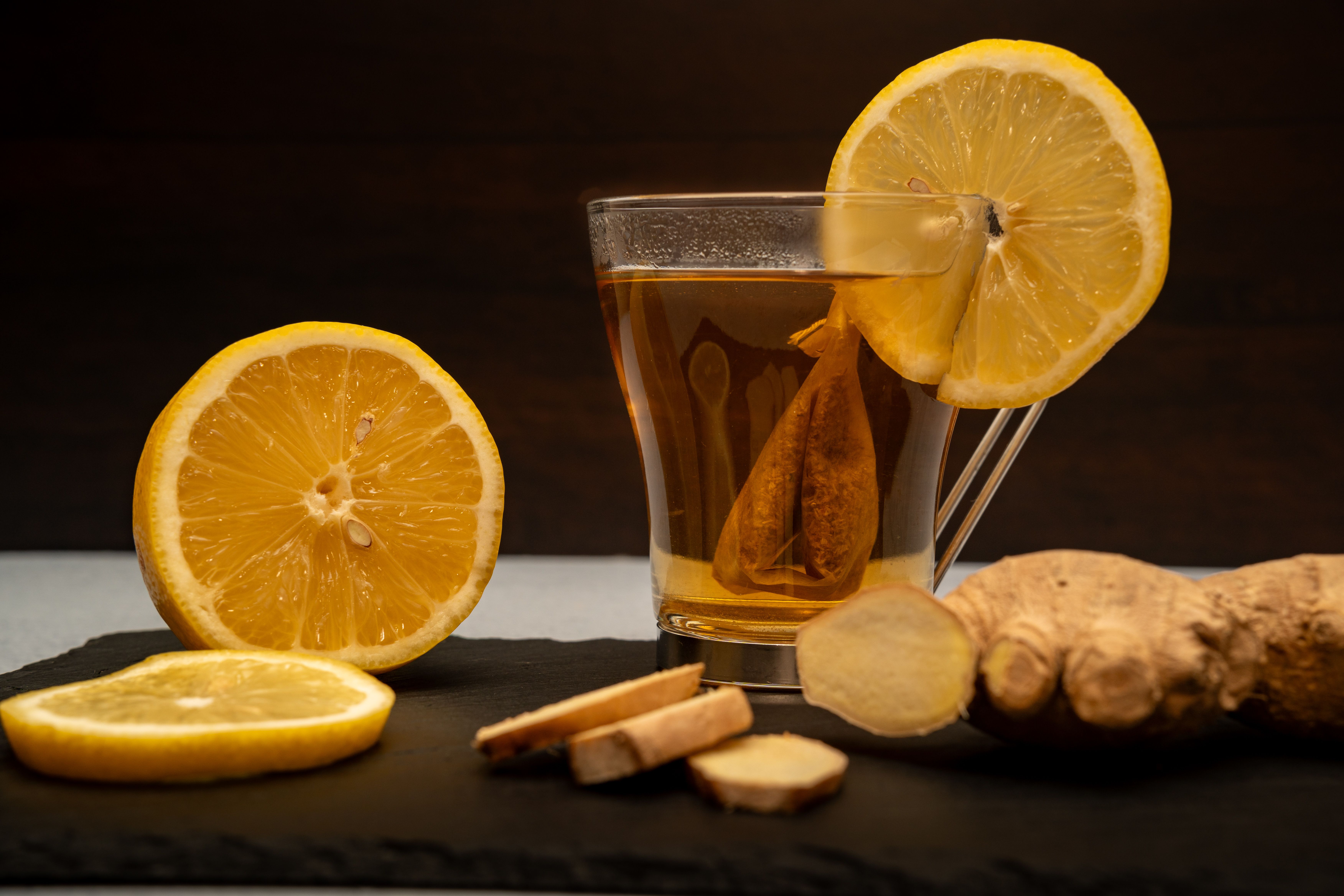
Cover image source: Pexels (photo by Gundula Vogel)
A dull ache or burning sensation wakes you at night, or appears when your stomach is empty. The discomfort sits between the breastbone and belly button. That can fit a peptic ulcer, although symptoms alone cannot establish the diagnosis. As October brings cooler weather in the Northern Hemisphere, it is reasonable to pay attention to recurring pain: studies discussed below describe seasonal changes in ulcer diagnoses, hospital admissions, and bleeding, often rising toward winter. They do not establish a universal October increase in outpatient visits.
This guide follows two tracks: how traditional Chinese medicine describes upper abdominal pain, and what clinical research actually supports. Traditional pattern assessment may inform complementary care, but identifying an ulcer’s cause and treating it remain essential. If pain comes with black stools, bloody vomit, fainting, or sudden severe abdominal pain, seek emergency care instead of trying home remedies.
What Peptic Ulcers Are—and Their Two Main Causes
A gastric ulcer is a break in the stomach lining; a duodenal ulcer affects the lining of the duodenum, the upper part of the small intestine. Both are peptic ulcers. Potential complications include bleeding, perforation, penetration into nearby tissues, and obstruction. The NIDDK peptic ulcer overview explains the condition and its clinical significance.
The leading causes are infection with Helicobacter pylori and use of nonsteroidal anti-inflammatory drugs, or NSAIDs. These include aspirin, ibuprofen, and naproxen. Symptoms can include upper abdominal pain, early fullness during meals, uncomfortable fullness afterward, nausea, vomiting, bloating, and belching. Some ulcers cause no symptoms until complications develop. See NIDDK’s symptoms and causes.
Everyday emotional stress and spicy food do not cause peptic ulcers, although they can worsen symptoms. A history of ulcers, older age, and high-dose or combined NSAID use deserve attention during a medication review. Alcohol can irritate and erode the stomach lining. These distinctions are described by Mayo Clinic. A stressful week should not become an explanation that postpones investigation of persistent pain.
H. pylori is common, but prevalence estimates need context. The NCI fact sheet cites a CDC estimate that about two-thirds of the world’s population harbors the bacterium; that is not a new 2026 survey. Infection is often acquired during childhood and is associated with crowded living conditions and poor sanitation. Chronic infection can cause lasting gastritis and may progress to gastric adenocarcinoma or gastric MALT lymphoma. Infection does not mean that cancer is inevitable.
Reflux and ulcers can produce overlapping complaints, but they are distinct conditions. The site’s TCM guide to acid reflux and GERD provides related background; it cannot determine which condition explains an individual’s symptoms.
Why the Fall-to-Winter Transition Deserves Attention
The seasonal evidence is more nuanced than saying that fall is always ulcer season. A Korean nationwide study followed data from 2012–2016 covering 14,626 patients with peptic ulcers and 3,575 with ulcer bleeding. Ulcer incidence was highest in winter and lowest in fall, when the proportion was 18.5%–21.3%. The winter proportion declined from 33.1% in 2012 to 30.0% in 2016. The investigators observed a steep rise from fall to winter; bleeding peaked in winter in four of the five years (P<.001).
A Taiwanese nationwide study published in 2024 examined 13,022 patients hospitalized for peptic ulcers during 2001–2019. Winter accounted for 26.8%, followed by spring at 25.1%, fall at 24.2%, and summer at 23.9%. NSAID use attenuated the seasonal pattern. These are distributions among hospitalized patients, not estimates of any individual reader’s winter risk.
A Tokyo study published in 2001 included 441 patients: 275 with gastric ulcers, 51 with duodenal ulcers, and 115 with esophagogastric varices. Gastric ulcer bleeding varied by month and season (P=0.0018), decreasing in summer and increasing from fall into winter. It was inversely associated with average temperature (P=0.0016) and positively associated with average atmospheric pressure (P=0.0057). Duodenal ulcer and variceal bleeding did not show significant seasonal variation.
October is therefore a practical checkpoint within the transition toward colder months. The studies support attention to a fall-to-winter rise, but do not jointly identify October as the precise turning point. Their populations and outcomes differ, and Korea’s fall trough directly challenges any claim that fall must be the peak. None establishes that cold weather itself causes ulcers or that warming remedies prevent bleeding.
The TCM View: Epigastric Pain and Pattern Differentiation
TCM traditionally discusses this symptom area as wei wan tong, or epigastric pain. Its “Liver,” “Spleen,” and “Stomach” describe functional relationships within traditional theory; they are not anatomical diagnoses. “Liver–Stomach disharmony” can frame qi stagnation, but does not diagnose liver disease. The Spleen and Stomach digestive health guide explains this vocabulary.
A 2025 cross-sectional study of 105 patients reported excess patterns in 79.1% and deficiency patterns in 20.9%. Its individual pattern distribution was qi stagnation 31.4%, fire constraint 27.6%, blood stasis 22.9%, and Spleen–Stomach deficiency-cold 18.1%.
Qi stagnation involved intermittent pain, distention, belching, and sometimes pain extending toward the ribs or back. Fire constraint, discussed in relation to Stomach heat, included burning pain, irritability, and a dry or bitter mouth. Blood stasis involved severe, fixed pain and could accompany bloody vomit or black stools. Deficiency-cold involved persistent pain relieved by warmth or gentle pressure and worsened by an empty stomach.
Excess patterns were associated with disease lasting less than 6 months; deficiency-cold was more common with disease lasting more than 12 months (p<0.05). This observational association does not show that patterns predict healing or that pattern-based treatment prevents bleeding. Blood in vomit or stool requires urgent medical assessment, whatever traditional label is used.
Acupuncture Points and Gentle Acupressure
A 2023 Delphi expert consensus proposed a semi-standardized acupuncture approach for gastric ulcers, with adjustments based on traditional patterns. Main points were ST36, CV12, PC6, and SP6; additional points were LR3, CV4, SP10, and KI3. This was expert agreement about point selection, not a clinical trial demonstrating efficacy. The experts described adverse events as generally minor, commonly bruising, while acknowledging limited clinical evidence.
Acupressure uses touch rather than needles, so acupuncture findings cannot establish that home pressure heals ulcers. The landmarks below provide orientation, not instructions for self-needling. A qualified practitioner can mark the exact locations, particularly on the abdomen. With professional clearance, use a relaxed fingertip or thumb pad, gentle steady pressure or small circles, for 1–2 minutes per selected point. This is a cautious comfort routine, not a proven ulcer treatment dose. There is no need to work through every point.
| Point | General location | Gentle pressure approach |
|---|---|---|
| ST36, Zusanli | On the front-outer lower leg, about a handbreadth below the kneecap, just outside the shinbone. | Rest a thumb on the muscle beside the bone and make small, comfortable circles. |
| CV12, Zhongwan | On the abdominal midline, halfway between the navel and the lower tip of the breastbone. | Only after a clinician approves abdominal touch, rest the fingertip pads lightly; avoid deep pressure. |
| PC6, Neiguan | On the inner forearm, a few fingerbreadths above the wrist crease, between the central tendons. | Support the wrist and apply light, steady thumb pressure without provoking tingling. |
| SP6, Sanyinjiao | On the inner lower leg, about a handbreadth above the inner ankle prominence, immediately behind the tibia. | Use a soft thumb pad behind the bone, avoiding force against it. |
| LR3, Taichong | On top of the foot, in the depression between the metatarsal bones leading to the big toe and adjacent toe, toward their junction. | Use a fingertip for small circles in the soft depression. |
| CV4, Guanyuan | On the lower abdominal midline between the navel and pubic bone, closer to the pubic bone; have a practitioner identify it. | Use only light surface contact after professional clearance. |
| SP10, Xuehai | On the fleshy inner thigh above the inner upper edge of the kneecap, over the medial quadriceps bulge. | Relax the thigh and use broad, gentle thumb circles on muscle. |
| KI3, Taixi | In the depression between the inner ankle prominence and the Achilles tendon. | Apply light fingertip pressure in the hollow without squeezing the tendon. |
Avoid pressing injured skin or a painful, unexplained abdominal area. Stop if touch causes pain, dizziness, numbness, or worsening symptoms. During pregnancy, consult an appropriately qualified clinician before acupressure, particularly for SP6 and abdominal points such as CV4 and CV12. Do not use abdominal massage when bleeding or an acute abdominal problem is possible. The site’s acupressure guide for nausea offers related context without establishing ulcer-healing benefits.
What the Research Actually Shows
The most encouraging numbers require the most careful interpretation. A 2026 systematic review and meta-analysis of acupuncture combined with Chinese herbal medicine reported better outcomes than comparison treatments without that combination: clinical efficacy OR 4.83 (95% CI 3.36–6.93, P<.00001), H. pylori eradication OR 3.94 (95% CI 2.35–6.6, P<.00001), and recurrence OR 0.19 (95% CI 0.1–0.35, P<.00001). Gastrin was lower, with MD −18.39 (95% CI −20.68 to −16.11). No increase in adverse events was observed.
OR means odds ratio, MD means mean difference, and CI means confidence interval. These are relative comparisons or measured differences, not a personal probability of cure. The review judged the overall evidence to be of low certainty because included studies were small and of low quality. A large estimate cannot overcome weak underlying methods. The combination also prevents the results from identifying the independent contribution of acupuncture or herbs. Absence of an observed increase in adverse events does not establish safety for every patient.
An earlier 2009 systematic review of TCM for H. pylori infection included 16 randomized trials, all with Jadad quality scores no higher than 2. Average eradication was 72% in TCM groups and 78% with triple therapy; adverse effects were reported in 2% versus 29%. Heterogeneity was substantial (P=0.001, I²=59%), so the authors did not pool an overall effect estimate.
Those averages are not proof of equivalence. Differences between trials, weak methods, and uncertain adverse-event reporting limit interpretation. The review found insufficient evidence that TCM matched triple therapy and concluded that it should not be recommended as monotherapy. These older comparisons also should not be treated as a direct test against today’s preferred regimens. TCM should not be used as the sole treatment for H. pylori infection.
A meta-analysis of Banxia Xiexin Decoction included 14 randomized trials and 1,300 patients. Used alone, the formula showed higher reported “cure rates” than standard treatment for peptic ulcers, RR 1.85 (95% CI 1.07–3.17), and chronic gastritis, RR 1.48 (95% CI 1.24–1.75). Reported effectiveness ratios were RR 1.18 and RR 1.14, respectively.
However, H. pylori clearance after one month did not differ significantly from triple or quadruple therapy: RR 1.04 (95% CI 0.97–1.12). There were 3 reported adverse events versus 26, but trial quality was poor. RR means risk ratio. A nonsignificant difference does not demonstrate equivalence, and a study-defined “cure” outcome should not be confused with confirmed bacterial eradication. These results do not justify replacing antibiotics with the formula or preparing it without professional supervision.
H. pylori Treatment and Confirmation of Eradication
The 2024 ACG clinical guideline provides the treatment framework. Optimized bismuth quadruple therapy for 14 days is a preferred first-line approach when antibiotic susceptibility is unknown. Rising resistance to clarithromycin and levofloxacin has reduced the reliability of regimens that depend on them. Treatment selection belongs with the prescribing clinician, who can consider previous antibiotic exposure, allergies, and the clinical situation.
For patients younger than 60 with dyspepsia and no alarm features, a test-and-treat approach may be appropriate after clinical assessment. This does not mean that every stomach ache requires antibiotics, or that age alone excludes serious disease. The guideline also calls for a test of cure after treatment. Feeling better cannot confirm that the infection has cleared.
If complementary care is being considered, bring a complete list of herbs, supplements, and medicines to the treating team. Agree on what symptom the complementary approach is intended to address, and preserve the prescribed eradication and follow-up plan. Point selection and traditional pattern labels cannot substitute for testing.
Food and Daily Care: Traditional Warming, Modern Priorities
In traditional theory, “warming the middle” emphasizes comfortable meals and support for the Spleen–Stomach functions. A practitioner may favor warm cooked foods over raw or chilled foods for a deficiency-cold pattern. Ginger and red dates appear in traditional warming food practices, but their traditional use does not demonstrate ulcer healing or H. pylori eradication. Nor does every traditional pattern call for the same warming approach.
The TCM food therapy and medicinal soups guide offers cultural and culinary background. Treat soups as food, not as a substitute for prescribed treatment. The cover’s tea, lemon, and ginger are an illustration, not a recommended ulcer remedy. Choose foods that are comfortable to eat, and avoid turning temporary preferences into unnecessary long-term restrictions.
Modern dietary guidance is deliberately less prescriptive. NIDDK’s eating and nutrition guidance states that researchers have not found diet to play an important role in causing, preventing, or treating peptic ulcers. Doctors do not recommend a special ulcer diet or routine avoidance of particular foods. Quitting smoking can reduce ulcer risk and help existing ulcers heal.
Reduce alcohol exposure, especially when it worsens discomfort, and discuss NSAID use with a clinician. Review nonprescription pain relievers as well as prescriptions so duplicate NSAID use is not overlooked. Do not stop prescribed aspirin or any other prescription medicine on your own. Ask the prescriber how to manage ulcer risk while maintaining treatment for the condition that medicine addresses.
A brief symptom record can help that conversation: note when pain occurs, its relationship to meals, and the medicines taken. A recurring seasonal pattern is useful history, but it should not become a reason to assume that new symptoms are harmless.
When to Seek Medical Care
Seek emergency medical attention for black or tarry stools, vomiting blood or material resembling coffee grounds, sudden severe abdominal pain that persists, dizziness or fainting, or a rapid pulse with signs of shock. These are among the NIDDK warning signs of ulcer complications. Do not try to manage them with tea, herbs, acupressure, or abdominal warming.
Arrange a medical assessment for persistent or recurring upper abdominal discomfort, even when it improves after eating or seems connected to stress. Evaluation matters because symptoms cannot tell you whether an ulcer is present, whether H. pylori is involved, or whether a medication is contributing.
TCM may have an adjunctive role in a coordinated care plan, with goals and limitations made explicit. The evidence does not support using it instead of eradication therapy or urgent treatment of complications. For a practical next step, review the NIDDK ulcer information and discuss testing, treatment, and follow-up with your clinician. For the site’s scope, see our medical disclaimer.