TCM for Night Leg Cramps and Restless Legs: Liver Blood Deficiency, Cold-Damp, and Mineral Balance — Food Therapy, Acupressure, Herbal Foot Soaks, and When to See a Doctor (2026 Guide)
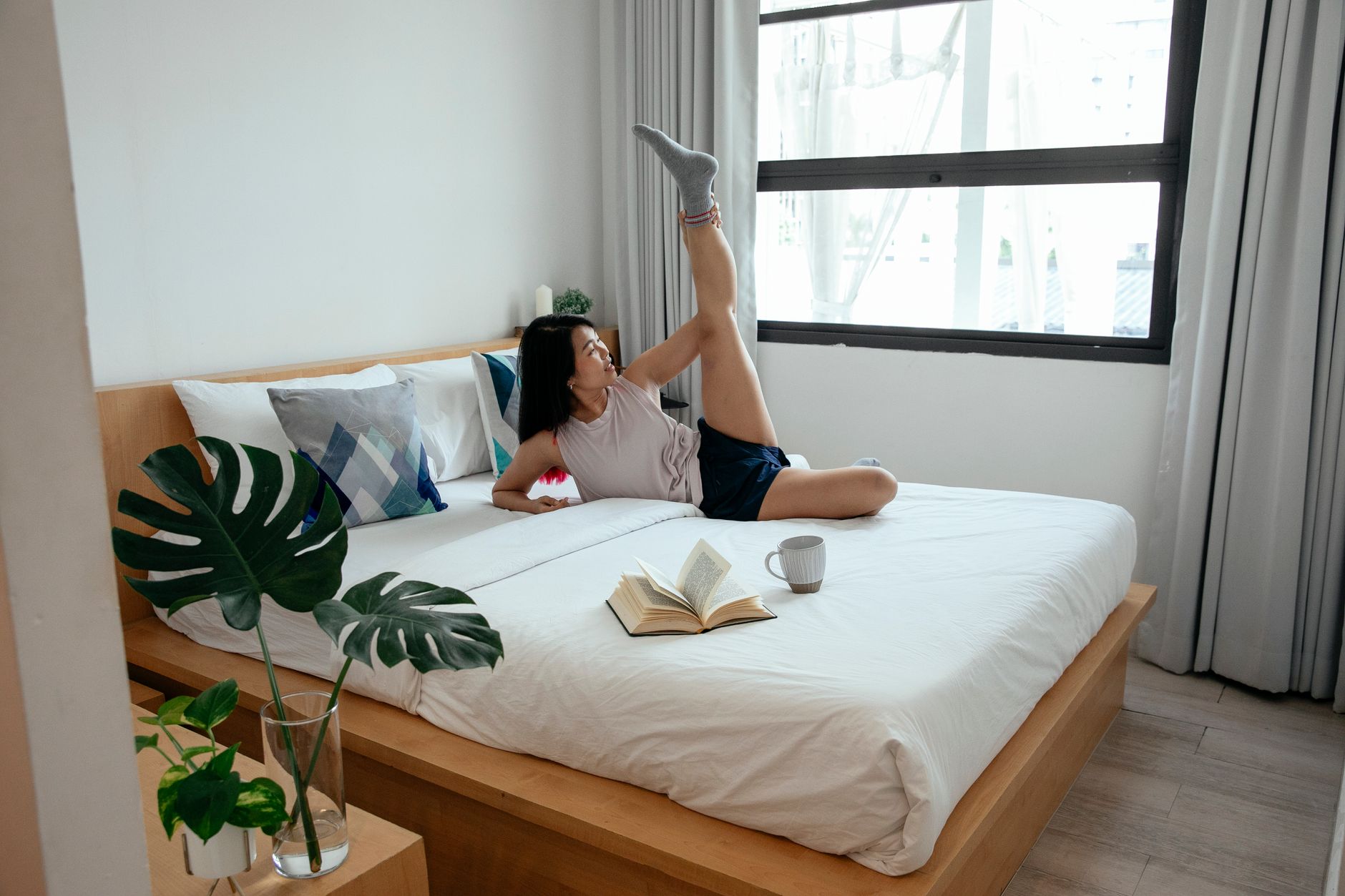
Cover image source: Pexels (photo by Miriam Alonso)
Medical Disclaimer: This article is for informational and educational purposes only. It does not diagnose or treat night leg cramps, restless legs syndrome, blood clots, mineral deficiencies, or nerve disease. Ask a doctor before using supplements, herbs, or strong acupressure if you have kidney disease, diabetes, poor circulation, peripheral neuropathy, are pregnant, or take prescription medicines; minerals and herbs can interact with medicines or become unsafe when kidney function is reduced.
As late September nights turn cooler, night leg cramps and restless legs can suddenly feel harder to ignore. A calf may seize after the blankets go on, or an uncomfortable urge to move may repeatedly break sleep. These are not the same problem: a cramp is a sudden, painful muscle contraction, while restless legs syndrome (RLS) is a neurologic condition marked by an urge to move that is worse at rest and usually at night. The distinction matters because their causes and medical treatment differ.
Why Cooler Late-September Nights Can Feel Worse
A temperature drop does not create one universal cramp disorder, but it can expose several triggers at once. Cooler muscles and blood vessels may feel stiffer, people may move less after sunset, and cold feet can make an already tense lower leg feel more uncomfortable. Anyone whose symptoms ease with socks, a warm shower, or a heating pad may notice the seasonal change before the calendar says autumn.
Hydration habits change too. Thirst is less obvious in cool weather even though daytime exercise, indoor heating, alcohol, fever, diarrhea, or a diuretic can still reduce fluid. MedlinePlus lists dehydration, nerve compression, pregnancy, certain medicines, and low electrolyte levels among recognized contributors to muscle cramps.
Minerals are part of the context, not an automatic explanation. Sodium, potassium, calcium, and magnesium all help nerves and muscles work, but a cramp does not prove that any one of them is low. Recurrent symptoms deserve a review of recent illness, sweating, diet, kidney and thyroid health, circulation, and medicines—including diuretics, statins, and inhaled beta-agonists—rather than a blind supplement purchase.
RLS is different again. It tends to appear during quiet evening rest, improves temporarily with walking or movement, and returns when movement stops. The National Institute of Neurological Disorders and Stroke notes links with low iron, pregnancy, kidney disease, neuropathy, sleep loss, and some medicines.
What TCM Says About Leg Cramps
Traditional Chinese medicine says the Liver stores Blood and governs the sinews—the muscles, tendons, and connective tissues that permit smooth movement. In a liver blood deficiency pattern, the sinews are said to lose nourishment, so the calves or feet may tighten at night alongside dry eyes, brittle nails, dizziness, pallor, or light menstrual periods. This is a traditional framework rather than a diagnosis; the NCCIH overview of TCM advises using complementary care without replacing or delaying conventional medical care. Read the site’s blood deficiency guide for the broader traditional picture.
Cold-Damp obstruction describes a different presentation: the legs feel cold, heavy, stiff, or achy; damp or chilly nights aggravate them; and warmth brings clear relief. This is the pattern most obviously echoed by an early-autumn temperature drop. The guide to cold hands, cold feet, and circulation explains the same warming logic in more detail.
With Liver Qi and Blood stagnation, tension or cramping is more fixed, stress-related, or associated with a tight, irritable feeling. Gentle movement, massage, and relaxation may help more than complete stillness. None of these patterns is a biomedical diagnosis, and they cannot identify a clot, iron deficiency, medication effect, neuropathy, or electrolyte disorder.
Three TCM Patterns Compared
| Traditional pattern | Typical signs | Often worse with | Food and habit direction |
|---|---|---|---|
| Liver Blood Deficiency | Night cramps, dry eyes, brittle nails, pale complexion, light periods, dizziness | Overwork, poor sleep, blood loss, restrictive eating | Regular protein; iron- and B12-rich foods; dark greens, beans, sesame, red dates, and cooked meals |
| Cold-Damp | Cold, heavy, stiff legs; dull ache; symptoms improve with heat | Cool damp weather, cold floors, wet clothing, iced drinks, long inactivity | Warm soups and stews, ginger in food, warm socks, gentle walking, fewer cold raw meals |
| Liver Qi Stagnation | Tight calves, shifting tension, irritability, symptoms linked to stress | Emotional strain, prolonged sitting, shallow breathing | Regular meals, green vegetables, daily movement, stretching, massage, and a calmer evening transition |
Use the table as a self-observation tool, not as a reason to postpone care. Mixed patterns are common, and an experienced licensed practitioner should still screen for ordinary medical causes.
Food Therapy for Blood, Warmth, and Muscle Function
Build meals around ordinary, nutrient-dense food. Dark leafy greens, black beans, black sesame, red dates, and goji berries fit the traditional blood-nourishing direction. Liver and lean red meat provide highly absorbable iron and vitamin B12; people who do not eat meat can combine beans, tofu, greens, or fortified foods with vitamin C-rich produce to improve plant-iron absorption.
Bone broth and other warm soups are useful mainly because they make a warm, hydrating meal easy. They are not a concentrated cure for anemia or a reliable electrolyte prescription. A simple bowl might combine black beans, greens, carrots, lean beef or tofu, and a spoonful of ground sesame.
For a Cold-Damp presentation, favor warm cooked meals over a steady diet of cold raw food, smoothies, and iced drinks. That choice is consistent with TCM practice and may simply feel better on a chilly evening, although temperature preference does not diagnose a pattern.
Foods cannot replace medical treatment for iron deficiency or vitamin B12 deficiency. Fatigue, pallor, shortness of breath, numbness, a sore tongue, heavy menstrual bleeding, or persistent RLS warrants laboratory testing. Do not take high-dose iron on a guess; excess iron can be harmful, and the cause of a deficiency needs attention.
Calcium, Magnesium, Potassium, Sodium, and Hydration
Muscle contraction depends on fluid balance and several minerals working together. A food-first checklist is safer than choosing one powder based on a symptom:
- Magnesium: beans, nuts, seeds, whole grains, and leafy greens.
- Potassium: potatoes, beans, lentils, yogurt, bananas, squash, and leafy greens.
- Calcium: dairy or fortified alternatives, calcium-set tofu, canned fish with bones, and some greens.
- Sodium: most people obtain enough from food; replacement matters mainly after substantial sweat or fluid loss and should be individualized for heart, kidney, or blood-pressure conditions.
- Hydration: drink regularly through the day and replace extra losses from exercise, heat, vomiting, or diarrhea.
Magnesium deficiency can cause cramps, but magnesium supplements do not reliably stop ordinary nighttime cramps. A Cochrane evidence review found that clinically meaningful benefit was unlikely in older adults with idiopathic cramps, while evidence in pregnancy was uncertain. Food first, followed by a clinician’s opinion when symptoms persist, is the sound route—especially because magnesium supplements can cause diarrhea and can accumulate in kidney disease.
Do not start potassium supplements without medical advice. Too little or too much potassium can disturb heart rhythm, and common blood-pressure or kidney medicines can raise potassium.
Acupressure for Leg Cramps: Six Useful Points
Sit or recline with the leg supported. Use a thumb or knuckle to apply steady, comfortable pressure, then make small circles for 60 to 90 seconds per point on each side while breathing slowly. Pressure should feel distinct but never sharp, electric, or numbing.
LIV3 (Taichong)
Find LIV3 on the top of the foot in the channel between the first and second long foot bones, about one to two thumb-widths back from the web between the big and second toes. Press toward the sole for 60 seconds. Traditionally, LIV3 moves Liver Qi and is used when cramps accompany stress, irritability, or a sense of constraint.
SP6 (Sanyinjiao)
Place four fingers above the highest point of the inner ankle bone; SP6 sits just behind the inner edge of the shinbone. Press inward gently for 60 seconds without digging into the bone. It is traditionally used to nourish Blood and Yin and to ease lower-leg tension.
GB34 (Yanglingquan)
Feel for the small bony head of the fibula on the outside of the leg below the knee; GB34 lies in the depression just in front of and below it. Press inward and slightly upward for 60 to 90 seconds. TCM calls it an influential point for tendons and sinews, so it is commonly selected for stiffness and tight movement.
BL57 (Chengshan)
BL57 is in the center of the back of the calf, where the two rounded calf-muscle bellies narrow toward the Achilles tendon. Rising onto the toes can make the hollow easier to see; sit down before pressing it. Use gentle sustained pressure for up to 60 seconds and never force a calf that is swollen, hot, red, or acutely painful.
KI3 (Taixi)
Find the hollow between the highest point of the inner ankle bone and the Achilles tendon. Pinch gently from both sides or press toward the ankle bone for 60 seconds. It is traditionally used to support Kidney energy and for ankle, heel, and lower-leg weakness.
ST36 (Zusanli)
Measure four finger-widths below the bottom of the kneecap, then move about one finger-width to the outside of the shinbone. Press into the muscle for 60 to 90 seconds. ST36 is traditionally used to support Qi, digestion, and general resilience.
Acupressure caution: Skip SP6 and avoid strong stimulation during pregnancy. Do not press on broken, bruised, infected, swollen, hot, or numb skin. Stop immediately if pressure produces sharp pain, tingling, or numbness. Acupressure is supportive self-care, not a treatment for a clot, mineral disorder, neuropathy, or persistent RLS.
For related lower-limb techniques, see the knee acupressure guide and lower-back acupressure guide.
Herbal Foot Soaks and Warm Compresses
A foot soak can warm the feet, relax the evening routine, and make gentle ankle movement comfortable. It is not a way to deliver a medically meaningful dose of magnesium through the skin.
Simple 10- to 15-minute soak: fill a stable basin with warm—not hot—water at about 98–104°F (37–40°C). Add either 1/2 cup Epsom salt, or 4–6 thin slices of fresh ginger. If a qualified practitioner has confirmed that mugwort (ai ye) is appropriate, a small tied sachet can replace the ginger; do not combine a shelf of herbs.
Test the water with a thermometer or an unaffected elbow, soak for 10–15 minutes, dry carefully between the toes, and put on warm socks. Stop if the skin becomes red, itchy, dizzy, or uncomfortable. A warm compress over an ordinary tight calf for 10 minutes is the simpler option, but never apply heat to a leg with unexplained swelling, redness, or warmth.
People with diabetes, peripheral neuropathy, poor circulation, open sores, or reduced temperature sensation should ask their clinician or podiatrist before soaking. Never use hot water on numb feet. Inspect the skin before and after, because a burn may occur without being felt. The longer TCM herbal foot-soak guide covers setup and hygiene.
Stretching and a Better Night Routine
For a standing calf stretch, face a wall, place both hands on it, step the affected leg back, keep that heel down and the knee straight, then lean forward until the calf stretches. Hold for 30 seconds, release, and repeat two or three times on each side without bouncing.
For a toe-flex stretch, sit with one leg extended, loop a towel around the ball of the foot, and draw the toes gently toward the shin. Hold 20–30 seconds and repeat twice. If a cramp strikes in bed, straightening the knee and pulling the toes toward the shin often shortens it.
Do both stretches gently before bed, not only after pain begins. Keep the feet and calves comfortably warm with loose socks, avoid tight bedding that forces the toes downward, and try side-sleeping with the knees slightly bent or back-sleeping with a small pillow under the knees. A short walk and ankle circles can help RLS more than lying still and fighting the urge to move.
Red Flags: When This Is a Doctor’s Problem
Seek urgent medical assessment for new one-sided calf pain with swelling, redness, or warmth; these can be signs of a deep vein thrombosis (DVT). If shortness of breath, chest pain, coughing blood, faintness, or a rapid heartbeat occurs with those leg symptoms, call emergency services. The NHS DVT guide explains why prompt assessment matters.
Make a medical appointment when:
- Cramps recur with muscle weakness, shrinking muscles, or loss of function.
- Restless legs occur with fatigue, pallor, breathlessness, heavy periods, pica, or during pregnancy; ask about a CBC and ferritin rather than self-prescribing iron.
- Cramps come with numbness, tingling, shooting pain, or back pain, which can indicate nerve compression or neuropathy.
- Spasms involve the hands or face, or occur with widespread twitching, confusion, seizures, or an irregular heartbeat; electrolyte or neurological problems need assessment.
- Symptoms began after a new medicine or dose change, especially a statin, diuretic, or beta-agonist inhaler. Do not stop a prescribed medicine on your own; ask the prescriber to review it.
- Pain is severe, prolonged, increasingly frequent, or does not improve with hydration and gentle stretching.
RLS itself deserves evaluation when it regularly disrupts sleep. The correct workup may uncover iron deficiency, kidney disease, pregnancy-related changes, neuropathy, sleep apnea, or a medicine that worsens symptoms.
Frequently Asked Questions
Are night leg cramps a sign of low magnesium?
Sometimes magnesium deficiency causes cramps, but most nighttime cramps do not prove a deficiency. Dehydration, muscle overuse, nerve problems, pregnancy, circulation issues, medicines, calcium or potassium imbalance, and no identifiable cause are all possible. Recurrent cramps call for history, examination, and selective testing—not automatic high-dose magnesium.
Can TCM actually stop cramps?
TCM food therapy, warmth, massage, and acupressure may make some people more comfortable, but they have not been shown to reliably eliminate every cause of cramps or RLS. Use the traditional pattern model to organize low-risk self-care while medical causes are assessed. Herbs and acupressure never replace prescribed treatment.
Is a foot soak safe with diabetes?
Not automatically. Diabetes can reduce sensation and circulation, making burns and unnoticed skin injury more likely. Ask a clinician or podiatrist first, never soak an ulcer or infected foot, measure the water temperature, and never use hot water on numb feet.
Does drinking pickle juice work?
Some athletes report that the strong taste helps a cramp resolve quickly through a nerve reflex, but pickle juice is not a general treatment for nocturnal cramps or RLS. It is also high in sodium and can be unsuitable for people with high blood pressure, heart failure, or kidney disease. Stretching the cramped muscle remains the simplest immediate step.
How can I tell a cramp from restless legs syndrome?
A cramp is a sudden, painful, hard contraction in a specific muscle, often the calf or foot. RLS is an uncomfortable urge to move, commonly with crawling, pulling, or tingling sensations; it appears during rest, is worse in the evening or night, and improves temporarily with movement. A person can have both.
Should I take iron for restless legs?
Only after appropriate testing and medical advice. Low iron stores can contribute to RLS even before obvious anemia, but excess iron is harmful and may hide ongoing blood loss or another condition. A clinician can interpret a CBC, ferritin, and related tests and choose a safe dose when treatment is needed.