TCM for Ménière's Disease: Fluid Metabolism, Acupressure, and Managing Inner Ear Vertigo (2026 Guide)
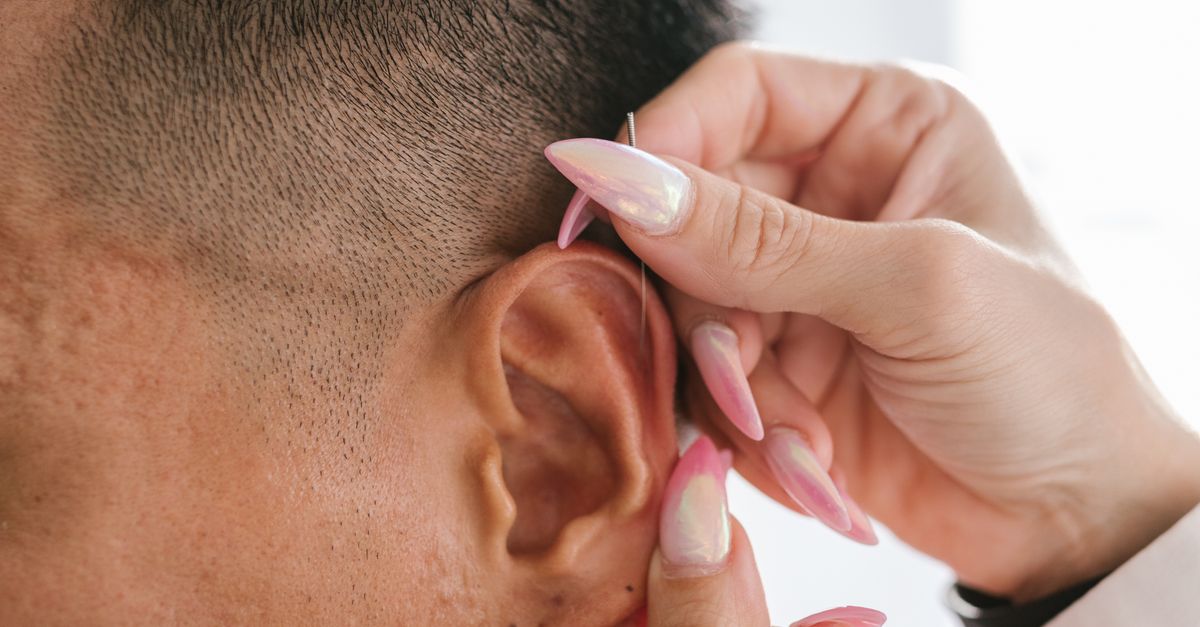
Cover image source: Pexels (photo by RDNE Stock project)
🌿 A gentle note from us
The practices shared here are rooted in Traditional Chinese Medicine traditions that have been passed down for thousands of years. We share them as educational resources — not as prescriptions or medical advice.
Every body is different. What brings balance to one person may not be right for another. Please listen to your body, go gently, and check with a qualified healthcare provider before trying any new wellness practice — especially if you are pregnant, managing a chronic condition, or have specific health concerns.
Some links on this site are affiliate links. If you choose to purchase through them, we may earn a small commission at no extra cost to you. This helps us continue sharing ancient wisdom for modern wellness. Thank you for your trust.
An unpredictable spinning attack can interrupt work, disturb sleep, and make ordinary activities feel unsafe. When hearing also fluctuates, the uncertainty can be particularly exhausting. People living with Ménière’s disease often look to traditional Chinese medicine (TCM) for additional ways to cope.
A useful integrative approach begins with a confirmed medical diagnosis and realistic expectations. TCM offers a traditional language for understanding symptoms, while gentle acupressure may provide a comforting routine. Neither establishes the cause of vertigo, and neither has been shown reliably to reverse inner-ear damage. This guide explains where traditional concepts, clinical evidence, and practical self-care fit together.
1. Understanding Ménière’s Disease: The Inner Ear Fluid Crisis
The inner ear contains structures responsible for hearing and balance. Within its membranous labyrinth, a specialized fluid called endolymph helps these sensory systems function. Endolymphatic hydrops means expansion of the endolymph-containing spaces. This abnormal fluid accumulation is associated with Ménière’s disease, although the underlying cause remains incompletely understood. It is not water trapped in the outer ear after bathing. See the NIDCD overview of Ménière’s disease.
The characteristic symptom cluster includes:
- Episodic vertigo: spontaneous spinning attacks lasting 20 minutes to 12 hours in definite Ménière’s disease, often accompanied by nausea.
- Fluctuating sensorineural hearing loss: typically affecting low to middle frequencies early on, documented through a hearing test.
- Tinnitus: sometimes described as a low roaring sound, although its character varies.
- Aural fullness: a feeling of pressure or blockage in the affected ear.
Diagnosis requires more than matching a symptom list. The AAO-HNS clinical practice guideline describes recurrent episodes, hearing assessment, and exclusion of alternative explanations. Endolymphatic hydrops and Ménière’s disease are not interchangeable diagnoses. Vestibular migraine and other balance disorders can resemble it.
Bring an attack diary to your appointment: record duration, hearing changes, nausea, possible triggers, and recovery time. Our TCM for Dizziness and Vertigo article provides broader context, but an ENT assessment remains essential when dizziness accompanies hearing symptoms.
2. Red Flags: When Vertigo Requires Urgent Medical Attention
A previous Ménière’s diagnosis does not mean every new dizzy spell has the same cause. Mayo Clinic’s symptom guidance emphasizes medical evaluation because these symptoms can occur in other illnesses.
Call emergency services immediately for sudden vertigo accompanied by any of the following:
- FAST symptoms: facial drooping, arm weakness, or speech difficulty; the final letter means time to call for help.
- A new neurological deficit on one side, such as weakness or numbness of an arm or leg.
- Diplopia, meaning double vision, or sudden loss of vision.
- Dysarthria, meaning newly slurred or poorly articulated speech.
- Sudden severe imbalance, especially inability to stand or walk safely.
- A thunderclap headache: an abrupt, extremely severe headache that reaches its peak within seconds to a minute.
Stroke affecting balance pathways may occur without the classic facial or arm symptoms. The American Stroke Association’s warning signs therefore include sudden balance and vision changes. Symptoms that disappear can still represent a transient ischemic attack (TIA) and require emergency assessment. Do not drive yourself or delay care to try pressure points.
Sudden new hearing loss also needs urgent, same-day medical evaluation, even if it feels like ear blockage. Persistent vomiting, inability to keep fluids down, or an unfamiliar severe attack warrants prompt medical advice. Until assessed, sit or lie somewhere safe and avoid stairs, driving, and machinery.
3. The TCM View: Water Metabolism, Tan Yin, and Zang-Fu Organs
TCM describes some presentations of dizziness through Tan Yin, often translated as phlegm-fluid retention. Here, “phlegm” does not necessarily mean mucus that can be coughed up. It is a traditional explanatory category for patterns of heaviness, nausea, congestion, and disturbed fluid handling.
Within this model, the Spleen governs transformation and transportation of food and fluids. The Kidney governs water and is traditionally said to “open to the ears.” The Liver governs the smooth movement of Qi, the traditional concept of functional activity and movement.
These capitalized organ names describe functional frameworks, not anatomical disease definitions. A TCM diagnosis involving the Kidney does not establish kidney disease, and “Spleen deficiency” does not diagnose a damaged spleen. Likewise, Tan Yin cannot be equated with measured endolymphatic hydrops. The two systems use different concepts and different forms of assessment.
Practitioners may consider several overlapping patterns:
Phlegm-Turbidity Harassing the Upper Orifices — Tan Zhuo Shang Meng
Traditional descriptions associate this pattern with spinning, a heavy or foggy head, nausea, chest or upper-abdominal stuffiness, and a greasy tongue coating. Treatment language may refer to transforming phlegm and clearing the sensory openings. Those phrases describe a traditional therapeutic intention; they do not demonstrate that a treatment drains inner-ear fluid.
Liver Yang Uprising — Gan Yang Shang Kang
This pattern may include dizziness with headache, irritability, disturbed sleep, or symptoms that seem more noticeable under stress. TCM describes an upward disturbance of Yang and aims to restore balance. It is not a substitute diagnosis for hypertension, migraine, or neurological disease, all of which require appropriate medical evaluation.
Kidney Yin and Jing Deficiency — Shen Jing Kui Xu
Jing is commonly translated as essence. Traditional assessment may consider longstanding tinnitus, reduced hearing, fatigue, or lower-back and knee weakness. Kidney Yin deficiency and Kidney Jing deficiency are related but distinct concepts; a practitioner should not assume they are identical. These labels do not establish age-related hearing loss or explain every case of Ménière’s disease.
Spleen and Heart Qi and Blood Deficiency — Xin Pi Liang Xu
This framework may describe dizziness alongside fatigue, poor appetite, palpitations, poor sleep, or difficulty concentrating. “Blood deficiency” in TCM is not automatically laboratory-confirmed anemia. New palpitations, marked fatigue, or faintness should receive medical assessment rather than being attributed to a traditional pattern alone.
Patterns may change over time, and self-diagnosis from a checklist is unreliable. If you consult a qualified TCM practitioner, share your ENT findings and complete medication list. Herbal formulas require particular care because ingredients can interact with medicines and may affect blood pressure, electrolytes, or organ function.
4. What Modern Clinical Research Actually Shows
The 2024 Frontiers in Medicine systematic review and meta-analysis, also indexed as PMC11669254, included six randomized trials. It compared acupuncture, alone or added to Western medical treatment, with Western medical treatment. Pooled results favored acupuncture-containing treatment for the studies’ reported “efficacy rate.”
Confidence is limited. The review identified small samples, lack of blinding, problematic outcome measures, and differences in point selection, treatment schedules, and technique. A pooled “efficacy rate” is not equivalent to proof of durable hearing preservation or prevention of future attacks. These findings justify better trials, rather than a promise of recovery.
The 2026 Laryngoscope umbrella review, Intervention Outcomes for Meniere’s Disease, examined 22 systematic reviews with meta-analyses across multiple treatments. Its abstract reports symptomatic benefit from acupuncture combined with other therapies, but explicitly calls for caution because the evidence is low quality. An umbrella review summarizes existing reviews; it does not supply a new, large randomized trial.
Acupuncture and acupressure are different interventions. Results from professionally administered needling cannot automatically be transferred to finger pressure at home. These reviews do not establish that the routine below reduces hydrops, restores hearing, or prevents Ménière’s attacks. NIDCD’s patient guidance likewise does not regard acupuncture or acupressure as established effective treatments for the condition.
For someone who wishes to try complementary care, the reasonable goal is supportive comfort with agreed monitoring. Track attack frequency, functional ability, and hearing assessments rather than relying only on how relaxed you feel immediately afterward. Ménière’s symptoms fluctuate naturally, so improvement after a session does not by itself prove that the session caused it.
5. Practical Acupressure Points for Inner Ear Support and Calming
The phrase “inner ear support” here refers to a traditional wellness practice, not a demonstrated fluid-draining effect. The following is a conservative comfort routine, not a validated treatment protocol. Practice while seated securely, preferably between attacks, with clean hands and short fingernails.
Start with light, comfortable contact for about 15–30 seconds at one location. Release, check how you feel, and repeat once if pleasant. There is no need to complete every point or press hard enough to produce pain. Stop for increased dizziness, tingling, headache, nausea, or discomfort.
Tinggong SI19, Ermen TE21, and Tinghui GB2: Around the Front of the Ear
These points form a short vertical group beside the ear:
- SI19: in the hollow just in front of the center of the tragus, the small cartilage flap beside the ear opening.
- TE21: above SI19, near the upper tragus and the supratragic notch.
- GB2: below SI19, near the notch between the tragus and antitragus.
Slightly opening the mouth helps reveal these depressions. Use the pad of one fingertip for very gentle contact, keeping the jaw relaxed. Never insert a finger or object into the ear canal, and do not force the jaw open. Skip this area if you have an ear infection, drainage, swelling, or jaw pain. These are traditional ear-related points, not mechanical outlets for endolymph.
Fengchi GB20: Base of the Skull
GB20 lies in paired hollows below the skull, between the upper neck muscles on either side. With the head supported and facing forward, use light fingertip contact only. Avoid deep upward pressure, forceful massage, neck twisting, or pressing the front or side of the neck. If locating it requires strain, leave it out and ask a qualified practitioner to demonstrate.
Neiguan PC6: A Practical Option for Nausea
PC6 is on the inner forearm, approximately three finger-widths above the wrist crease, between two tendons. Rest the forearm palm-up and use the opposite thumb for comfortable pressure or small circles. Repeat on the other wrist if desired.
Memorial Sloan Kettering’s patient instructions describe PC6 acupressure for nausea and vomiting. That broader supportive use does not establish effectiveness specifically for Ménière’s-related nausea or spinning. Continue prescribed rescue treatment as directed.
Taichong LR3: Traditional Liver Qi and Yang Regulation
LR3 lies on the top of the foot, in the depression between the first and second metatarsal bones, just before they meet. Support the foot without bending forward in a way that provokes dizziness. Apply gentle fingertip pressure. TCM associates this point with regulating Liver Qi and calming rising Yang; those traditional descriptions are not evidence that it lowers inner-ear pressure.
Zusanli ST36 and Fenglong ST40: Traditional Dampness Patterns
ST36 is approximately four finger-widths below the kneecap, just lateral to the shinbone. ST40 is farther down and outward on the lower leg, roughly halfway between the knee crease and outer ankle, in muscle lateral to the shin. Finger-width estimates are approximate; ask a practitioner to confirm placement. These landmarks follow WHO’s standard acupuncture point locations.
While seated, support the leg and use soft finger-pad contact. ST36 is traditionally associated with supporting digestive Qi; ST40 with transforming phlegm and dampness. Neither has been shown to draw fluid out of the inner ear.
Precautions That Matter
Do not press aggressively during an acute spinning episode. Prioritize a safe resting position and your clinician’s attack plan. Avoid broken, infected, inflamed, or recently operated skin. Do not massage a swollen or painful calf, and seek advice before pressure work if sensation is reduced or bruising occurs easily.
During pregnancy, consult your maternity clinician and a practitioner trained in pregnancy care before beginning acupressure. LI4 and SP6, although not included in this routine, are traditionally cautioned against for unsupervised strong stimulation during pregnancy. This precaution does not mean incidental touch causes labor.
Never attempt self-needling. For a gentler habit between episodes, adapt our Morning Acupressure Routine to a seated position and omit anything that worsens symptoms.
6. Daily Habits for Inner Ear Fluid Balance
Lifestyle adjustments are commonly included in care, but evidence should be described accurately. A Cochrane review of lifestyle and dietary interventions found considerable uncertainty about benefits. A sensible routine can still be worthwhile when individualized, affordable, and monitored without becoming excessively restrictive.
Discuss sodium restriction with your clinician. NIDCD describes a commonly recommended range of 1,500–2,000 milligrams of sodium daily. That is sodium, not the total weight of salt. Your target should account for other illnesses and medicines. Reading labels and reducing heavily salted packaged foods may be more practical than trying to remove every trace of salt.
Keep hydration consistent. Spread ordinary fluid intake across the day rather than alternating long dry periods with large amounts at once. Do not force excessive water or use dehydration as a way to “dry out” the inner ear. Follow any individualized fluid instructions for heart or kidney disease.
Avoid excess caffeine and alcohol. Notice whether either consistently precedes symptoms, and discuss a manageable reduction. Limit excessive refined sugar, especially sugary drinks, as part of balanced nutrition. This is not evidence that sugar avoidance cures hydrops. Regular meals can make it easier to sustain an overall routine without extreme dietary rules.
Make stress reduction and sleep practical. Try a few minutes of slow, comfortable breathing, a predictable bedtime, and a quiet wind-down period. These habits can support coping even when attacks remain unpredictable. Symptoms are not your fault, and difficulty controlling them does not mean you have failed to relax enough.
Keep a brief diary rather than changing everything simultaneously. Note sleep, meals, attacks, and functional limitations, then review patterns with your clinician. Avoid drawing conclusions from a single good or bad day.
For persistent imbalance between attacks, ask about vestibular rehabilitation; hearing changes may warrant hearing support. These options are part of the AAO-HNS guideline’s approach to ongoing care. For additional discussion of coping with ear noise, see Natural Approaches to Tinnitus.
A sustainable plan combines medical follow-up, a clear response to new warning signs, and supportive habits that fit your life. If gentle acupressure feels calming, it can have a place in that plan while its limits remain clear. Protecting hearing, preventing falls, and preserving everyday independence remain the priorities.