TCM for Lumbar Disc Herniation (Slipped Disc): Du Mai and Kidney Deficiency Patterns, Radicular Leg Pain, the 2026 Needle-Knife Trial, Evidence-Based Acupressure, and the Red Flags That Need Emergency Care (2026 Guide)
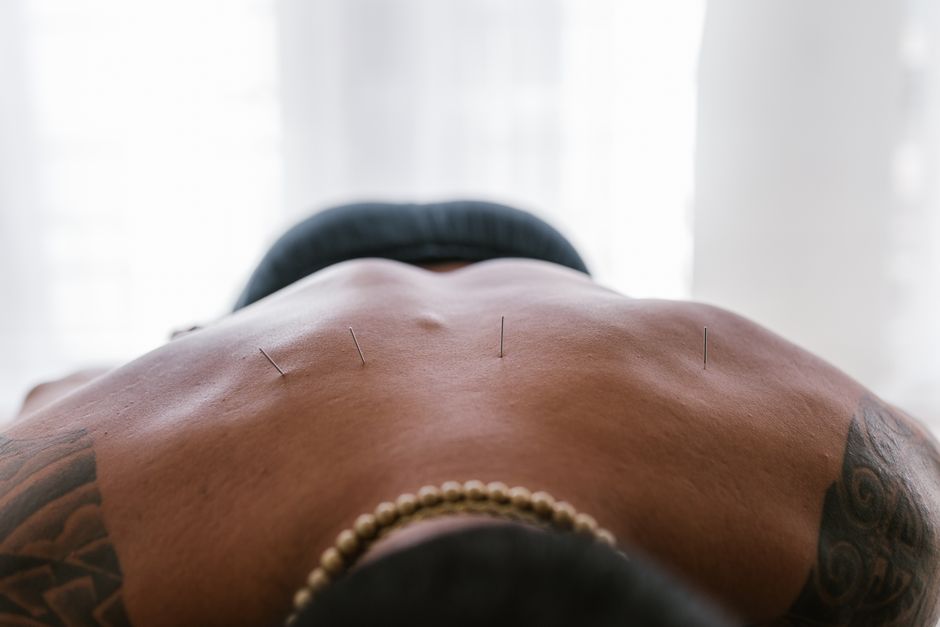
Cover image source: Pexels (photo by RDNE Stock project)
🌿 A gentle note from us
The practices shared here are rooted in Traditional Chinese Medicine traditions that have been passed down for thousands of years. We share them as educational resources — not as prescriptions or medical advice.
Every body is different. What brings balance to one person may not be right for another. Please listen to your body, go gently, and check with a qualified healthcare provider before trying any new wellness practice — especially if you are pregnant, managing a chronic condition, or have specific health concerns.
Some links on this site are affiliate links. If you choose to purchase through them, we may earn a small commission at no extra cost to you. This helps us continue sharing ancient wisdom for modern wellness. Thank you for your trust.
Why leg pain, not back pain, is usually the real story
A lumbar disc herniation involves a cushioning disc in the lower spine. Its jelly-like center, the nucleus, pushes through a damaged outer layer and can irritate nearby nerves. “Slipped disc” is familiar shorthand, but the clinical issue is the damaged disc and its relationship to nerves. MedlinePlus explains herniated discs and the role of examination in diagnosis.
Ordinary localized back pain and radicular leg pain are different presentations. Radicular pain travels along the distribution of an irritated spinal nerve root. In sciatica, symptoms commonly run through the buttock and down the back of one leg, sometimes reaching the foot and toes.
The NHS description of sciatica includes sharp or burning pain, tingling, reduced sensation, and weakness. Coughing, sneezing, or moving can aggravate symptoms. Leg pain often exceeds back pain; back pain alone usually does not indicate sciatica. A herniated disc is the most common cause, but other conditions can produce similar symptoms.
Keep three questions separate throughout this guide: What is happening medically? How would traditional Chinese medicine describe the symptom pattern? What benefits have treatments actually demonstrated in research? Those questions require different kinds of evidence.
How a herniated disc is assessed
Clinical assessment comes first. Explain where pain travels, whether sensation or strength has changed, and whether bladder, bowel, or genital symptoms have appeared. Examination helps determine whether the presentation fits nerve involvement or requires investigation for another cause.
NICE NG59 assessment recommendations advise against routine imaging in non-specialist settings. Even specialist referral does not automatically require a scan: imaging is considered when the result is likely to change management. Suspected emergencies are a different situation, described below.
Most people recover with treatment, and management generally begins with non-surgical care. MedlinePlus lists medicines and physical therapy among treatments, with surgery needed in some cases. The diagnosis and clinical course guide decisions; the phrase “slipped disc” alone does not select a treatment.
A useful consultation should leave you knowing what activities are appropriate, what changes need urgent review, and when progress will be reassessed. Persistent pain and worsening neurological function should not be treated as interchangeable problems.
The TCM view: the Du Mai, the Kidney, and the lumbar region
This section describes a traditional organizing framework, not an established anatomical mechanism or a biomedical diagnosis. There is no validated biomedical test for these pattern labels. Two people with the same scan can receive different traditional descriptions because practitioners also consider the reported quality and context of symptoms.
The NCCIH overview of traditional Chinese medicine provides broad context and safety cautions. It does not validate every traditional pattern or point prescription below. Pattern language must never override neurological assessment.
Du Mai (Governor Vessel) involvement
The Du Mai is traditionally mapped along the posterior midline, including the lumbar region. Practitioners therefore select lumbar Governor Vessel points when describing restricted movement or obstruction along that channel. “Opening” or “dredging” the channel describes a traditional treatment intention; it does not mean physically clearing a compressed nerve or moving disc material.
Kidney deficiency
In traditional theory, the Kidney governs bone and stores Jing, often translated as essence; the lumbar region is described as its “palace.” This framework connects longstanding lumbar complaints with a broader pattern of depleted support. Traditional Kidney deficiency is not kidney disease, impaired filtration, or a laboratory diagnosis. It is not a reason to start kidney supplements or disregard medical investigations.
Cold-damp obstructing the channels
This traditional label describes heavy, weather-sensitive discomfort reported as worse in cold or damp conditions. Warming practices fit the traditional interpretation. They do not establish that environmental dampness entered the spine or caused a disc to rupture.
Blood stasis
Fixed, stabbing pain, a history of injury, and nighttime aggravation are traditional features associated with blood stasis. This helps explain the language behind blood-activating and Du Mai or meridian-dredging approaches. The label does not diagnose a blood clot. New severe night pain still requires medical interpretation rather than automatic assignment to this pattern.
Damp-heat pour-down
Burning discomfort and heaviness reported as worse in humid heat may be grouped under damp-heat pour-down. This traditional description must be distinguished from fever, infection, or neurological burning pain. A pattern name cannot safely explain away a hot, inflamed area or systemic illness.
What the evidence actually shows
Acupuncture for chronic low back pain: real but modest, and of uncertain quality
The 2020 Cochrane review of chronic nonspecific low back pain included 33 trials and 8,270 participants. Seven German trials contributed 67% of participants. Evidence certainty ranged from very low to moderate, with substantial performance-bias concerns because practitioners or participants often knew the treatment assignment.
Acupuncture performed better than no treatment for immediate pain and function. Against sham acupuncture, the pain difference did not reach the review’s threshold for clinical importance, and function was not clearly improved. Against usual care, pain improvement was also not clinically important, although function could improve.
Crucially, the review excluded low back pain with a specific etiology. It therefore does not directly answer whether acupuncture helps disc herniation with nerve involvement.
NCCIH’s acupuncture evidence summary describes a 2018 review: 12 studies involving 8,003 participants favored acupuncture over no treatment for back or neck pain; 10 studies involving 1,963 participants favored it over sham. The difference against no treatment was larger. NCCIH also notes that the 2017 American College of Physicians guideline included acupuncture among non-drug options for chronic low back pain. These findings do not establish disc repair.
The 2026 evidence specific to disc herniation
The Governor Vessel acupuncture systematic review, published in the Journal of Pain Research on February 25, 2026, reported favorable overall effectiveness and pain reduction for acute lumbar disc herniation. However, interventions differed, and many combined acupuncture with other treatments. The authors acknowledge methodological heterogeneity and limited evidence for Governor Vessel acupuncture used alone, calling for higher-quality multicenter trials.
The chronic sciatica systematic review, published in Frontiers in Medicine on January 22, 2026, reported improved leg pain and disability. For the Oswestry Disability Index (ODI), seven studies with 621 participants produced a standardized mean difference of −0.57, with a 95% confidence interval from −0.84 to −0.31. This is a standardized effect, not a reduction of 0.57 ODI points or a percentage of patients recovering.
The authors caution about methodological limitations, differing acupuncture protocols, small samples, and short follow-up. These predominantly Chinese trial populations and variable comparison treatments limit broad conclusions. Favorable pooled results support further investigation and a discussion of possible symptom relief; they do not show that needling shrinks, repairs, or reabsorbs a herniated disc.
The brand-new needle-knife trial (published 16 October 2026)
The new needle-knife randomized trial was single-center and outcome-assessor-blinded. It randomized 74 patients: 37 to lumbosacral needle-knife therapy and 37 to conventional acupuncture at the same anatomical sites. Seventy completed a two-week course and three-month follow-up.
Group-by-time interactions favored needle-knife: the visual analog pain scale (VAS) interaction had a 95% confidence interval of 0.21–0.83, adjusted p=0.001; the ODI interaction interval was 1.89–4.35, adjusted p<0.0001. Both met the Bonferroni-adjusted threshold of 0.017. Lumbar flexion mobility differences did not survive multiple-testing correction.
These statistics describe differences in change over time, not guaranteed individual benefits. Participants and therapists were unmasked; the trial was exploratory, and the authors call for larger multicenter studies.
Needle-knife is a minimally invasive procedure for trained practitioners, never self-administration. Better results than conventional acupuncture in one trial do not make it the treatment of choice or establish superiority over all standard care.
What the guidelines say — including the inconvenient part
NICE NG59 recommends against offering acupuncture for low back pain with or without sciatica. It also advises against traction, belts or corsets, TENS, PENS, ultrasound, interferential therapy, and foot orthotics for this purpose.
Its manual-therapy recommendation, amended in 2026, permits consideration only within a package that includes exercise. Routine imaging remains discouraged in non-specialist settings. Spinal decompression can be considered when non-surgical care has not improved pain or function and imaging findings match the sciatic symptoms.
This is a legitimate disagreement between guideline recommendations, another guideline body’s options for chronic low back pain, and favorable Chinese trial literature. Hold both facts together: some studies report symptom benefits, while NICE does not recommend offering acupuncture. A positive study does not automatically overturn a guideline, and a guideline disagreement should be disclosed before someone commits time and money to treatment.
Hands-on self-care: acupressure for the lower back and leg
Acupressure here means gentle, comfort-oriented touch. Direct evidence for treating disc herniation with acupressure is limited. The NCCIH acupuncture overview concerns needling, and the Cochrane review above concerns nonspecific back pain: neither validates this home point sequence or its timing as a disc-herniation treatment.
Safety comes before point selection
Use these conservative boundaries for home practice:
- Never press skin that is numb, tingling, ulcerated, bruised, or broken, or directly over an acutely inflamed or hot area.
- Skip deep pressure with cancer, a spinal fracture, suspected infection, osteoporosis with fracture risk, or recent spinal surgery. Seek individualized advice before local pressure.
- Avoid Hegu LI4 and Sanyinjiao SP6 during pregnancy; neither is needed for this routine.
- Ask a clinician first if you take anticoagulants, have a bleeding disorder, have diabetes with reduced sensation, or have a spinal cord stimulator or another implanted device.
Warm your hands. If gentle pressure feels comfortable, use slow, steady contact for 30–60 seconds per point, on both sides where points are paired. Breathe out as you press. Once or twice daily is a suggested comfort routine, not a researched therapeutic dose. Midline points are not paired. You do not need to work through every point.
Stop if pain or numbness increases. Do not chase radiating sensations, force a tender spot, or use tools for deeper pressure. Any new or worsening weakness or numbness needs medical review; severe or rapidly progressive changes require urgent assessment.
The locations below are orientation descriptions, not instructions for needling. Have a trained practitioner identify unfamiliar points, particularly on the spine, rather than guessing vertebral levels or twisting to reach them.
Lumbar and traditional Kidney region: BL23, GV3, GV4
| Point | Anatomical orientation | Traditional association |
|---|---|---|
| BL23, Shenshu | Paired lower-back points beside the spine, level with the lower border of the second lumbar spinous process | Kidney support and lumbar discomfort |
| GV3, Yaoyangguan | Posterior midline, in the depression below the fourth lumbar spinous process | Lumbar stiffness and lower-body channel obstruction |
| GV4, Mingmen | Posterior midline, in the depression below the second lumbar spinous process | Traditional Kidney and warming support |
These associations belong to TCM theory. Use only comfortable superficial contact around the area; do not push firmly onto spinal bones or ask someone to force pressure into an acutely painful back.
Leg and ankle: BL40, BL60, KI3
BL40 (Weizhong) lies at the midpoint of the crease behind the knee. Its traditional association is the back and posterior leg. This is a sensitive hollow: use light contact rather than deep digging.
BL60 (Kunlun) lies between the outer ankle prominence and the Achilles tendon. KI3 (Taixi) occupies the corresponding hollow between the inner ankle prominence and the Achilles tendon. BL60 is traditionally associated with the posterior leg and back; KI3 with Kidney support. Skip either area if sensation is altered or local tissue is tender, swollen, or damaged.
Lateral hip and leg: GB30, GB34
GB30 (Huantiao) is in the buttock, approximately one-third of the way from the outer hip prominence toward the sacral hiatus at the lower end of the sacrum. It is traditionally selected for hip and radiating leg complaints. Leave precise localization to a practitioner and avoid deep buttock pressure that reproduces shooting pain.
GB34 (Yanglingquan) lies in the depression just in front of and below the fibular head, the bony prominence on the outer upper calf below the knee. Its traditional indications concern tendons and the lateral leg. Gentle touch should remain local and comfortable, without electrical sensations down the leg.
Traditional Du Mai pair: SI3 and BL62
SI3 (Houxi) lies on the little-finger side of the hand, just behind the knuckle in the depression visible with a loosely closed fist. BL62 (Shenmai) is in the depression immediately below the outer ankle prominence.
These points are traditionally paired in approaches involving the Du Mai and related channel relationships. Their pairing is a traditional rationale, not clinical evidence that pressing the hand and ankle decompresses lumbar nerves.
Traditional qi and blood support: ST36
ST36 (Zusanli) lies on the front-outer upper shin, below the knee and just lateral to the tibial crest. Practitioners traditionally use it for general qi and blood support. That phrase does not mean it corrects anemia or repairs a disc. Comfortable light contact is sufficient for this self-care purpose.
Heat, movement, and daily habits that match the evidence
The NHS self-care advice is practical: continue normal activities as far as possible, start gentle exercise early, use heat packs on painful areas, and discuss painkillers with a pharmacist. Avoid spending long periods sitting or lying down. Prolonged bed rest is not the modern recommendation.
Build movement into the day through manageable walks and changes of position. Pay attention to sitting posture and safe lifting technique. Ask for individualized exercise advice if symptoms prevent ordinary activity. Increasing weakness calls for assessment rather than a harder exercise session.
Imaging is a diagnostic tool, not a treatment; routine scanning does not automatically improve a care plan. NICE’s advice against traction and supportive belts means these should not become substitutes for appropriate assessment and active rehabilitation.
Traditional comfort advice includes keeping the lower back, neck, and feet warm, choosing warm cooked meals, avoiding iced drinks, and favoring gentle walking, tai chi, or qigong over hard training during an acute flare. These are traditional preferences, not proven mechanisms for healing disc herniation. Food temperature does not establish whether nerves are compressed, and a warming ritual should not delay review.
Red flags: symptoms that must not be self-treated
Seek emergency assessment for suspected cauda equina syndrome. Do not wait for an acupuncture appointment or try pressure points first. Warning symptoms include:
- Severe or progressive weakness in one or both legs, including a dropping foot or new difficulty walking.
- Sudden bilateral leg pain or numbness, or symptoms spreading from one leg to both.
- New difficulty starting urination, loss of awareness of urinary flow, or inability to empty the bladder with leakage or overflow incontinence.
- Loss of awareness of rectal fullness or a new inability to control bowel movements.
- Reduced or altered sensation in the saddle area: inner thighs, buttocks, genitals, or around the back passage.
- New sexual dysfunction, including erectile difficulty or loss of genital sensation.
- Severe unrelenting back pain after significant trauma, new severe back pain with a cancer history, or fever accompanying back pain: these can indicate other serious spinal problems and need urgent assessment.
The Buckinghamshire Healthcare NHS cauda equina information particularly flags recent bladder, bowel, sexual, or saddle-sensation changes arising within two weeks. That timeframe is not permission to ignore older or worsening symptoms.
Cauda equina syndrome is rare, affecting about 1–3 per 100,000 people, and is most often caused by a sudden large disc prolapse compressing the nerve bundle below the spinal cord. Confirmation or exclusion requires emergency clinical assessment and spinal MRI; clinicians arrange alternative imaging if MRI cannot be performed. Around nine in ten suspected cases are excluded after assessment. That reassuring figure is not a home screening rule.
Follow the NHS emergency instructions: do not drive yourself. Ask someone to drive or call an ambulance, and bring your medicines. In the UK, use A&E or call 999; elsewhere use local emergency services. Report when each neurological or bladder symptom began.
Putting it together: what a sensible plan looks like
Start with assessment of the presentation, especially radiating pain with altered sensation or weakness. Agree on a plan for movement, heat, symptom management, and follow-up. Keep comfort measures simple enough to judge whether they help everyday function.
Use gentle acupressure and warmth rituals with realistic expectations. If considering acupuncture, discuss a time-limited adjunctive trial with clear goals, such as easier walking or less disruptive leg pain, while acknowledging NICE’s negative recommendation. It must never replace diagnosis or evaluation of progressive neurological symptoms.
Review the result rather than stacking treatments indefinitely. Lack of useful improvement is a reason to reassess the plan; new red flags change the urgency immediately.
Herbal formulas are a separate decision, even when offered by a trained practitioner. NCCIH describes quality concerns including contamination, substitution, and undeclared ingredients. Do not select a formula from an internet pattern checklist. Traditional Kidney deficiency or blood stasis terminology is not a prescription.