TCM for Hyperthyroidism and Graves' Disease: Yin Deficiency with Fire, the Seaweed-Iodine Question, Herbal and Acupuncture Evidence, and Antithyroid Drug Safety (2026 Guide)
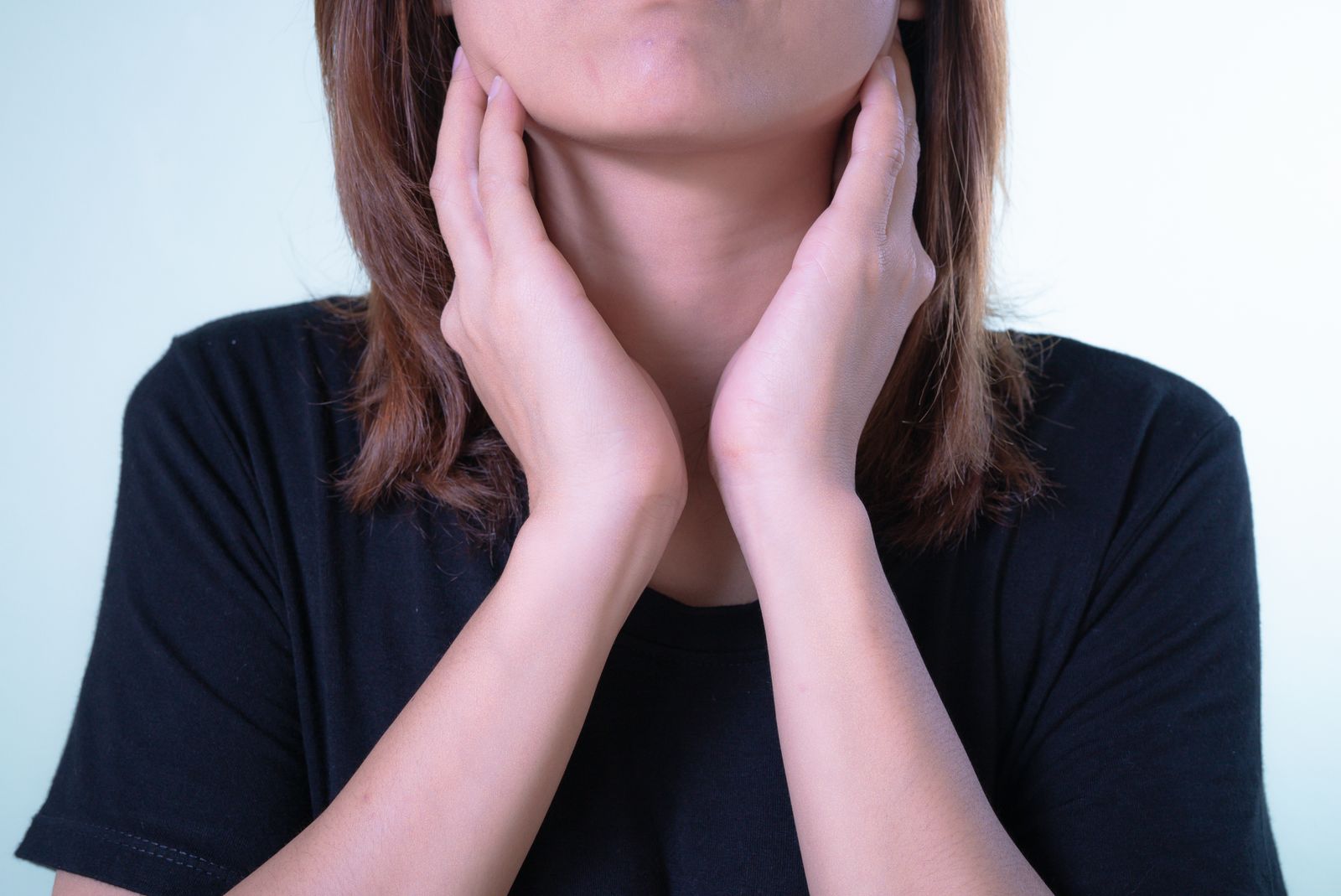
Cover image source: Pexels (photo by Picas Joe)
🌿 A gentle note from us
The practices shared here are rooted in Traditional Chinese Medicine traditions that have been passed down for thousands of years. We share them as educational resources — not as prescriptions or medical advice.
Every body is different. What brings balance to one person may not be right for another. Please listen to your body, go gently, and check with a qualified healthcare provider before trying any new wellness practice — especially if you are pregnant, managing a chronic condition, or have specific health concerns.
Some links on this site are affiliate links. If you choose to purchase through them, we may earn a small commission at no extra cost to you. This helps us continue sharing ancient wisdom for modern wellness. Thank you for your trust.
A racing heart, weight loss despite eating well, broken sleep and feeling wired can look like stress or overwork. NIDDK estimates that about 1 out of 100 Americans aged 12 and older have hyperthyroidism.
A TCM narrative review cites approximately 0.5% for overt plus subclinical hyperthyroidism in iodine-sufficient regions, with roughly 50 cases per 100,000 annually; Graves’ disease predominates there. These estimates describe different populations. TCM offers a traditional framework and growing but limited add-on evidence, not a replacement for treatment.
What Graves’ disease and hyperthyroidism actually are
In the autoimmune disorder Graves’ disease, the immune system produces thyroid-stimulating immunoglobulin, or TSI. This antibody mimics thyroid-stimulating hormone, TSH, driving excess hormone production. Other causes include toxic nodules, thyroiditis, iodine overload, excess thyroid hormone medicine and a non-cancerous pituitary tumour. Overactive nodules occur more often where dietary iodine is low.
The narrative review’s diagnostic outline starts with suppressed TSH below 0.4 mU/L, followed by free thyroid hormones FT4 and FT3. Elevated FT4 indicates thyrotoxicosis; normal FT4 with elevated FT3 indicates T3 toxicosis; normal FT4 and FT3 with suppressed TSH indicates subclinical hyperthyroidism. TSH receptor antibodies, TRAb, support Graves’ diagnosis. Radioactive iodine uptake, thyroid scanning and Doppler flow can clarify the cause. The review cautions against transferring findings between Graves’ disease, nodular goiter and thyroiditis.
Why a fast thyroid is not just a fast metabolism
Untreated hyperthyroidism can cause arrhythmias, including atrial fibrillation, with risks of clots, stroke and heart failure. Other complications include muscle problems, menstrual and fertility problems, eye disease and osteoporosis; our bone-health guide provides related context. In older adults, symptoms can resemble depression or dementia.
A 2026 treatment review reports relapse in 37%–76% after normal thyroid function on a first antithyroid-drug course. Low-dose treatment beyond 2 years improves relapse rates compared with conventional 12–18 months, although roughly one-fifth experience adverse effects with long-term treatment. Duration needs individual discussion.
How TCM traditionally frames a fast thyroid
Traditional accounts classify goiter as “ying bing”, involving emotional injury, yin deficiency, qi stagnation, phlegm accumulation and transformation into fire. Labels include liver qi stagnation with fire, yin deficiency with empty heat, qi-and-yin deficiency and phlegm-fire. A modern view emphasises exuberant liver fire, phlegm and blood stasis, with herbs such as Prunella vulgaris.
These labels describe presentations; they cannot measure FT4, TRAb or an overactive nodule. Blood tests remain necessary, and conceptual parallels are not validated biological equivalence. Stress also appears in conventional accounts: NIDDK recognises stressful life events as eye-disease triggers. That does not make Graves’ disease your fault.
What the herb and acupuncture research actually shows
Herbal formulas added to methimazole
A 2026 network meta-analysis included 15 randomised trials, 1,317 patients and 14 TCM-plus-methimazole regimens. It reported potential advantages for thyroid indices and selected antibodies. SUCRA values rank interventions; they are not percentages of patients cured. The scope was short-term, newly diagnosed, overt Graves’ hyperthyroidism, not long-term remission or relapse. Incomplete, heterogeneous adverse-event reporting limited safety conclusions.
| Outcome | Highest-ranked addition to methimazole | SUCRA |
|---|---|---|
| Lower FT3 | Modified Huagan Decoction | 93.4% |
| Lower FT4 | Modified Xiaoyao Powder | 97.3% |
| Regulate TSH | Xiaoyao Powder | 96.3% |
| Lower TRAb | Modified Huagan Decoction | 88.2% |
| Lower TPOAb | Huotan Jiangni Formula | 100% |
The same question asked earlier
A 2024 network meta-analysis included 35 articles and 2,828 patients. Odds ratios for the authors’ “curative effect” outcome versus Western medicine alone were Yinjia Pellet 8.4 (95% CI 1.9–65), Tripterygium wilfordii 6.1 (1.5–33), Bailing Capsule 5.3 (1.9–17), Jiakangling Capsule 4.0 (1.3–16), and Prunella vulgaris oral liquid 3.7 (1.0–19). This outcome does not establish cure. Top-ranked interventions did not differ significantly in the league table. Evidence was low quality: most studies were unregistered, allocation concealment and blinding were undescribed, all reports were Chinese-language, dosage forms varied, and follow-up was usually absent.
A stronger single trial, with important limits
The Pingkang granules trial randomised 186 patients across five centres, double-blind, for 12 weeks: methimazole plus placebo, methimazole plus Pingkang, or placebo plus Pingkang. The full analysis included 150 patients. All arms reduced FT3 and FT4; combination therapy reduced TRAb (p = 0.0014). Methimazole-alone thyroid volume increased at week 12 (p = 0.0370). Pingkang also improved ThyPRO39 quality-of-life scores and reduced superior thyroid artery peak systolic velocity. The herb-only arm, in newly diagnosed patients over this short period, does not establish replacement of antithyroid drugs.
An iodine-rich classical formula
A Haizao Yuhu Decoction study enrolled 198 patients; matching left 54 per group for 12 weeks. Combination versus methimazole-alone declines at week 4 were FT4 16.67 [7.64, 24.43] versus 9.82 [3.49, 19.02] pmol/L (p = 0.018), and FT3 5.32 [3.10, 10.33] versus 3.46 [1.16, 7.63] pmol/L (p = 0.043). Cumulative methimazole doses were 814.20 [600.00, 1050.00] versus 1007.10 [782.10, 1125.00] mg (p = 0.004); adverse events were 5.56% (3/54) versus 18.52% (10/54), p = 0.038. Treatment reflected clinician judgement and patient preference. This prospective observational study remains vulnerable to residual confounding despite matching; it cannot prove benefit.
The Cochrane position and acupuncture evidence
The 2007 Cochrane review found 13 trials with 1,770 participants, all low quality. Possible add-on benefits did not justify recommending any formula; mortality, quality of life, economic outcomes and compliance were unexamined. An acupuncture overview covered 29 projects and 1,757 patients; only 11 studies (37%) were randomised trials. Reported symptom and biomarker improvements require better research.
The TCM review’s conclusion is adjunctive potential alongside antithyroid drugs, absent robust monotherapy evidence and low overall certainty. Drug effects, dose adjustments, adherence and regression to the mean can explain apparent improvements.
The iodine question: why a classical goiter formula is not automatically right for Graves’ disease
NIDDK warns that kelp, dulse, other seaweeds and iodine supplements can worsen hyperthyroidism. Haizao Yuhu Decoction includes 12 g Sargassum and 18 g Laminaria and is iodine-rich. Its proposed Wolff–Chaikoff rationale involves temporary inhibition of hormone synthesis; escape can allow recurrence or deterioration.
A goiter formula considered in iodine deficiency is not automatically suitable for autoimmune Graves’ disease in an iodine-sufficient setting. Disclose prescribed formulas, seaweed foods, kelp supplements, iodine-containing cough syrups and multivitamins. Check iodine exposure and monitoring with your clinician rather than changing a prescribed formula alone.
What carries the strongest evidence today
NIDDK’s treatment guidance describes methimazole as the usual antithyroid medicine; propylthiouracil is often used in the first 3 months of pregnancy. Normalisation takes weeks to months, with about 1–2 years’ average treatment, sometimes longer. Medicines are not a permanent cure.
Contact your doctor right away for rash, itching, easy bruising, fatigue or weakness, appetite loss, dull abdominal pain, jaundice, fever, chills or constant sore throat while taking these drugs. Rare severe white-blood-cell reduction and liver failure make these warnings important. The 2026 analysis also lists agranulocytosis, fever, rashes, urticaria, arthralgia and drug-induced liver injury.
Radioiodine leads to hypothyroidism in almost everyone, generally easier to manage; see the hypothyroidism counterpart. Surgery requires antithyroid preparation to prevent thyroid storm.
Eye care needs its own plan
The ATA reports eye symptoms in about one in three people with Graves’, usually within the first year and usually mild. StatPearls gives 25% to 50% across cases; eyelid retraction is the commonest sign. Smoking, including secondhand exposure, increases risk.
The 2016 European guidelines recommend artificial tears, ointments, dark glasses, smoking cessation and thyroid control. They recommend a clinician-directed 6-month selenium course for mild disease and high-dose intravenous glucocorticoids for moderate-to-severe active disease. These are dated recommendations requiring specialist application. Teprotumumab became the first specifically approved drug for thyroid eye disease; its 2020 FDA label warns about infusion reactions, inflammatory bowel disease exacerbation and hyperglycaemia. Our TCM eye-health guide offers complementary context.
Acupressure at home: comfort, not thyroid control
No study cited here tested self-applied acupressure for hyperthyroidism; there is no evidence here that it changes FT4, FT3 or TRAb. Feeling calmer does not show your thyroid slowed down.
If your clinician has identified appropriate points, optionally use light fingertip pressure at HT7, PC6, SP6, ST36 and LV3 for 20–30 seconds, then release, once daily. Stop if anything hurts. Do not guess locations, self-treat SP6 during pregnancy, or press the front of the neck or a goiter. Avoid strong neck pressure.
Use sleep acupressure guidance as comfort support; sleep hygiene and a consistent bedtime may help sleeplessness. Keep food supportive, without iodine-heavy remedies. Weight loss despite eating more warrants investigation, not celebration as diet success; our weight-management guide is background, not a response to unexplained loss.
When to see a doctor
Use ATA symptom guidance, urgent eye warnings and NIDDK drug warnings to act promptly:
- Seek emergency care for chest pain, breathlessness, or fever with agitation, confusion and a racing heart; the latter can signal thyroid storm.
- Arrange prompt assessment for rapid or irregular heartbeat, unexplained weight loss, tremor, enlarging neck or trouble swallowing.
- Report bulging eyes or double vision. Colour-vision changes, visual-field loss or inability to close the eyelids require immediate attention.
- Contact the doctor right away for any antithyroid-drug warning symptoms listed above.
- Discuss pregnancy planning or the first trimester promptly with your prescriber.
- Have new apathy, low mood or confusion in older adults assessed; hyperthyroidism can be overlooked.
Herb and needle safety
NCCIH reports undeclared drugs, heavy metals, pesticides and misidentified ingredients in some products; herbs can interact with medicines. Acupuncture complications are uncommonly serious, but improper technique or nonsterile needles can cause infection or organ injury. Choose a qualified practitioner using sterile, single-use needles.
Antithyroid drugs and some herbal formulas can affect the liver. Coordinate recommended monitoring: thyroid tests, TRAb when indicated, liver function, complete blood count, pregnancy status and iodine exposure. Document every herbal product.
A practical next step
Bring every herbal formula, supplement, seaweed product and iodine source to your endocrinologist. Prepare using ATA pages on hyperthyroidism and thyroid eye disease, NIDDK pages on overactive thyroid and Graves’ disease, and NCCIH’s TCM overview. Agree on monitoring together rather than deciding alone.
TCM approaches here are complementary; they must not delay diagnosis or replace antithyroid drugs, radioiodine, surgery, or prescribed eye-disease care.