High Blood Pressure, a TCM View: Calming "Liver Yang" With Diet & Lifestyle
Your jaw is tight, your temples throb by mid-afternoon, and the smallest delay makes you snap. You check your blood pressure at the pharmacy and it is higher than you expected — again. If that sounds familiar, traditional Chinese medicine (TCM) has a very specific way of describing what is happening: your liver yang is rising (肝陽上亢, gān yáng shàng kàng), and it has been rising for a while.
High blood pressure (hypertension) affects roughly 1.3 billion adults worldwide, according to the World Health Organization — and with World Heart Day approaching on September 29, it is a good moment to look at cardiovascular health from every angle. This guide explains how TCM understands high blood pressure as a pattern of disharmony rather than a number, and what you can do about it with calming foods, daily habits, and three well-known acupressure points — always alongside, never instead of, your doctor’s care.
What TCM Means by “Liver Yang Rising”
Western medicine measures blood pressure as force against artery walls. TCM asks a different question: what is the state of the person behind the reading? In the TCM model, the Liver (肝) governs the smooth, even flow of qi — energy — through the body. Everything about the Liver is movement and momentum: planning, decision-making, and the emotion of anger.
Yang is the active, warming, rising force in the body, like the flame of a lamp. Normally the Liver’s yang stays anchored by yin — the cool, moist, stilling substance, like the oil in that lamp. When yin runs low or yang flares up, the flame leaps beyond the wick: qi surges upward toward the head, and the vessels feel that surge as tension. TCM calls this pattern gān yáng shàng kàng — liver yang rising — and it is one of the most frequently described patterns behind high blood pressure, headaches, and irritability in the Chinese medical classics (Me & Qi pattern overview).
A Crucial Clarification: It Is Not Your Anatomical Liver
When TCM says “liver,” it is not pointing at the organ that filters alcohol in the right upper abdomen. The TCM Liver is a functional system: a set of jobs — smooth circulation of qi, storage of blood, regulation of mood and tendons — mapped onto channels that run through the body. You can have “liver yang rising” with perfectly normal liver enzyme blood tests. Thinking of it as “the tension-regulation system” is closer to the mark.
Signs the Pattern Fits You
Liver yang rising describes a cluster of experiences that often travel together, especially under stress:
- Irritability — a short fuse, feeling wound up, anger that comes quickly and passes quickly
- Headaches — tightness or throbbing at the temples or the crown of the head
- Dizziness — lightheadedness, sometimes worse with anger or fatigue
- Tinnitus — ringing or buzzing in the ears
- A flushed face — cheeks or ears that feel hot and red, especially after frustration
- Poor sleep — difficulty falling asleep, vivid dreams, or waking in the small hours
These are also, of course, classic signs of stress. In the TCM view that is no coincidence: stress is the engine that stokes liver yang.
What Fans the Flame: Triggers to Know
Certain habits feed liver yang directly. The big ones in modern life:
- Stress and held-in anger — the strongest trigger of all
- Overwork without recovery — long hours deplete the yin that anchors the yang
- Alcohol — heating and qi-agitating, a well-known driver of blood-pressure spikes
- Late nights — sleep is when yin rebuilds; skipping it drains the oil from the lamp
- Rich, greasy, salty food — which TCM reads as creating damp-heat that pushes yang upward
Notice the theme: this pattern is not something you catch. It is something you stoke — usually for years, one deadline and one late night at a time. That is good news, because it means daily choices genuinely matter.
Calming-Liver Foods: Cool the Flame From the Kitchen
TCM food therapy for liver yang is all about cooling, moistening, and settling. These are ordinary foods, used in food amounts — no exotic preparations needed.
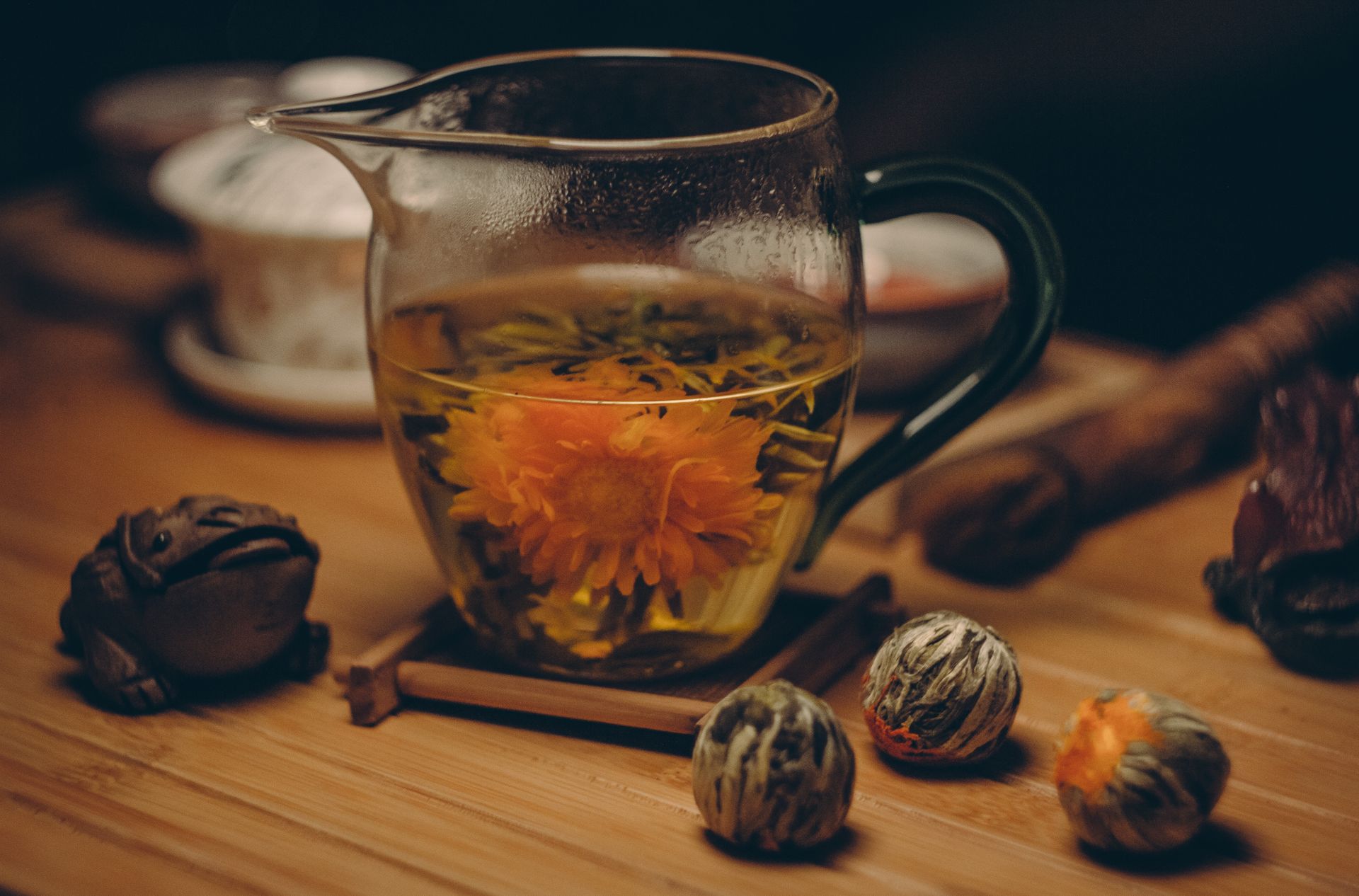
Chrysanthemum tea (菊花茶, júhuā chá). The signature drink for liver yang. Chrysanthemum is cool and clears the head; Chinese households reach for it when eyes feel hot, the head is heavy, or anger is simmering. Steep four to six dried flower heads in hot water for five minutes and sip it through the afternoon. It has a light, honeyed aroma — no sugar needed.
Goji berries (枸杞, gǒuqǐ). The yin-nourishing counterweight: goji supports the Liver and Kidneys, replenishing the oil that anchors the flame. A small handful (about 10–15 g) in the chrysanthemum cup, stirred into congee, or eaten like raisins.
Lotus seeds (蓮子, liánzǐ). Calming and settling — the classic partner for a restless, overactive mind. Simmer them into a porridge or soup; they are neutral and gentle enough for daily eating.
Celery (芹菜, qíncài). In Chinese food therapy celery is one of the most traditional “lower the pressure” vegetables — cool, clearing, and said to guide excess heat downward. Chop it into soups and stir-fries a few times a week, or drink fresh celery juice with a little apple for sweetness.
Mung beans (綠豆, lǜdòu). The classic summer coolant, used here to clear heat from the system. Mung bean soup — whole beans simmered until soft, lightly sweetened, served warm or at room temperature — is a traditional household remedy for a hot, irritable, headachy state. Keep it occasional, not daily: mung bean is strongly cooling and can be too much for a weak stomach.
Green tea (綠茶). Lighter than black tea and gently cooling; a cup in the morning supports the same clearing action. If caffeine makes you jittery (jitter is yang energy!), switch to chrysanthemum.
Foods to Ease Off
Just as important as what to add is what to reduce:
- Excess salt — the most consistent dietary driver of high readings; watch hidden salt in sauces, pickles, and processed food, not just the shaker
- Greasy, fried food — heavy damp-heat that obstructs the vessels and agitates yang
- Alcohol — heating and pressure-raising; cut it right back, especially in the evening
- Excess coffee and spicy food — both stoke yang in people who are already “hot-headed”
None of this must be perfect. The direction matters more than the perfection: your diet is cooling down, not heating up.
Lifestyle: Movement, Breath, Sleep, and Anger
Food alone rarely settles liver yang — the lifestyle that created the pattern is part of the remedy.
Gentle, regular movement. This is where TCM and evidence-based medicine agree most strongly. A systematic review of tai chi for blood pressure found that the majority of studies reported reductions in both systolic and diastolic readings (PubMed), and tai chi, qi gong, and brisk walking all suit the TCM goal: smooth circulation without exhausting the body. Twenty to thirty minutes a day, at a pace where you could still hold a conversation, is the sweet spot.
Breathing practice. When anger or stress flares, the qi rises with it. Slow, extended exhalation physically pulls the nervous system toward calm. Try the “4-7-8” pattern — inhale for four counts, hold for seven, exhale slowly for eight — for five rounds when you feel your shoulders creeping up.
A real sleep routine. Late nights deplete yin, and yin is the anchor that holds yang down. Aim to be in bed by 11 p.m. and treat the hour before as wind-down time: dim lights, no work or scrolling, perhaps a foot soak or the evening sleep ritual we describe elsewhere on this site.
Managing anger — the TCM way. Anger is not the enemy; suppressed anger and explosive anger both feed liver yang. The TCM prescription is to let qi move: a walk, a loud exhale, journaling, talking it through — anything that lets the pressure out in a contained way rather than bottling it or blowing up.
Acupressure to Settle Rising Qi
Acupressure is a gentle, needle-free way to encourage qi to move downward and calm. Sit comfortably, breathe slowly, and press each point with a fingertip or thumb in slow circles for one to two minutes per side, once or twice a day. The feeling should be pleasantly tender (“achy-sore”), never sharp.
LR-3, Taichong (太衝) — “Great Surge.” The master point for calming the Liver and is used for nearly every liver pattern. Find it on the top of the foot in the hollow between the big toe and second toe bones, about two finger-widths back from the web of the toes; slide your finger toward the ankle until you feel the deepest dip. Press firmly and slowly — this is the point that “sends the rising yang back down.”
GB-20, Fengchi (風池) — “Wind Pool.” The pair of hollows at the base of the skull, between the two vertical neck muscles — run your fingers up the back of the neck until they fall into the depressions just below the skull bone. This is the classic point for tension headaches, temple pressure, and dizziness, and it feels wonderful after a stressful day. Press upward and slightly inward with both thumbs for a minute, breathing slowly.
LI-11, Quchi (曲池) — “Crooked Pond.” Found at the outer end of the elbow crease: bend your arm and the point sits at the crease’s outer edge, in the small depression in front of the elbow bone. LI-11 clears heat from the whole body — the TCM “cooling” point — and is traditionally used where heat and pressure run high. Note: LI-11 is conventionally avoided during pregnancy, so skip this one if you are pregnant.
One technique you may read about — ear-apex bleeding to lower pressure dramatically — is a clinical procedure performed by trained practitioners with sterile lancets. It is not a home technique: do not try it yourself.
When to See a Doctor — Please Read This
The most important paragraph in this article: TCM supports and complements medical care for high blood pressure; it never replaces it. If you have been prescribed blood-pressure medication, take it exactly as directed, and never stop or reduce your medication on your own — even if you feel fine, even if home readings look better. Suddenly stopping some blood-pressure drugs can cause dangerous spikes.
Think of the dietary and lifestyle care in this article as working with your treatment plan: discuss it with your clinician, ask your pharmacist about herb–drug interactions, and tell your doctor about any supplements you take. And see a doctor promptly if you experience:
- A home reading consistently at or above 180/110 mmHg
- Headache or dizziness that is sudden, severe, or different from your usual pattern
- Chest pain, palpitations, breathlessness, or fainting
- Sudden weakness, numbness, difficulty speaking, or vision changes — these can signal a stroke and need urgent care, not tea
If you have not had your blood pressure checked in the past year, book a check-up — knowing your numbers is the foundation everything else builds on.
Key Takeaways
- TCM sees high blood pressure as a pattern, most often liver yang rising (肝陽上亢) — qi and heat surging upward when yin can no longer anchor yang; the TCM “liver” is a functional system, not the anatomical organ.
- Classic signs: irritability, temple or crown headaches, dizziness, tinnitus, flushed face, poor sleep — all stoked by stress, anger, overwork, alcohol, and late nights.
- Calm the flame with chrysanthemum tea, goji berries, lotus seed, celery, mung bean soup, and green tea; ease off excess salt, greasy food, alcohol, and excess caffeine.
- Move gently and daily (tai chi, qi gong, walking), practice slow-exhalation breathing, protect sleep before 11 p.m., and let anger out in contained ways.
- Press LR-3 Taichong, GB-20 Fengchi, and LI-11 Quchi (skip LI-11 in pregnancy) for one to two minutes daily; ear-apex bleeding is a clinical technique, not a home remedy.
- Above all: keep taking prescribed medication, never stop it on your own, and treat TCM as complementary care — with urgent symptoms, see a doctor immediately.
Further reading: the WHO hypertension fact sheet, the Me & Qi pattern guide to liver yang rising, this systematic review of tai chi and blood pressure on PubMed, and the US National Center for Complementary and Integrative Health’s pages on traditional Chinese medicine and acupuncture. You may also enjoy our guides to tai chi for beginners and qi gong basics.
🌿 A gentle note from us
The practices shared here are rooted in Traditional Chinese Medicine traditions that have been passed down for thousands of years. We share them as educational resources — not as prescriptions or medical advice.
Every body is different. What brings balance to one person may not be right for another. Please listen to your body, go gently, and check with a qualified healthcare provider before trying any new wellness practice — especially if you are pregnant, managing a chronic condition, or have specific health concerns.
Some links on this site are affiliate links. If you choose to purchase through them, we may earn a small commission at no extra cost to you. This helps us continue sharing ancient wisdom for modern wellness. Thank you for your trust.
Health & Safety Notes
- This content is educational wellness information, not medical advice or diagnosis.
- Suitable for: general adult self-care reference.
- Consult a qualified practitioner before use if you are pregnant, nursing, have a chronic condition, take medication, or treat children.
- Red flags — seek medical care if: symptoms are severe, worsening, or persistent; sudden or unexplained pain; fever; numbness/weakness.
- Information reviewed: 2026-09. Sources: traditional Chinese medicine references and general wellness literature.