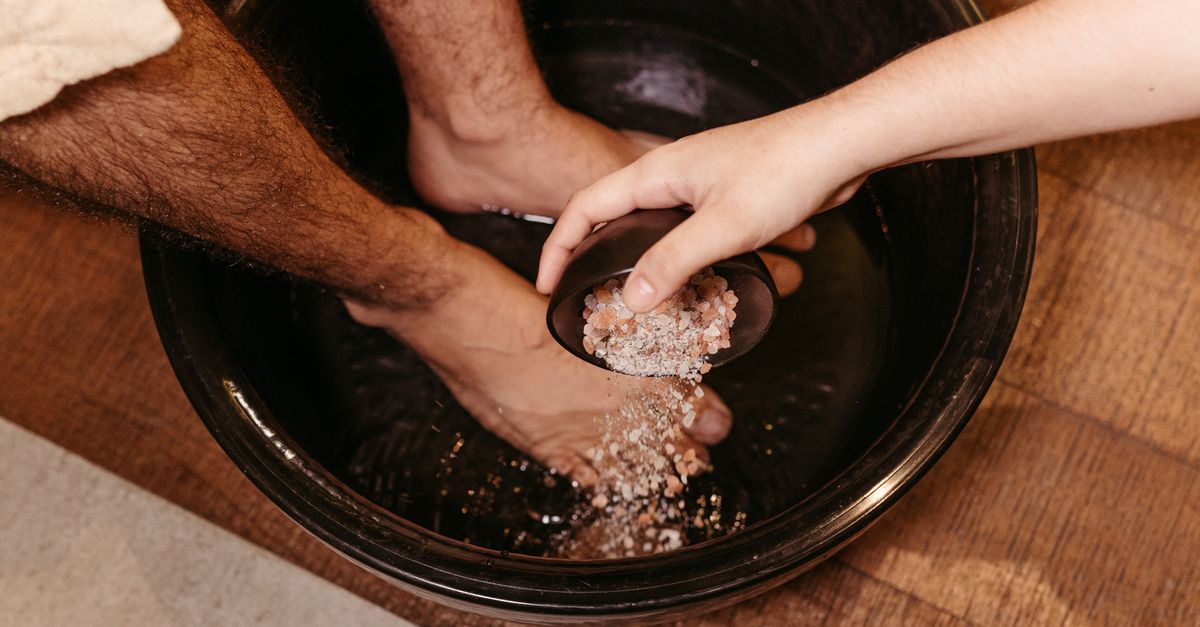
Chinese Herbal Foot Soaks: A TCM Guide to Relaxation, Circulation, and Whole-Body Wellness
Medical Disclaimer: This article is for informational and educational purposes only. It does not constitute medical advice and is not a substitute for professional medical consultation, diagnosis, or treatment. Always consult a qualified healthcare provider before incorporating herbal remedies into your routine, especially if you are pregnant, nursing, taking medication, have diabetes, neuropathy, open wounds, or an existing health condition.
Introduction
After a long day on your feet — whether you’ve been standing at work, running errands, or just dealing with the accumulated tension of modern life — there’s something almost magical about sinking your feet into a basin of warm, herb-infused water. In Traditional Chinese Medicine (TCM), this isn’t just a feel-good ritual. It’s a therapeutic practice with roots stretching back over 2,000 years.
Chinese herbal foot soaking (中药泡脚, zhōng yào pào jiǎo) is one of the most accessible entry points into TCM self-care. It requires no special training, no complicated techniques, and the equipment can be as simple as a basin and hot water. Yet the benefits — improved circulation, deeper relaxation, better sleep, and whole-body warmth — can be profound.
In this guide, we cover everything you need to know: the TCM theory behind foot soaks, the best herbs for different needs, step-by-step instructions for the perfect soak, and equipment recommendations to elevate your routine.
Why Feet? The TCM Theory Behind Foot Soaking
In TCM, the feet are far more than just the endpoints of your legs. They’re considered a map of the entire body.
The Six Major Meridians
Six of the body’s twelve primary meridians either begin or end in the feet:
| Meridian | Starts/Ends | Associated Organ | Key Function |
|---|---|---|---|
| Kidney | Starts at sole (KI-1) | Kidneys | Foundation of vitality |
| Spleen | Starts at big toe | Spleen | Digestion, energy production |
| Liver | Starts at big toe | Liver | Smooth flow of qi, detoxification |
| Stomach | Ends at 2nd toe | Stomach | Digestion, nutrient absorption |
| Gallbladder | Ends at 4th toe | Gallbladder | Decision-making, courage |
| Urinary Bladder | Ends at little toe | Bladder | Fluid metabolism |
Because so many meridians converge in the feet, a warm herbal soak can influence multiple organ systems simultaneously. This is why TCM practitioners often say: “Soak your feet, and your whole body benefits.”
The KI-1 Yongquan Point — Your Body’s Grounding Switch
The most famous acupressure point on the foot is KI-1 (Yongquan, 涌泉), located in the depression at the center of the sole, roughly at the junction of the front third and back two-thirds of the foot. In TCM theory, this is where the Kidney meridian begins — and since the Kidneys are considered the root of your body’s vital energy (qi), stimulating KI-1 is believed to:
- Ground excess energy from the head downward
- Calm an overactive mind (especially helpful before sleep)
- Support the body’s natural energy reserves
- Promote a sense of stability and centeredness
Warm water alone stimulates KI-1. Adding herbs amplifies the effect.
6 Essential TCM Herbs for Foot Soaks
Different herbs serve different purposes. Here are six of the most commonly used, organized by what they’re best for.
1. Mugwort (艾草, Ài Cǎo) — The All-Rounder
Mugwort is the most famous foot-soak herb in Chinese culture. It’s warm in nature and used extensively for:
- Warming the body — ideal for people who often feel cold, especially in winter
- Promoting circulation — helps move stagnant blood and qi
- Easing menstrual discomfort — commonly used in postpartum care and period relief
- General relaxation — a gentle, grounding herb suitable for almost everyone
How to use: Add 20–30g of dried mugwort to your foot bath. For convenience, pre-packaged mugwort soak bags are widely available.
2. Ginger (生姜, Shēng Jiāng) — Warming and Invigorating
Fresh ginger is a kitchen staple that doubles as a powerful foot-soak ingredient. Its warming properties make it excellent for:
- Cold hands and feet — ginger drives warmth outward to the extremities
- Early-stage colds — a ginger foot soak at the first sign of chills can help the body fight off external pathogens (in TCM terms, “wind-cold”)
- Muscle aches — ginger’s warming nature helps relax tight muscles
How to use: Slice 30–50g of fresh ginger (no need to peel) and simmer in water for 10 minutes before adding to your foot basin. Alternatively, add the sliced ginger directly to hot water and let it steep.
3. Lavender (薰衣草, Xūn Yī Cǎo) — Calming and Sleep-Promoting
While lavender isn’t a traditional Chinese herb, it’s been widely adopted in modern TCM-inspired wellness for its calming properties. It pairs beautifully with traditional herbs and is ideal for:
- Evening relaxation — lavender signals to the nervous system that it’s time to wind down
- Stress relief — the aroma alone can lower cortisol levels
- Sleep preparation — combines well with mugwort for a pre-bedtime soak
How to use: Add 1–2 tablespoons of dried lavender flowers or 5–8 drops of lavender essential oil to your foot bath.
4. Safflower (红花, Hóng Huā) — For Circulation and Stagnation
Safflower is a traditional TCM herb known for its blood-moving properties. It’s used in foot soaks specifically for:
- Poor circulation — helps blood flow to the extremities
- Cold feet that don’t warm up easily — safflower is one of the stronger warming herbs
- Recovery after prolonged standing — helps disperse pooled blood in the feet and lower legs
How to use: Add 5–10g of dried safflower to your soak. Note: Safflower should be avoided during pregnancy and by those on blood-thinning medications. Always consult a qualified practitioner if unsure.
5. Chinese Angelica Root (当归, Dāng Guī) — Nourishing and Blood-Building
Dang Gui is one of the most revered herbs in TCM, particularly for women’s health. In foot soaks, it’s valued for:
- Nourishing blood — supports the body’s blood-building capacity
- Moisturizing dry, cracked heels — Dang Gui has skin-nourishing properties
- Menstrual cycle support — a warm Dang Gui foot soak can be comforting during menstruation
How to use: Add 10–15g of dried Dang Gui slices. For best results, simmer in water for 15 minutes before adding to your foot basin.
6. Epsom Salt (泻盐, Xiè Yán) — The Modern Addition
While not a Chinese herb, Epsom salt (magnesium sulfate) is a popular add-in for TCM-inspired foot soaks. It provides:
- Muscle relaxation — magnesium is absorbed through the skin and helps relax tight muscles
- Foot odor control — Epsom salt has mild antimicrobial properties
- Softening calluses — makes it easier to exfoliate rough skin after soaking
How to use: Add 1/2 to 1 cup of Epsom salt to your foot bath. It pairs well with all the herbs listed above.
How to Do a TCM Herbal Foot Soak: Step-by-Step
What You’ll Need
- A foot basin or foot spa (deep enough to cover your ankles, ideally up to mid-calf)
- Hot water (40–43°C / 104–109°F is ideal)
- Your chosen herb(s)
- A towel
- Optional: a kettle of extra hot water nearby to top up the temperature
Step-by-Step Instructions
Step 1: Prepare the herbs. If using loose dried herbs, place them in a muslin bag, cheesecloth, or a reusable tea infuser. This prevents loose debris from floating in the water. Pre-packaged herbal soak bags are the most convenient option.
Step 2: Fill your basin. Start with water at around 40–43°C (104–109°F). Test with your wrist or elbow — it should feel comfortably hot but not scalding. If you have diabetes or reduced sensation in your feet, use cooler water (around 37°C / 98°F) and always test with your hand first.
Step 3: Add the herbs. Place your herb bag in the water and let it steep for 2–3 minutes before putting your feet in.
Step 4: Soak for 15–25 minutes. This is the sweet spot. Less than 15 minutes doesn’t give the herbs enough time to work; more than 30 minutes can over-tire the body and may cause excessive sweating.
Step 5: Keep the water warm. Have a kettle of hot water nearby. When the foot bath starts to cool, add a splash to maintain the temperature. The goal is to keep the water consistently warm throughout the soak.
Step 6: Dry thoroughly. After soaking, pat your feet completely dry — especially between the toes. Dampness trapped between toes can lead to fungal issues.
Step 7: Rest for 10–15 minutes. In TCM, it’s recommended to sit quietly for a short while after a foot soak. Your body has been stimulated and needs time to integrate the effects. Avoid immediately jumping into cold environments or strenuous activity.
Best Time to Soak
The ideal time for a foot soak is 60–90 minutes before bed. This gives your body time to cool down naturally after the soak (your core temperature rises slightly during the soak, then drops — and that temperature drop is a powerful sleep signal).
Avoid soaking immediately after a heavy meal. Wait at least 30–60 minutes after eating.
Equipment: Choosing the Right Foot Spa Basin
While any basin can work, the right equipment makes the ritual more enjoyable and effective. Here’s what to consider:
Basic Basin
A simple deep basin or bucket works perfectly fine. Look for one that’s:
- Deep enough to submerge your ankles (at least 20cm / 8 inches)
- Wide enough to fit both feet comfortably
- Sturdy and stable
Electric Foot Spa with Heat
An electric foot spa maintains a consistent temperature — no need to keep topping up with hot water. Key features to look for:
- Temperature control — adjustable heat settings between 35–48°C
- Bubble/massage function — adds a gentle physical massage alongside the herbal soak
- Removable herb compartment — some models include a built-in compartment for herbs or salts
- Easy to clean — smooth surfaces without hard-to-reach crevices
Foldable Foot Spa Basins
For those short on storage space, collapsible silicone foot basins are a practical choice. They’re lightweight, portable, and easy to store — though they don’t offer heating functionality.
Wooden Foot Buckets
In traditional Chinese households, wooden buckets (usually made of cedar or cypress) are preferred because they retain heat naturally and don’t react with herbs. The wood also adds a subtle, pleasant aroma to the experience. The downside: they’re heavy and require more maintenance to prevent cracking.
Pre-Made Herbal Foot Soak Packets
If sourcing and blending individual herbs sounds overwhelming, pre-made packets are an excellent alternative. When shopping, look for:
- Clear ingredient lists — you should know exactly what’s in the packet
- No artificial fragrances — synthetic perfumes can irritate skin and don’t provide therapeutic benefits
- Individually wrapped packets — they stay fresh longer and are convenient for travel
- Mugwort-based blends — mugwort is the gold standard for general-purpose foot soaks
Many Chinese supermarkets, herbal shops, and online marketplaces carry a variety of foot-soak packets at accessible prices. Popular formulations include mugwort-ginger blends, mugwort-safflower blends, and calming lavender-chamomile combinations.
Who Should Be Cautious
While herbal foot soaks are generally safe, certain people should take extra precautions or avoid them:
- Diabetes or neuropathy: Reduced sensation in the feet means you may not feel if the water is too hot. Always test temperature with your hand and use cooler water (max 37°C).
- Open wounds, cuts, or active infections on the feet: Soaking can introduce bacteria and slow the body’s natural recovery process.
- Pregnancy: Some herbs (notably safflower) are contraindicated during pregnancy. Stick to plain warm water or consult a qualified TCM practitioner.
- Varicose veins or deep vein thrombosis: Very hot water can dilate blood vessels and may worsen symptoms. Use lukewarm water and keep soaks brief (under 10 minutes).
- Fever or acute illness: Foot soaks are warming by nature. During a high fever, they may be counterproductive.
- Known herb allergies: Always check ingredients before using any herbal preparation.
If you have any underlying health condition, consult with your healthcare provider before starting a herbal foot soak routine.
A Simple Evening Routine
Here’s a template for incorporating a TCM herbal foot soak into your evening:
- Set up (5 min): Fill your basin, add herbs, grab a book or podcast
- Soak (20 min): Let the warmth and herbs do their work. This is screen-free time — read, meditate, or simply close your eyes
- Dry and moisturize (3 min): Pat feet dry, apply a nourishing foot cream
- Brief acupressure (2 min): While moisturizing, press KI-1 (center of sole) for 30 seconds on each foot
- Rest (10 min): Sit quietly before starting your bedtime routine
Consistency matters more than duration. A 20-minute soak three times a week is better than a marathon session once a month.
Conclusion
Chinese herbal foot soaking is one of TCM’s simplest and most rewarding self-care practices. It asks very little of you — a basin, some hot water, a handful of herbs, and 20 minutes of quiet time — and gives back relaxation, warmth, and a sense of grounded well-being that lingers long after you’ve dried your feet.
Whether you reach for a classic mugwort soak to warm up on a cold evening, a lavender blend to ease into sleep, or a ginger bath at the first hint of a chill, the ritual itself becomes a small anchor in your day — a signal to your body and mind that it’s time to slow down.
Your feet carry you through every day. A warm herbal soak is a simple way to say thank you.