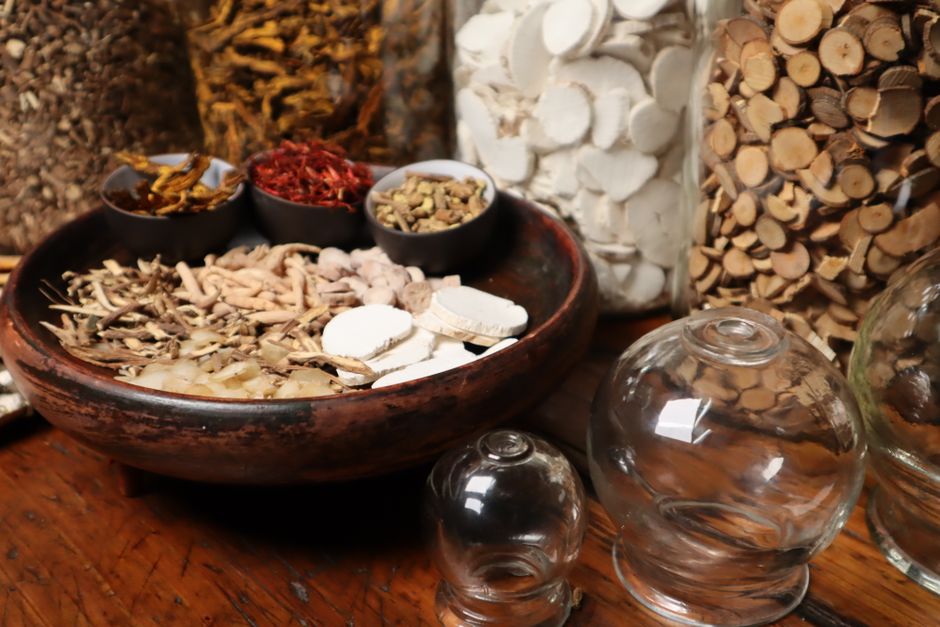
TCM Wellness
Feeling constantly drained? Discover the most effective Traditional Chinese Medicine energy herbs — from ginseng to cordyceps — and learn how to use them for natural, sustained vitality without the crash.

TCM Energy Tonics: Ginseng, Cordyceps & Adaptogenic Herbs for Natural Vitality

· TCM Wellness Team
Educational content only. Not medical advice. Consult a healthcare professional before starting any new wellness practice. Some links are affiliate links.

Medical Disclaimer: This article is for informational and educational purposes only. It does not constitute medical advice and is not a substitute for professional medical consultation, diagnosis, or treatment. Statements regarding dietary supplements have not been evaluated by the FDA. These products are not intended to diagnose, treat, cure, or prevent any disease. Always consult a qualified healthcare provider before incorporating herbs or supplements into your routine, especially if you are pregnant, nursing, taking medication, or have an existing health condition.


Introduction

It is 3 PM. Your third coffee of the day sits cold on the desk. Your eyelids feel heavier than they should, and the idea of mustering focus for another meeting feels almost impossible. You are not alone — millions of people ride this daily energy rollercoaster, reaching for caffeine, sugar, or worse to push through the afternoon slump.

Traditional Chinese Medicine (TCM) has approached energy differently for over two thousand years. Instead of quick fixes that borrow energy from tomorrow, TCM asks a deeper question: why is your energy low in the first place?

The TCM answer often comes down to Qi (氣) — your body’s vital energy — and the herbs that help replenish it. These are not stimulants. They are tonics: herbs traditionally used to nourish, restore, and build sustainable vitality over time.

In this guide, we walk through the most effective TCM energy herbs, how they work, how to use them, and what to look for when choosing quality products.


Understanding Qi Deficiency: Why Your Energy Tank Feels Empty

Before reaching for herbs, it helps to understand what TCM practitioners mean when they talk about low energy. The term is Qi Deficiency (氣虛), and it describes a pattern rather than a disease.

Common Signs of Qi Deficiency

SymptomWhat It Feels Like
Chronic fatigueTired even after a full night’s sleep; energy that never quite returns to baseline
Weak digestionBloating after meals, loose stools, poor appetite
Shortness of breathGetting winded from mild exertion; sighing frequently
Weak voiceA tendency to speak softly; feeling too tired to talk
Spontaneous sweatingSweating without exertion, especially during the day
Pale complexionFace and tongue appear pale or dull
Frequent illnessCatching every cold that goes around the office

From a TCM perspective, Qi Deficiency often stems from several root causes: chronic overwork, poor diet (too much cold or raw food), insufficient rest, prolonged stress, or recovering from illness. The herbs discussed below are traditionally used to address these patterns — not by forcing energy upward like a stimulant, but by supporting the body’s natural capacity to generate and sustain Qi.

Important: If you experience persistent fatigue, see a healthcare provider to rule out underlying conditions like anemia, thyroid issues, or sleep disorders. Herbal support works alongside medical care, not instead of it.


The Top TCM Energy Herbs

1. Ginseng (人參 / 高麗參 / 花旗參) — The King of Energy Herbs

If TCM energy herbs had a hierarchy, ginseng would sit at the top. Used for over 2,000 years in China and Korea, ginseng is the most famous Qi tonic in the world — and for good reason.

Types of Ginseng:

TypeChinese NameThermal NatureBest For
Asian/Korean Ginseng (Panax ginseng)高麗參WarmDeep fatigue, cold hands/feet, low vitality; traditionally used for those who feel cold and depleted
American Ginseng (Panax quinquefolius)花旗參CoolFatigue with heat signs (dry mouth, irritability); gentler, suitable for warmer climates and constitutions
White Ginseng白參Mildly warmEveryday Qi maintenance; air-dried, less stimulating than red ginseng
Red Ginseng紅參Very warmDeep exhaustion, post-illness recovery; steamed and dried, the most potent form

What the research suggests: Modern studies have explored ginseng’s active compounds — ginsenosides — for their potential effects on physical stamina, cognitive performance, and immune modulation. A 2013 systematic review in the Journal of Ginseng Research noted that ginseng may support physical endurance and mental clarity, though researchers emphasize that results vary by preparation method and dosage.

How TCM practitioners think about it: Ginseng is considered a major Qi tonic (大補元氣) that strengthens the Lung and Spleen meridians. It is traditionally used to support energy, mental focus, and the body’s adaptive capacity — but it is considered too strong for everyday use by healthy people. In TCM, ginseng is a rescue herb for significant depletion, not a daily supplement.

Best for: Deep, prolonged fatigue; post-illness recovery; mental fog; poor cold tolerance.


2. Cordyceps (冬蟲夏草) — The Athlete’s Tonic

Cordyceps is one of the most fascinating substances in the herbal world — technically a fungus that grows on caterpillar larvae in the high-altitude plateaus of Tibet and Qinghai. While wild cordyceps commands astronomical prices (often exceeding $20,000 per kilogram), cultivated Cordyceps militaris offers a far more accessible alternative with a similar phytochemical profile.

How it is traditionally used: In TCM, cordyceps is classified as a dual tonic — it supports both Yin (nourishment, fluids, deep reserves) and Yang (energy, warmth, activity). This makes it unusually versatile. It is traditionally used to:

  • Support lung function and respiratory capacity
  • Enhance physical stamina and athletic performance
  • Contribute to kidney energy (which, in TCM, is the foundation of overall vitality)
  • Support immune function

What the research suggests: Cordyceps contains cordycepin, a bioactive compound that has attracted interest for its potential effects on cellular energy production (ATP) and oxygen utilization. Some small-scale studies have explored whether cordyceps supplementation may support VO₂ max and exercise performance in older adults, though larger trials are still needed.

Best for: Athletes, active individuals, those with respiratory weakness, anyone seeking sustained stamina support.


3. Astragalus (黃耆) — The Daily Qi Guardian

If ginseng is the emergency energy reserve, astragalus is the daily security detail. It is perhaps the most widely used Qi tonic in TCM — appearing in everything from soups to teas to classic herbal formulas.

How it is traditionally used: Astragalus (Astragalus membranaceus) is classified as a Qi tonic that specifically strengthens the Spleen and Lung meridians. It is traditionally associated with:

  • Supporting daily energy and reducing fatigue
  • Strengthening Wei Qi — the body’s defensive energy (read more in our TCM immune health guide)
  • Supporting recovery from frequent illness
  • Promoting wound healing and tissue repair

What makes it different from ginseng: Astragalus is considered gentler and more suitable for daily, long-term use. Where ginseng is like a powerful spotlight, astragalus is more like gradually turning up a dimmer switch. Many TCM practitioners recommend astragalus slices in everyday cooking — add a few slices to soups and stews, remove before eating, and benefit from the slow infusion of Qi-supporting compounds.

What the research suggests: Astragalus contains astragalosides and polysaccharides, compounds studied for their potential immunomodulatory and adaptogenic properties. A 2020 review in Phytotherapy Research noted preliminary evidence for astragalus in supporting immune function and reducing fatigue perception.

Best for: Daily maintenance energy; people who catch frequent colds; those recovering from prolonged stress or illness.


4. Codonopsis (黨參) — The Gentle Alternative

Not everyone can tolerate ginseng’s strength — and not everyone needs to. Enter codonopsis, sometimes called “poor man’s ginseng,” though the nickname undersells its value.

How it is traditionally used: Codonopsis (Codonopsis pilosula) is a milder Qi tonic that shares many of ginseng’s traditional applications but with far less stimulating intensity. It is especially popular for:

  • Mild to moderate fatigue
  • Supporting digestion (Spleen Qi)
  • People who find ginseng too heating or overstimulating
  • Long-term gentle energy support

Key advantage: Codonopsis is considered neutral in thermal nature, meaning it is less likely to cause the overheating sensation that some people experience with ginseng. It is also significantly more affordable, making it a practical choice for daily use.

Best for: Mild energy slumps, digestive weakness, people with heat-sensitive constitutions, budget-conscious daily tonics.


5. Goji Berries (枸杞) — The Blood & Energy Nourisher

Goji berries have achieved superfood status in the West, but in TCM they have been a staple for centuries — not as a trendy smoothie ingredient, but as a specific herb for nourishing both blood and energy.

How they are traditionally used: Goji berries (Lycium barbarum) are classified as a blood and Yin tonic that also supports the Liver and Kidney meridians. The traditional view is that blood and Qi are deeply interconnected — nourish the blood, and energy often follows. Goji is traditionally associated with:

  • Supporting eye health and visual clarity
  • Nourishing dry eyes from prolonged screen use
  • Contributing to overall vitality and healthy aging
  • Supporting kidney and liver function

How to use them: The simplest method is to eat a small handful (10–15 berries) daily. They can be added to tea, oatmeal, soups, or eaten straight as a snack. Their mild sweetness makes them one of the most palatable herbs in the TCM pharmacopoeia.

What the research suggests: Goji berries are rich in zeaxanthin (a carotenoid linked to eye health), polysaccharides, and antioxidants. Observational studies have explored their potential role in supporting vision and overall wellness, particularly in aging populations.

Best for: Eye fatigue from screens, general vitality, healthy aging support, an easy daily addition to any wellness routine.


6. Schisandra (五味子) — The Five-Flavor Adaptogen

If there is one herb that captures the TCM concept of balance, it is schisandra. Its Chinese name — 五味子 (wǔ wèi zǐ, “five-flavor berry”) — comes from the fact that it simultaneously tastes sour, sweet, bitter, pungent, and salty, corresponding to all five TCM elements.

How it is traditionally used: Schisandra (Schisandra chinensis) is classified as an astringent adaptogen — it is believed to help the body “hold onto” its resources rather than leaking energy. In traditional use, it is associated with:

  • Supporting stress resilience and mental clarity
  • Helping the body adapt to physical and mental stress
  • Supporting liver function and detoxification
  • Contributing to skin health and hydration
  • Reducing night sweats and excessive fluid loss

What the research suggests: Schisandra contains schisandrins — lignans studied for their potential hepatoprotective (liver-supporting) and adaptogenic properties. Preliminary research has explored its effects on physical endurance, cognitive function, and stress-induced fatigue, though larger clinical trials are still needed.

Best for: High-stress lifestyles, mental fatigue, people who feel “wired but tired,” those looking for a comprehensive adaptogen.


How to Use TCM Energy Herbs

Teas & Decoctions

The traditional way to take most TCM herbs is as a decoction — simmering the raw herb in water for 20–40 minutes. This extracts both water-soluble and some fat-soluble compounds.

Basic method:

  1. Place 3–9g of sliced herb (ginseng, astragalus, codonopsis) in a pot with 2–3 cups of water
  2. Bring to a boil, then reduce to a gentle simmer
  3. Simmer for 20–30 minutes, strain, and drink
  4. Many herbs can be re-simmered once or twice — the second brew is often gentler

Simpler option: Pre-made herbal tea bags with astragalus, codonopsis, or goji berries are widely available and more convenient for daily use.

Powders & Capsules

For consistency and convenience, powdered extracts in capsule form are the most practical option for many people.

FormProsCons
Whole herbFull spectrum of compounds; traditional preparationTime-consuming; variable potency
Powdered extractConvenient; standardized potency; can add to smoothiesMay taste bitter; shorter shelf life once opened
CapsulesMaximum convenience; precise dosage; no tasteMore expensive per serving; may contain fillers

Cooking with TCM Herbs

One of the most enjoyable ways to incorporate Qi tonics is through food. TCM herbal soups and congees have been part of Chinese cuisine for centuries:

  • Astragalus + chicken soup: Add 3–5 slices of astragalus root to your next chicken soup; remove before serving
  • Goji + congee: Stir a tablespoon of goji berries into rice porridge
  • Codonopsis + bone broth: Simmer codonopsis root with beef or pork bones for a deeply nourishing broth

Choosing Quality Products: What to Look For

The herbal supplement market is largely unregulated, and quality varies enormously. Here is what to look for:

Ginseng

  • Korean red ginseng: Look for products specifying the ginsenoside content (standardized extracts typically list Rg1 + Rb1 percentages)
  • American ginseng: Wisconsin-grown ginseng is widely considered the gold standard
  • Quality indicators: Whole roots should be firm, free of mold, and aromatic; slices should have visible concentric rings

Cordyceps

  • Wild cordyceps is prohibitively expensive and often counterfeit; cultivated Cordyceps militaris (CS-4 strain) is the practical choice
  • Look for products that specify the strain and cultivation method
  • Third-party testing for heavy metals is important — cordyceps grown in uncontrolled conditions can accumulate contaminants

Astragalus

  • Dried root slices should be pale yellow and fibrous
  • Organic certification is valuable given that astragalus is a root crop
  • Look for products from reputable Chinese herb suppliers with transparent sourcing

General Tips

  • Third-party testing: Look for brands that use independent labs like USP, NSF, or ConsumerLab
  • Country of origin: Different growing regions produce different quality profiles
  • Avoid: Products with vague labeling (“proprietary blend” without specific amounts), unrealistic claims, or suspiciously low prices for high-value herbs like cordyceps

Safety & Precautions

While TCM energy herbs are generally well-tolerated, they are not for everyone:

HerbWho Should Be Cautious
GinsengPeople with high blood pressure, anxiety, insomnia, or heat-sign conditions; may interact with blood thinners (warfarin) and MAOIs
CordycepsThose with autoimmune conditions (may stimulate immune activity); people on immunosuppressants
AstragalusThose with autoimmune conditions; may interact with immunosuppressants and lithium
CodonopsisGenerally very safe; monitor blood sugar if diabetic
Goji berriesThose on warfarin (rare case reports of interaction); people with pollen allergies
SchisandraPregnant women (insufficient safety data); may affect liver enzyme activity

General precautions:

  • Start with the lowest suggested dose to assess tolerance
  • Take breaks — many TCM practitioners recommend cycling herbs (e.g., 5 days on, 2 days off)
  • Stop use at least 2 weeks before scheduled surgery
  • Always inform your healthcare provider about all supplements you take

Building Your Natural Energy Routine

The beauty of TCM energy herbs is that they are not an all-or-nothing proposition. You can start small:

Morning: A cup of astragalus tea instead of your second coffee
Midday: A small handful of goji berries as a snack
Evening: A bowl of codonopsis-infused soup for dinner

The goal is not to eliminate caffeine overnight — it is to build a foundation of sustained energy that reduces your dependence on stimulants. Over weeks and months, many people report that their baseline energy rises, their afternoon crashes soften, and their overall sense of vitality deepens.

Energy, in the TCM view, is not something you take. It is something you cultivate. These herbs are tools for that cultivation — patient, steady, and rooted in a tradition that has helped people find their vitality for over two thousand years.


Below are carefully selected TCM energy herb products available online. These are general-purpose recommendations — always choose based on your individual constitution and consult a qualified practitioner if unsure.


This article is part of our TCM wellness series. Explore more guides on moxibustion, cupping, and herbal foot soaks to build your complete self-care toolkit.

This content is for informational purposes only and is not medical advice. Always consult a healthcare professional before starting any wellness practice.