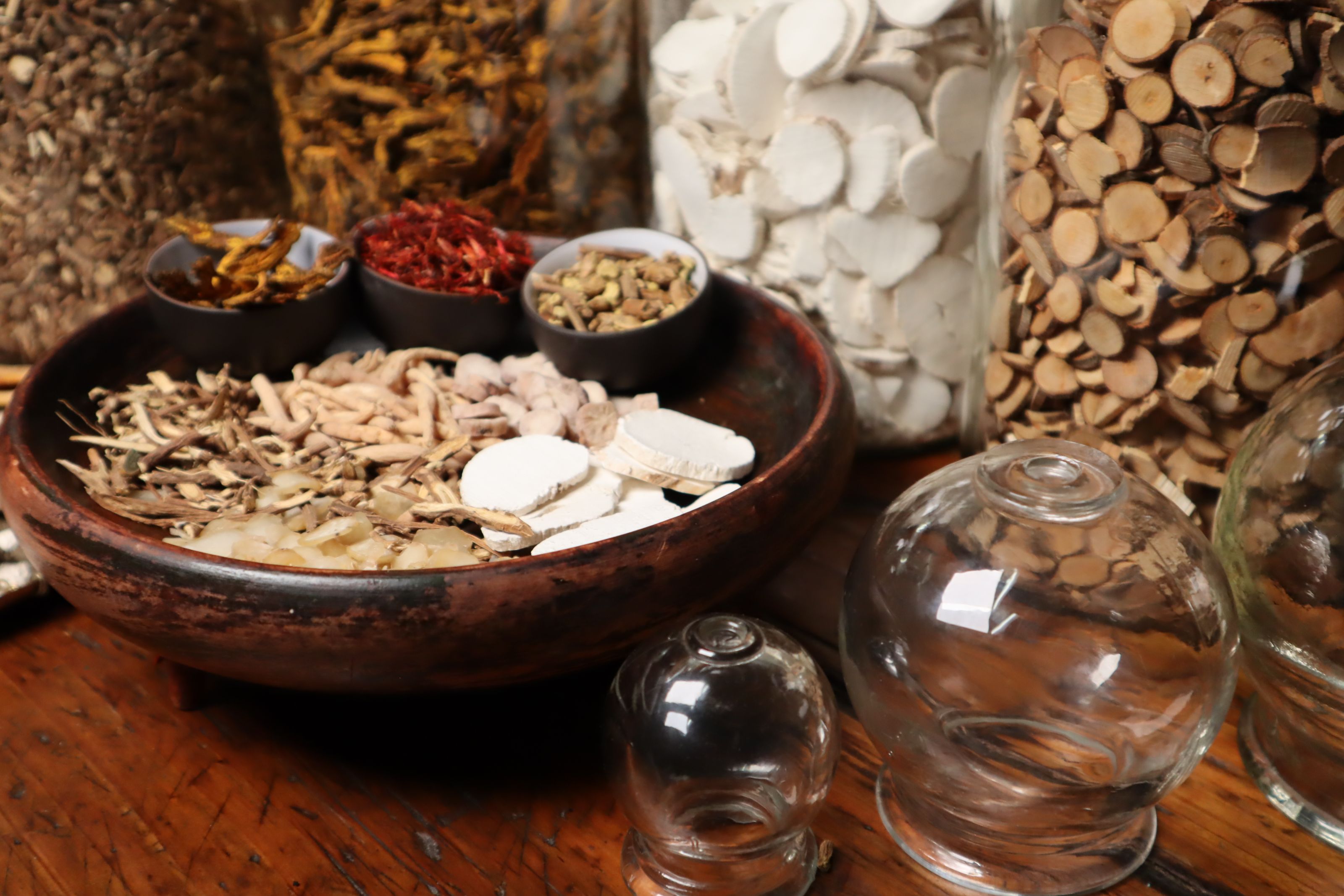
TCM for Eczema: Herbs, Acupressure Points, and Diet for Atopic Dermatitis Relief
If your eczema flares are winning, TCM offers a different traditional framework: rather than viewing atopic dermatitis only as a surface rash, Chinese medicine describes patterns involving digestion, stress, and sleep. These patterns are not a medical diagnosis, and improvements in those areas do not guarantee that the skin will calm.
This guide covers the whole picture — the common TCM patterns behind eczema, Chinese herbs for eczema, acupressure points for itching you can press at home, and a TCM diet for skin health. It is written for people who want a gentler complement to conventional dermatology, not a replacement for it. If that sounds like you, keep reading.
Why TCM Views Eczema Differently
In traditional Chinese medicine, the skin is the mirror of the internal organs. The Lungs govern the surface, the Spleen manages fluids, and the Liver keeps qi and blood moving smoothly. When these systems are out of balance, wind, dampness, or heat can build up inside and overflow onto the skin as a rash.
That is why a TCM practitioner will ask about your digestion, sleep, stress, and tongue before they ever look closely at the rash. Eczema (atopic dermatitis) is not one disease in Chinese medicine — it is a symptom with many possible roots. The practitioner’s job is to identify your pattern through pattern differentiation (辨证论治, bian zheng lun zhi): matching the treatment to the exact way your body expresses imbalance.
This is also why the same rash gets different treatments in different people. Two patients with identical-looking patches may receive completely different herbs and points, because their underlying patterns differ. Naming your pattern is the first step in every serious TCM eczema consultation.
Common TCM Patterns for Eczema
Most eczema fits one of three patterns. You may have a mix — for example, damp-heat flares on top of a long-standing spleen deficiency. Here is how they usually show up:
| Pattern | Typical signs | What is happening | What helps |
|---|---|---|---|
| Damp-Heat (shi re 湿热) | Red, swollen, weeping patches; worse in summer; feeling heavy or hot | Dampness and heat accumulate, often from rich food, alcohol, and humid weather | Cooling foods, mung bean soup, bitter greens, heat-clearing herbs |
| Wind-Dryness / Blood Deficiency (xue xu sheng feng 血虚生风) | Dry, cracked, lichenified skin; itch worse at night; common in older adults | Long-standing dryness depletes blood and yin, so the skin loses its moisture and wind stirs the itch | Blood-nourishing herbs, moistening foods, omega-3 fish, sleep |
| Spleen Deficiency with Dampness (pi xu shi sheng 脾虚湿盛) | Flares tied to digestion; bloating, loose stools, fatigue; weepy patches | The Spleen fails to transform fluids, so dampness accumulates and spills into the skin | Easy-to-digest warm meals, avoid cold drinks, strengthen the gut |
Most people with chronic atopic dermatitis carry a deficiency pattern underneath and an excess pattern on top. The acute flare is damp-heat; the chronic dryness is blood deficiency. That is why treatment usually works in two phases: clear the heat first, then nourish the root. A licensed practitioner can pinpoint your dominant pattern — the self-care below supports all three at once.
Chinese Herbs for Eczema
Herbal medicine is the heavyweight of TCM eczema treatment. Formulas are built from several herbs that work together, and the right combination depends entirely on your pattern. A few key players appear again and again:
- Clearing heat and draining dampness — Ku Shen (苦参, Sophora root), Huang Qin (黄芩, Scutellaria root), and Long Dan Cao (龙胆草, gentian root) cool the heat and dry the dampness behind red, weeping patches. Ku Shen is so specific to itchy skin that it shows up in many topical formulas too.
- Dispelling wind and calming the itch — Fang Feng (防风, siler root), Jing Jie (荆芥, schizonepeta), and Bai Xian Pi (白鲜皮, dictamnus bark) stop the wind that drives the itch and move heat out of the skin.
- Nourishing blood for chronic cases — Dang Gui (当归, angelica root) and Bai Shao (白芍, white peony) rebuild the blood that chronic dryness has drained. For lichenified, leathery patches that itch at night, blood-nourishing herbs are often the missing piece.
⚠️ A serious caution: do not self-prescribe. Raw herbs are strong medicine, and the wrong herb for your pattern can make eczema worse. Chinese herbs for eczema must be prescribed by a qualified, licensed practitioner who can match the formula to your pattern and dose it correctly.
Herbs also interact with medications. If you take blood thinners (anticoagulants like warfarin), some herbs such as Dang Gui can increase bleeding risk. Always tell both your TCM practitioner and your doctor every medication and herb you take — and never stop prescribed treatment on your own.
Acupuncture and Acupressure Points for Itching
Acupuncture for atopic dermatitis has real research behind it, including randomized trials and systematic reviews on PubMed showing reduced itch and symptoms. You can preview the effect at home with acupressure — same points, no needles. Five points are the workhorses for itchy skin:
| Point | Location | What it does |
|---|---|---|
| LI-11 (Quchi / 曲池) | Outer end of the elbow crease, arm bent | The classic point for skin conditions — clears heat and wind from the surface |
| LI-4 (Hegu / 合谷) | Fleshy web between thumb and index finger | The master point for the face and head; calms inflammation and itch |
| SP-10 (Xuehai / 血海) | Two thumb-widths above the inner kneecap, on the bulge of thigh muscle | “Sea of Blood” — cools blood-heat and is famous for itchy skin |
| SP-6 (Sanyinjiao / 三陰交) | Four finger-widths above the inner ankle bone, just behind the shinbone | Nourishes blood and calms the nervous system; great for night itching |
| ST-36 (Zusanli / 足三里) | Four finger-widths below the kneecap, one finger-width outside the shinbone | Traditionally used to support the Spleen and digestion in the TCM framework |
How to press: use your thumb or index fingertip and press firmly enough to feel a dull, spreading ache — not sharp pain. Hold each point for 1–2 minutes while breathing slowly and deeply. Repeat once or twice a day, morning and evening. Run the full sequence when the itch peaks, especially before bed.
Do not press LI-4 or SP-6 during pregnancy, and avoid pressing directly on broken or infected skin. For persistent itching, weekly acupuncture sessions with a licensed practitioner are usually far stronger than home pressure alone.
TCM Diet for Skin: Eating to Cool and Nourish
In Chinese medicine, the gut and the skin share one tube — the digestive tract. The TCM diet for skin is simple: cool what is hot, moisten what is dry, and strengthen digestion. Here is the practical version.
Cooling foods for damp-heat flares: cucumber, celery, mung beans, and watermelon cool the body from within. Mung bean soup (lightly sweetened, not a dessert) is the classic remedy for hot, weeping skin. Add bitter greens like Chinese broccoli and lettuce during a flare.
Skin-nourishing foods for dry, chronic eczema: black sesame, walnuts, sweet potato, and omega-3-rich fish (salmon, mackerel, sardines) rebuild the moisture that blood deficiency has drained. A small handful of black sesame or walnuts daily is easy to keep up.
Foods to reduce or avoid: spicy food, fried food, alcohol, and excess sugar generate damp-heat — the number-one dietary driver of flares. If your pattern suggests it, trial a two-week pause on dairy and wheat and watch how your skin responds. Keep a simple food diary; many people find their personal triggers faster than any textbook list.
Eating habits matter as much as ingredients. Eat warm, cooked meals, chew slowly, and stop before you are stuffed. Cold drinks and raw salads weaken the Spleen in TCM, which is exactly the organ that fails when dampness accumulates. A warm congee or soup-based meal is gentler for eczema-prone digestion than a cold smoothie.
Lifestyle and Daily Habits That Calm the Itch
Traditional practitioners often consider daily habits alongside herbs and points. Four general habits to discuss as part of supportive care are:
- Manage stress — stress is wind and heat in motion. Twenty minutes of qigong, tai chi, or simple slow breathing each day settles the nervous system, and the itch with it.
- Protect your sleep — the skin regenerates at night, and itching peaks after dark for a reason. A consistent wind-down routine, including the acupressure sequence above, supports both sleep and skin repair.
- Dress and wash gently — wear natural fibers like cotton and bamboo against the skin, and switch to a fragrance-free, dye-free laundry detergent. Rinse thoroughly; residue irritates eczema more than people realize.
- Stop scratching — scratching breaks the skin barrier and invites infection, which is how mild eczema becomes stubborn eczema. When the urge hits, press LI-11 or SP-10 firmly for a minute, apply a cool compress, or tap the patch gently instead.
None of this is glamorous, but it is honest: eczema calms when the whole system calms. Small daily consistency beats heroic weekend efforts every time.
Integrating TCM with Conventional Care
The best eczema care is usually both, not either. TCM can complement conventional dermatology — but it cannot replace it.
Keep using your emollients and topical steroids exactly as prescribed. Moisturizers protect the skin barrier, and anti-inflammatory creams control flares in a way that herbs alone cannot match. Use TCM food therapy, herbs, and acupressure alongside them, and tell your dermatologist everything you are taking.
See a dermatologist promptly if: the skin shows signs of infection (yellow crusting, oozing honey-colored fluid, spreading redness), the flare is severe or covers large areas, the itch disrupts sleep for weeks, or your usual treatment stops working. Also check in with a doctor before starting any new herbs if you are pregnant, nursing, or on prescription medication.
TCM for eczema is a complement, not a replacement. Urgent medical care is always the priority — and for the long, quiet work of keeping eczema calm, Chinese medicine has a great deal to offer.
Summary Checklist
- Know your pattern: damp-heat (red, weeping, summer), wind-dryness/blood deficiency (dry, cracked, night itch), or spleen deficiency (digestion-linked flares)
- Herbs: Ku Shen, Huang Qin, Long Dan Cao for heat; Fang Feng, Jing Jie, Bai Xian Pi for wind and itch; Dang Gui, Bai Shao for blood — prescribed by a licensed practitioner only
- Press daily: LI-11, LI-4, SP-10, SP-6, ST-36, one to two minutes each, once or twice a day
- Eat for your skin: mung beans, cucumber, celery, watermelon to cool; black sesame, walnuts, sweet potato, fish to nourish; cut spicy, fried, alcohol, and excess sugar
- Live gently: qigong or breathing for stress, consistent sleep, cotton clothing, fragrance-free detergent, no scratching
- Keep conventional care in place: emollients and topical steroids as prescribed; see a dermatologist for infection or severe flares
Key Takeaways
- TCM traditionally interprets atopic dermatitis through internal patterns as well as skin signs; a qualified practitioner uses pattern differentiation (辨证论治) to individualize care.
- The three common patterns are damp-heat, wind-dryness with blood deficiency, and spleen deficiency with dampness; most chronic cases are a mix.
- Chinese herbs for eczema work, but only when matched to your pattern by a licensed practitioner — never self-prescribe, and mind interactions with drugs like anticoagulants.
- Acupuncture for atopic dermatitis has clinical trial support; at home, press LI-11, LI-4, SP-10, SP-6, and ST-36 for 1–2 minutes, once or twice daily.
- A TCM diet for skin means cooling foods during flares, nourishing foods for chronic dryness, and cutting spicy, fried, and sugary foods.
- TCM complements conventional eczema care — keep using prescribed emollients and steroids, and see a dermatologist for infection or severe flares.
For deeper reading: the systematic review on acupuncture for atopic dermatitis, this randomized trial on acupuncture for mild to moderate atopic dermatitis, and the Me & Qi knowledge base on eczema patterns.
🌿 A gentle note from us
The practices shared here are rooted in Traditional Chinese Medicine traditions that have been passed down for thousands of years. We share them as educational resources — not as prescriptions or medical advice.
Every body is different. What brings balance to one person may not be right for another. Please listen to your body, go gently, and check with a qualified healthcare provider before trying any new wellness practice — especially if you are pregnant, managing a chronic condition, or have specific health concerns.
Some links on this site are affiliate links. If you choose to purchase through them, we may earn a small commission at no extra cost to you. This helps us continue sharing ancient wisdom for modern wellness. Thank you for your trust.
Health & Safety Notes
- This content is educational wellness information, not medical advice or diagnosis.
- Suitable for: general adult self-care reference.
- Consult a qualified practitioner before use if you are pregnant, nursing, have a chronic condition, take medication, or treat children.
- Red flags — seek medical care if: symptoms are severe, worsening, or persistent; sudden or unexplained pain; fever; numbness/weakness.
- Information reviewed: 2026-09. Sources: traditional Chinese medicine references and general wellness literature.