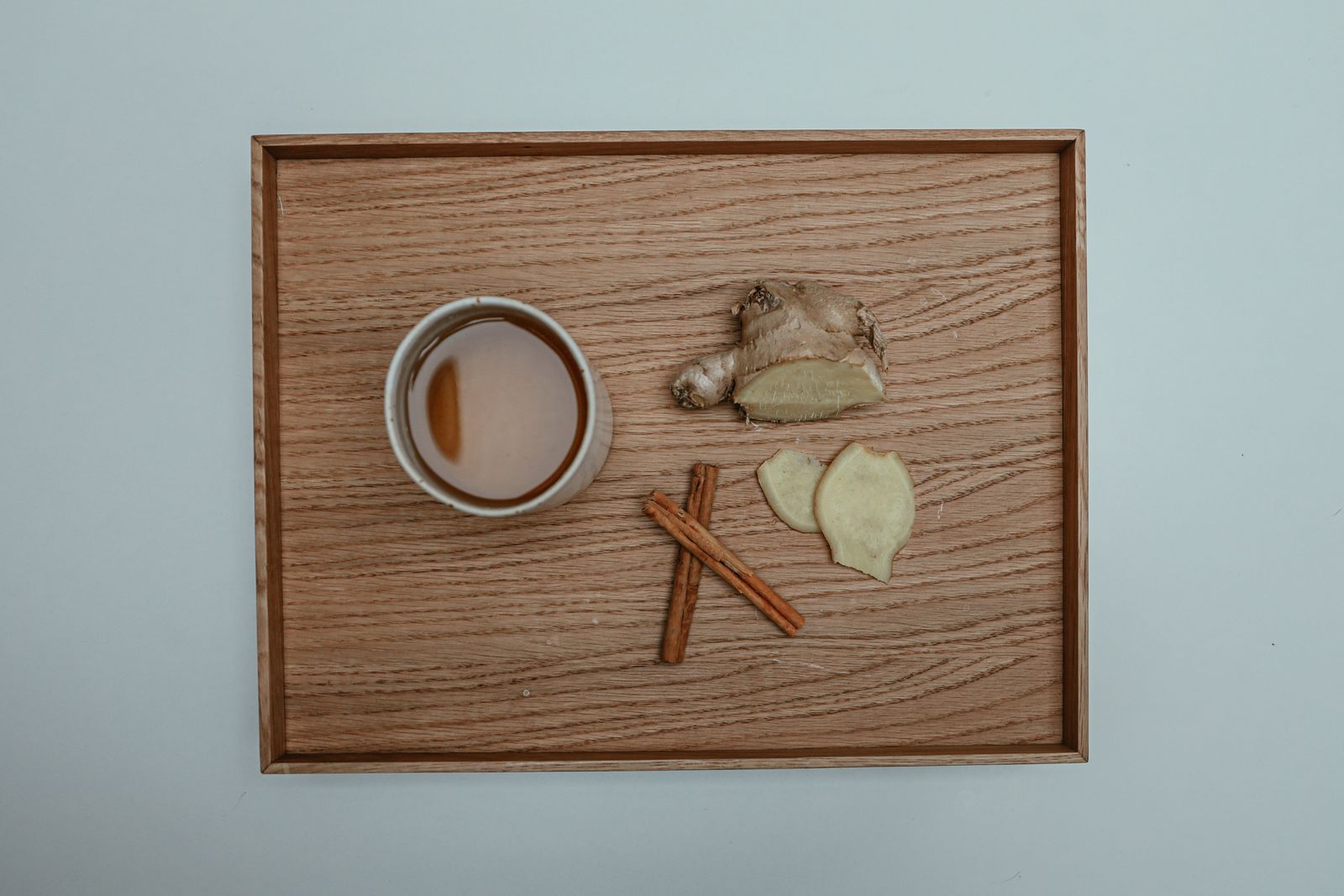
TCM Digestive Health: How the Spleen & Stomach Theory Explains Bloating, Fatigue, and Brain Fog — and What to Do About It
Cover image source: Pexels
You eat a normal lunch and by three in the afternoon you are bloated, heavy-lidded, and staring at your screen with a head full of cotton. Sound familiar? In TCM digestive health, that exact cluster — bloating, post-meal fatigue, and brain fog — is not a random collection of annoyances. It is one recognizable pattern with a name, a cause, and a surprisingly simple set of fixes.
That pattern centers on the spleen (pi, 脾) and stomach (wei, 胃), which Chinese medicine traditionally describes as the engine room of the body. This guide explains the traditional spleen and stomach theory and the food, acupressure, and daily habits associated with it; these concepts are not anatomical diagnoses.
The Spleen Is Not the Spleen: A System, Not an Organ
The first thing Western readers need to know: the TCM spleen is not the anatomical spleen a surgeon can remove. When your doctor mentions your spleen, she means a fist-sized organ filtering your blood. When a Chinese medicine practitioner mentions it, she means something closer to a metabolic system — the machinery that transforms food into qi (vital energy) and blood, then transports those resources to every tissue in your body.
Think of it this way: the stomach is the cauldron — it receives food and begins “ripening and rotting” it, in classical language. The spleen is the fire beneath and the courier behind it. It extracts usable energy from what you eat, sends the clear, nourishing part upward to fuel your brain, muscles, and organs, and sends the turbid remainder downward for elimination.
This is why classical texts call the spleen the root of acquired constitution (hou tian zhi ben, 后天之本). You are born with kidney essence as your battery — but after birth, everything you run on comes from food, and food becomes you through the spleen. In TCM digestive health, a strong spleen means steady energy, clear thinking, and firm digestion. A weak one means the opposite.
Spleen Qi Deficiency: The Pattern Behind Bloating, Fatigue, and Brain Fog
When spleen function runs low, practitioners call the pattern spleen qi deficiency (pi qi xu, 脾气虚). Because the spleen fails to transform and transport properly, food sits in the middle of your body half-processed, and the energy that should have reached your head and limbs never arrives. The classic symptoms are remarkably specific:
- Post-meal bloating and fullness — especially after heavier meals; your stomach feels like it is still working hours later.
- Loose stools — soft, mushy, or urgent bowel movements, sometimes with undigested food, because the “turbid” part is not being separated cleanly.
- Fatigue that peaks after eating — the food-coma that is more than normal: your body is spending energy it does not have.
- Brain fog and a heavy head — the clear yang qi that should rise to the mind is stuck down in the gut. Foggy thinking, poor recall, a head that feels wrapped in cloth.
- A sallow or pale complexion — the spleen makes the blood that colors your face; when it runs low, skin loses its healthy tint.
- A scalloped tongue — press your tongue against your teeth for a few seconds, then look: if the edges show wavy tooth marks, that is a textbook spleen sign (called a scalloped tongue or chi hen she, 齿痕舌). A pale tongue body with a thin white coat often accompanies it.
None of these alone means much, but three or four together draw a clear picture. And here is the encouraging part: unlike many TCM patterns, spleen qi deficiency responds quickly to everyday food and habits — often within a few weeks.
Five Everyday Habits That Quietly Weaken the Spleen
Before reaching for remedies, check your habits. TCM says the spleen is most easily damaged by cold, dampness, irregularity, and overthinking — which means modern life attacks it from every direction.
- Iced drinks, especially with meals. Cold literally turns down the digestive fire. In TCM thinking, your stomach needs warmth to “cook” food; dumping ice water into it forces the spleen to spend extra qi warming everything up. Room-temperature or warm drinks are the single easiest upgrade you can make.
- Raw and cold foods. Large raw salads, cold smoothie breakfasts, and fruit straight from the fridge are all “cold” foods that demand more transformation work. This does not mean never eating salad — it means noticing if your body handles it better cooked.
- Sitting for hours. The spleen governs the muscles and loves gentle movement. Long, unbroken sitting lets qi stagnate in the middle, and stagnant qi makes bloating worse.
- Overthinking and constant worry. Classical Chinese medicine pairs each organ with an emotion, and the spleen’s paired emotion is si (思), rumination — excessive thinking, planning, and worry literally “knot” spleen qi. If your bloating flares on high-mental-load days, this is your answer.
- Irregular meals and grazing. The spleen likes rhythm. Skipping breakfast, eating dinner at 9 p.m., or snacking all day without a real meal forces the transformation system to run erratically. Aim for three sit-down meals at roughly the same times daily.
What to Eat for a Happy Spleen
Spleen-nourishing food therapy follows one golden rule: warm, cooked, and gently sweet. Warmth reduces the transformation burden; cooking pre-digests food; and moderate sweetness is the flavor that directly nourishes spleen qi.
- Millet congee (xiao mi zhou, 小米粥) — the classic recovery food. Simmer millet with plenty of water until soft and porridge-like. It is easy to digest, warming, and the traditional first food for anyone rebuilding spleen qi. Oatmeal plays the same role in a Western kitchen.
- Pumpkin and squash — sweet, warm, and gently tonifying. Roasted pumpkin, pumpkin porridge, or pumpkin in soup is practically medicine for a tired spleen.
- Chinese yam (shan yao, 山药) — the single most spleen-specific food in the Chinese pantry. It tones spleen qi without being heavy. Use fresh yam in soups or stews.
- Fresh ginger — a few slices in cooking or tea warms the middle, disperses cold, and settles nausea.
- Jujube dates (da zao, 大枣) — sweet and warming, they build spleen qi and blood and appear in nearly every tonic recipe.
- Warm soups and stews — long-simmered broths are essentially pre-digested qi. A bowl of soup with lunch does more for spleen qi than any supplement.
Ease off the other end, too: deep-fried and greasy foods create dampness and sluggishness, and heavy dairy is a common hidden cause of that full, foggy feeling.
Ginger-Jujube Tea (sheng jiang da zao cha, 生姜大枣茶)
The starter tonic for spleen qi deficiency. Slice two or three coins of fresh ginger, split two or three jujube dates open, and simmer both in two cups of water for ten to fifteen minutes. Sip it warm mid-morning. It is warming, gently sweet, and supports the spleen without the caffeine that overstimulates a tired system. Ginger is one of the best-studied kitchen remedies in Western research too — the U.S. National Center for Complementary and Integrative Health (NCCIH) summarizes evidence that ginger may help with nausea and some digestive complaints.
Four Spirits Soup (si shen tang, 四神汤)
The most famous spleen tonic in Chinese home cooking, Four Spirits Soup is a mild, slow-cooked broth of four starchy, neutral ingredients: lotus seeds (lian zi, 莲子), Chinese yam (shan yao, 山药), fox nuts (qian shi, 芡实), and poria (fu ling, 茯苓). Together they tonify the spleen, stop loose stools, and gently drain dampness. Simmer a palmful of each (soaked) with pork ribs or a vegetable broth base for an hour or two, season lightly, and eat it as a meal. It is deliberately plain — the point is gentle rebuilding, not excitement.
Acupressure Points for Digestion: Four to Learn by Heart
Acupressure is the TCM digestive tool you can use anywhere, and the four points below are the classics. Press each with a firm but comfortable thumb or fingertip in slow circles for one to two minutes while breathing deeply. Do both sides for paired points, once or twice daily, especially before meals or when bloating hits.
- ST36 Zusanli (zu san li, 足三里, “Leg Three Miles”) — the most famous point in Chinese medicine. With your knee slightly bent, place your palm over your kneecap; your ring finger lands just below it, one finger-width out from the shin bone, in the muscle belly. It strengthens the stomach and spleen, raises energy, and is used for nearly every digestive complaint.
- SP6 Sanyinjiao (san yin jiao, 三阴交, “Three Yin Crossing”) — four finger-widths above the inner ankle bone, just behind the shin bone, in the tender hollow. It nourishes the spleen, liver, and kidney together — excellent for sluggish digestion with fatigue.
- CV12 Zhongwan (zhong wan, 中脘, “Middle Cavity”) — midway between your navel and the bottom of your breastbone, right on the midline. This is the stomach’s own alarm point; press it in slow circles when you feel full, bloated, or nauseated. (Do not press hard on a very full stomach.)
- PC6 Neiguan (nei guan, 内关, “Inner Gate”) — three finger-widths above the inner wrist crease, between the two tendons. It settles the stomach and the mind at once — the point for nausea and for the digestive upset that stress drives.
For the evidence-minded: the NCCIH describes research on acupuncture as mixed but notes it may help with conditions including nausea and some pain — a fair frame for how this ancient toolkit relates to modern science.
Why Stress Turns Into Bloating: Wood Overacting on Earth
If your stomach knots up before big meetings or travel, TCM has a precise explanation: the liver (gan, 肝) is the Wood element, the spleen is Earth — and in the five-element cycle, Wood naturally presses down on Earth. When stress, frustration, or deadline pressure makes liver qi stagnant, that pressure transfers straight to your spleen and stomach. Classical texts call it gan mu ke pi tu (肝木克脾土) — wood overacting on earth.
This is why the best “digestive” fix is sometimes not dietary at all: a ten-minute walk after meals, slow abdominal breathing (in through the nose for four counts, out for six or eight), and actually addressing the chronic stress. Diaphragmatic breathing massages the stomach from the inside and is one of the fastest ways to break a stress-bloat loop. Our guide to acupressure for stress and anxiety pairs well with this one.
When to See a Professional
Everything above is gentle, food-first support — and it genuinely helps many people within a few weeks. But TCM is complementary care, not a substitute for a medical diagnosis.
See a doctor first if you have any red flags: blood in your stool, unexplained weight loss, severe or worsening abdominal pain, persistent vomiting, or a change in bowel habits after age fifty. Those deserve a proper medical workup regardless of which tradition you prefer.
If your bloating, fatigue, and brain fog have persisted for weeks despite warm food, regular meals, and the points above — or if you want a precise pattern diagnosis rather than a self-help guess — see a licensed TCM practitioner. They will read your tongue and pulse, identify exactly which pattern is running (spleen qi deficiency has cousins like dampness and food stagnation), and prescribe individualized herbs or acupuncture. For deeper context on the spleen and how it fits the wider system, our guide to TCM digestive health, gut wellness, and the digestive organs is a good next read.
🌿 A gentle note from us
The practices shared here are rooted in Traditional Chinese Medicine traditions that have been passed down for thousands of years. We share them as educational resources — not as prescriptions or medical advice.
Every body is different. What brings balance to one person may not be right for another. Please listen to your body, go gently, and check with a qualified healthcare provider before trying any new wellness practice — especially if you are pregnant, managing a chronic condition, or have specific health concerns.
Some links on this site are affiliate links. If you choose to purchase through them, we may earn a small commission at no extra cost to you. This helps us continue sharing ancient wisdom for modern wellness. Thank you for your trust.
Health & Safety Notes
- This content is educational wellness information, not medical advice or diagnosis.
- Suitable for: general adult self-care reference.
- Consult a qualified practitioner before use if you are pregnant, nursing, have a chronic condition, take medication, or treat children.
- Red flags — seek medical care if: symptoms are severe, worsening, or persistent; sudden or unexplained pain; fever; numbness/weakness.
- Information reviewed: 2026-09. Sources: traditional Chinese medicine references and general wellness literature.