TCM for Digestion & Gut Health: How Chinese Medicine May Support Your Gut with Food Therapy and Acupressure
Bloating after every meal, a foggy afternoon brain, and stools that never quite feel solid — if that sounds familiar, your digestion is telling you something. In traditional Chinese medicine (TCM), these are the classic signs of a tired Spleen. This guide walks through the Spleen–Stomach theory behind gut health, the food therapy that rebuilds it, and three acupressure points you can press at your desk tonight.
Western medicine and TCM ask different questions about the gut. A doctor asks what is happening; a TCM practitioner asks why your body stopped handling food well in the first place. In the traditional framework, the answer often starts with the Spleen and Stomach, which TCM describes as the engine room of digestion.
The Spleen–Stomach Theory: Where TCM Digestion Begins
In TCM, the Stomach is the “rotten and ripening” organ — it receives food and breaks it down. The Spleen then transforms the nutrients into qi (vital energy) and blood and sends them upward to feed the whole body. Together they form the “Middle Burner,” the metabolic core of Chinese medicine.
The key detail is the direction of movement. Stomach qi is supposed to descend, pushing food downward through the intestines. Spleen qi is supposed to ascend, carrying nutrients to the head, muscles, and organs. When either direction reverses — Stomach qi rising, Spleen qi sinking — symptoms appear.
Notice that TCM’s “Spleen” is not the anatomical organ a surgeon would point to. It is a functional system covering digestion, nutrient absorption, energy production, and even how well your muscles hold their tone. When people say “gut health” in a TCM clinic, they usually mean the health of this Spleen–Stomach axis.
Signs Your Spleen Qi Is Low
TCM practitioners call a sluggish digestive system Spleen qi deficiency (pi qi xu). It develops slowly, often over years of rushed meals, cold drinks, and irregular eating. The signs below are the ones patients report most often:
| Symptom | What it feels like | Why the Spleen is involved |
|---|---|---|
| Bloating | Heavy, full feeling for hours after a small meal | Food sits undigested because transformation qi is weak |
| Fatigue after eating | Strong urge to nap 30–60 minutes after meals | The body borrows energy to digest, leaving little for you |
| Loose stools | Soft, sticky, or urgent stools | The Spleen fails to separate the clear from the turbid |
| Brain fog | Heavy head, poor focus, worse mid-afternoon | Nutrients never reach the head when Spleen qi fails to ascend |
| Pale, puffy tongue | Pale tongue with scalloped, teeth-marked edges | A physical sign practitioners check first in every consult |
You do not need all five signs. Two or three that show up most days are enough to start eating and pressing differently. The good news is that Spleen qi deficiency responds well to food therapy — the gentlest entry point in all of Chinese medicine.
Food Therapy: Four Staples That Rebuild Digestion
Chinese food therapy (shi liao) traditionally frames meals as part of wellness practice. The four foods below are commonly used for digestive support: cheap, easy to find, and neutral enough to eat regularly for many adults.
Congee (Rice Porridge)
Congee is rice simmered with plenty of water until the grains fall apart into a silky porridge. TCM cooks call it the “first food of the Spleen” because it arrives in your stomach already half-digested. It is the classic meal for recovery from illness, a stomach flu, or a week of bad eating.
Cook one part rice with eight to ten parts water, bring it to a boil, then simmer for 45–60 minutes, stirring occasionally. Eat it warm — never cold — and keep toppings simple at first: a pinch of salt, sliced scallion, or a few pieces of cooked Chinese yam. Congee is deliberately bland because a tired Spleen wants simple food.
Chinese Yam (Huai Shan)
Chinese yam is the most prescribed single food in Spleen-repair formulas. Dried slices (huai shan) sit on the shelf of any TCM shop or Asian grocery; fresh Chinese yam — a long, hairy root, not the sweet orange “yam” from the Thanksgiving table — works just as well.
It is sweet and neutral in TCM terms and is traditionally used to support digestion without adding heat. Add it to congee or soup, or steam and mash fresh yam into your morning porridge. Individual responses vary, especially when digestive symptoms have an underlying medical cause.
Fresh Ginger
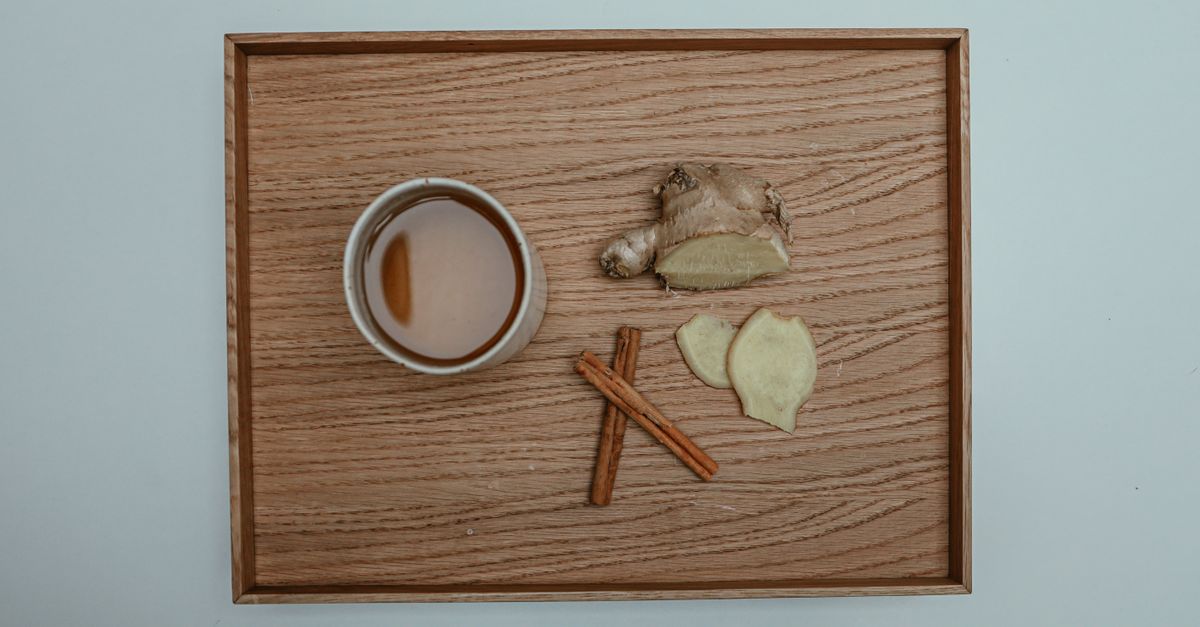
Ginger warms the Stomach and settles nausea — the reason a cup of ginger tea is the universal stomachache remedy. The warming action matters most for people whose digestion slows down in cool weather or after cold drinks.
Slice three to five thin slices of fresh ginger, about the size of a quarter, and steep them in a cup of just-boiled water for five minutes. Sip it warm before or after meals. Keep the dose modest: more than a thumb-sized piece a day can dry the mouth and irritate the stomach lining, and dried ginger is roughly twice as warming.
Fox Nuts (Qian Shi)
Fox nuts are small, tan seeds from the water lily Euryale ferox, sold dried in TCM shops. They are the classic partner to Chinese yam in Spleen formulas, valued for stopping loose stools and draining the “dampness” that makes stool sticky and heavy.
Rinse a handful, soak them for an hour, and simmer them in congee or soup until tender. They have almost no flavor of their own, which makes them easy to hide in a morning bowl of porridge. For full recipes built on these ingredients, see our medicinal soups guide.
Three Acupressure Points for Digestion and Gut Health
Acupressure works on the same meridians as acupuncture, minus the needles. Pressing these three points daily gives your digestion a nudge that compounds over weeks, and all three are easy to find without a chart.
ST36 (Zusanli) — the Master Stomach Point
Location: With your knee slightly bent, find the depression just below and outside the kneecap — the “outer eye of the knee” (ST35). From there, measure four finger-widths down the outside of the shin, then one thumb-width to the side of the shinbone. That hollow is ST36.
How to press: Use your thumb, a knuckle, or the blunt end of a pen cap. You want a firm, aching sensation — if it only feels like skin pressure, push harder. Press for two minutes per leg, once or twice a day, and this single point often does more for low appetite and post-meal fatigue than any other.
CV12 (Zhongwan) — the Center of the Belly
Location: Lie flat and find the exact midpoint between your navel and the bottom of your breastbone (the xiphoid process). It sits on the body’s midline, in the soft hollow of the upper abdomen — roughly two-thirds of the way up from the navel to the ribs.
How to press: Press with two or three fingers flat, or the heel of your hand, using slow, steady pressure. Breathe out as you press deeper, hold for 30 seconds, and release as you inhale. Repeat three to five times; some people report a pleasant sense of release in the upper belly, but responses to bloating and fullness vary.
PC6 (Neiguan) — the Nausea Point
Location: On the inner forearm, three finger-widths above the wrist crease. It sits between the two tendons that run down the center of the forearm — the ones that tighten when you make a fist. If you press into the gap between those tendons, you have found PC6.
How to press: Grip your forearm with the opposite hand so your thumb lands between the tendons. Press toward the bones with a small circular motion for one to two minutes per arm. This is the most-studied point for nausea in TCM — the same spot sea-sickness wristbands press — and it also calms the anxiety-driven stomach upset that shows up before presentations or exams.
Daily routine: Do the sequence once in the morning and once before bed: ST36, CV12, PC6, in that order. You are looking for consistency, not force — two minutes per point is plenty. For a fuller digestion routine with related points, see our acupressure for bloating and gas guide.
Everyday Habits That Protect Your Gut
Food and points do the heavy lifting, but habits decide whether the gains stick. TCM says the Spleen hates three things: cold, dampness, and irregularity.
- Chew until the food is liquid. Twenty to thirty chews per bite is the target. Digestion begins in the mouth, and TCM considers hurried eating one of the fastest ways to exhaust the Spleen.
- Skip the ice. Cold drinks drop stomach temperature and stall Stomach qi mid-descent. Drink warm water, room-temperature tea, or ginger tea instead — many practitioners consider this single swap more powerful than any herb.
- Eat at roughly the same times daily. The Spleen likes rhythm, and erratic meal times force it to work on demand. Aim for three meals within a two-hour window of the same time each day.
- Keep the belly warm. A cold abdomen slows the Middle Burner, especially at night. A light layer over the stomach while sleeping is a small, surprisingly effective habit.
- Stop at 80% full. TCM recommends leaving a little room at every meal so the Spleen is never overwhelmed. Seconds are allowed; the third plate is not.
When to See a Practitioner
Food therapy and acupressure are gentle enough to try for weeks on your own. But see a TCM practitioner if bloating or loose stools persist beyond four to six weeks of consistent changes, or if you want a tailored herbal formula — classics like Si Jun Zi Tang (Four Gentlemen Decoction) or Shen Ling Bai Zhu San are prescribed to your exact pattern, not to a generic label. Our gut wellness guide covers the herbal side in more depth.
See a medical doctor first for red flags: blood in the stool, unexplained weight loss, severe or worsening abdominal pain, fever, or night sweats. TCM is a complement to, not a substitute for, ruling out serious conditions.
FAQ
How quickly does Spleen food therapy work? Most people notice better energy and firmer stools within two to four weeks of daily congee, yam, and ginger. Deep repair of a chronically weak Spleen usually takes two to three months of consistent habits.
Can I press these points if I am pregnant? PC6 is widely used for pregnancy nausea, and gentle CV12 pressure is generally fine. Avoid strong, prolonged stimulation of ST36 during pregnancy and check with your midwife or practitioner first.
Do I need to cut out dairy? Not necessarily. Dairy creates dampness for some people and not others. The cleanest test: remove it for two weeks, watch your stool consistency, and reintroduce it to see what changes.
If appropriate for you, start with a cup of ginger tea, gentle ST36 pressure, or a warm bowl of congee with Chinese yam. If you want to stock your kitchen, browse dried Chinese yam (huai shan) on Amazon or an acupressure mat for daily ST36 pressing. Small, warm, consistent habits are how this traditional approach may support digestive comfort.
Health & Safety Notes
- This content is educational wellness information, not medical advice or diagnosis.
- Suitable for: general adult self-care reference.
- Consult a qualified practitioner before use if you are pregnant, nursing, have a chronic condition, take medication, or treat children.
- Red flags — seek medical care if: symptoms are severe, worsening, or persistent; sudden or unexplained pain; fever; numbness/weakness.
- Information reviewed: 2026-09. Sources: traditional Chinese medicine references and general wellness literature.