TCM for Cough & Sore Throat: Autumn Dryness Remedies, Herbal Teas & Acupressure Points
It starts as a tickle you keep clearing your throat against. By evening the tickle is a cough, your voice sounds like sandpaper, and swallowing feels like passing gravel. Every autumn, the same scene plays out in offices and bedrooms across the northern hemisphere — and traditional Chinese medicine (TCM) has a name for why: qiū zào (秋燥), autumn dryness.
In the TCM view, the Lungs are the most delicate organ (嬌臟), and the throat is their front door. When the air turns dry and cold, the Lungs lose moisture, the throat dries out, and the body’s protective surface (wei qi) weakens. The result is the classic autumn trio: a dry, tickly cough, a scratchy sore throat, and a hoarse voice.
This guide walks through how TCM tells one cough from another, the food-based remedies (like steamed pear with Sichuan bearball) you can make in a normal kitchen, three simple herbal teas, and four acupressure points for throat relief — followed by an honest list of when to put down the tea and see a doctor.
Which Cough Do You Have? Dry vs. Phlegm-Damp
Before reaching for any remedy, pause and read your symptoms. TCM treats coughs by their pattern, and the two most common autumn patterns ask for opposite care.
Dry cough (zào ké, 燥咳). Little or no phlegm, or phlegm so thin it feels like nothing. The throat feels scratchy and raw, the voice turns husky, and the cough often worsens in the evening, in heated rooms, or when you talk a lot. The tongue may look dry with little moisture. This pattern is driven by dryness injuring lung yin — the moist, cooling fluid that keeps the respiratory tract lubricated. Care aims at moistening and gently cooling.
Phlegm-damp cough (tán shī ké, 痰濕咳). A productive, rattly cough with phlegm that is white, sticky, or foamy. It tends to be worse in the morning, comes with a heavy, foggy feeling, and often follows rich food, dairy, or cold drinks. Here the problem is not a lack of moisture but mucus that the body cannot clear. Care aims at drying dampness and transforming phlegm — and the sweet, sticky foods that help a dry cough (pear, honey, syrup) can actually make this cough worse.
| Sign | Dry cough (燥咳) | Phlegm-damp cough (痰濕咳) |
|---|---|---|
| Phlegm | Little or none | White, sticky, foamy |
| Throat | Scratchy, sore, raw | Congested, phlegmy |
| Voice | Hoarse, husky | Normal, but throaty |
| Worse when | Evening, heated rooms, talking | Morning, after rich or cold food |
| Kitchen care | Moistening foods, warm fluids | Light soups, ginger, less sugar |
Not sure which you have? When in doubt, choose the gentler option: warm fluids and rest help both, while a heavy dose of pear and honey only fits the dry pattern.
Food Therapy You Can Make at Home
These are the classics of Chinese home care for cough and sore throat — food-based, gentle, and safe for most adults.
Steamed Pear with Sichuan Bearball (chuān bèi dùn lí, 川貝燉梨)
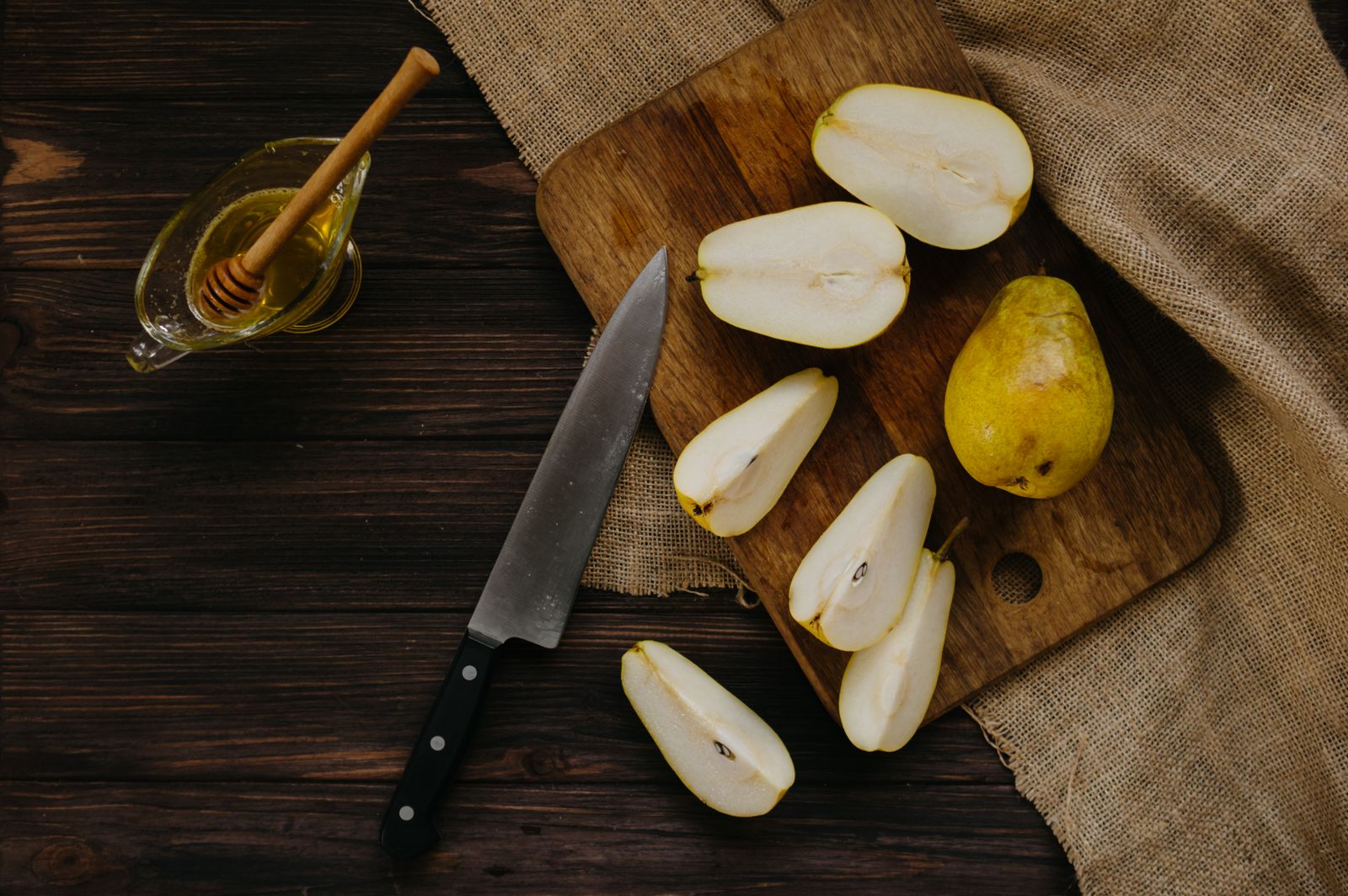
The most famous Chinese cough remedy. Sichuan bearball is the bulb of Fritillaria cirrhosa (chuān bèi mǔ, 川貝母), a small, hard white herb sold whole or as powder at Chinese herb shops. Choose a snow pear (they are juicier) — or any ripe pear. Slice off the top like a lid, scoop out the core, place about 2–3 grams of bearball powder (about half a teaspoon) inside, replace the lid, and steam over gently simmering water for 30–40 minutes until the pear is translucent and tender. Eat the pear warm and drink the collected juice in the bowl.
This remedy is specifically for dry coughs — it moistens the lung and clears the dryness-heat that makes a throat raw. Skip it for a phlegm-damp cough, where the sweet, moist pear would feed the mucus. If your throat is also sore and you are not diabetic, a teaspoon of honey stirred in after steaming rounds out the taste.
Honey and White Radish (fēng mì bái luóbo, 蜂蜜白蘿蔔)
A humble but effective folk remedy for a throat that is both raw and slightly congested. Dice half a white radish (daikon) into small cubes, place in a clean jar, and cover with raw honey. Leave it for four to six hours — the radish will release juice into the honey. Take one to two teaspoons of the liquid a few times a day, letting it coat the throat before swallowing. White radish helps the Lungs move phlegm downward, while honey soothes the throat lining.
Two firm cautions: never give honey to an infant under 12 months (botulism risk), and if your cough is clearly the cold-damp type with thin, watery phlegm and chills, honey and radish are not your best match — ginger tea suits you better.
Loquat Syrup (pípá gāo, 枇杷膏)
The dark, sticky syrup sold in jars at Asian grocery stores — the throat remedy many Chinese households grew up with. Traditional recipes simmer loquat fruit and loquat leaves with honey or rock sugar until thick. You can buy a ready-made bottle; the label will usually say it is “for cough and throat discomfort.” Take it by the spoonful, slowly, rather than mixing it into water, so it coats the throat.
Two notes: loquat syrup is sweet, so count it as sugar; and it suits dry, irritated coughs better than mucus-heavy ones — read the pattern guide above before buying.
Lily Bulb and Ophiopogon Porridge (bǎihé mài dōng zhōu, 百合麥冬粥)
For evenings when your throat is dry and sleep is interrupted by coughing fits, this porridge is the quietest remedy on the list. Lily bulb (bǎihé, 百合) moistens the Lungs and calms the mind; ophiopogon (mài dōng, 麥冬) is a root that nourishes lung yin like rain on parched soil. Simmer 30 g of rice with 20 g dried lily bulb and 10 g ophiopogon root in about six cups of water for 40 minutes, until soft and creamy. Tie the ophiopogon in a small muslin bag or tea infuser first — the roots are fibrous and unpleasant to bite into. Eat it warm before bed.
Three Herbal Teas for a Scratchy Throat
1. Ophiopogon and licorice tea (mài dōng gān cǎo chá, 麥冬甘草茶). Simmer 8–10 ophiopogon roots and two thin slices of licorice root (gān cǎo, 甘草) in 500 ml of water for ten minutes, then sip it warm through the day. This is a throat-coating, yin-nourishing cup. Note that licorice can raise blood pressure with daily long-term use, so keep it to a few days, and skip it entirely if you have hypertension or low potassium.
2. Chrysanthemum and honeysuckle tea (júhuā jīnyínhuā chá, 菊花金銀花茶). One teaspoon of dried honeysuckle flowers (jīn yín huā, 金銀花) with four or five chrysanthemum heads, steeped five minutes. This is the cup for a sore throat that arrives with heat signs — redness, thirst, a low fever, yellow nasal discharge. It is cooling, so if you feel chilled and achy (wind-cold), choose a different tea.
3. Honey-fried loquat leaf tea (mì zhì pípá yè, 蜜炙枇杷葉). Buy loquat leaf that is already prepared “honey-fried” from a Chinese herb shop — raw leaves carry fine hairs that irritate the throat. Simmer about 5 g in 400 ml of water for ten minutes, strain through a fine mesh or cloth, and drink warm. It is traditionally used to direct lung qi downward and quiet an irritating cough.
Four Acupressure Points for Cough and Sore Throat
Press each point with a fingertip or thumb using slow, steady, circular pressure for one to two minutes, two or three times a day, while breathing deeply. Stop if a point feels sharp rather than achy.
- LU-7, Lieque (列缺) — two thumb-widths above the wrist crease on the thumb-side forearm, in the small hollow where the bone angles. The classic point for the throat and nose: it releases wind, opens the airway, and is the first point many practitioners reach for at the start of a cold. Press slightly toward the wrist.
- LU-5, Chize (尺澤) — in the elbow crease, on the thumb side of the large biceps tendon (bend your elbow slightly and it appears). It clears heat from the Lungs and settles cough — useful for both the dry tickle and the cough that follows a fever.
- CV-22, Tiantu (天突) — in the soft hollow at the base of the front of the neck, just above the breastbone notch. This point sits directly over the windpipe area and soothes an irritated trachea. Use a lighter touch than the other points — one fingertip pressing gently downward for about a minute. If anything feels uncomfortable, stop.
- LI-4, Hegu (合谷) — in the fleshy web between thumb and index finger; press toward the index-finger bone. Called the “face and mouth” point, it is the classic choice for a sore throat and head cold. Note: LI-4 is traditionally avoided during pregnancy, so skip this one if you are pregnant.
When a Cough Needs a Doctor, Not a Recipe
TCM home care is supportive self-care for mild, everyday autumn coughs — it is not a substitute for medical care. Book a doctor’s visit (or telehealth) if you notice any of these:
- A cough lasting more than three weeks
- Fever above 100.4 °F (38 °C), especially with chills
- Coughing up blood or rust-colored phlegm
- Shortness of breath, wheezing, or chest pain
- Difficulty swallowing, drooling, or a muffled voice with a severe sore throat (these can signal a blocked airway and need urgent care)
- A barking cough or a high-pitched whistling sound when breathing in
- Symptoms that improve, then suddenly worsen
Take extra care with infants (no honey under 12 months), young children, older adults, and anyone pregnant or living with asthma, heart disease, diabetes, or a weakened immune system — for these groups, check in with a clinician early rather than experimenting. And if you take medication, ask your pharmacist before adding herbal remedies, since some herbs interact with blood thinners and blood-pressure drugs.
Key Takeaways
- Autumn dryness (秋燥) dries the Lungs, so September and October coughs are usually dry, tickly, and worse at night — moisten, don’t suppress.
- Read the pattern first: dry cough (little phlegm, raw throat) calls for pear, honey, and lily bulb; phlegm-damp cough (white mucus, morning rattling) calls for lighter soups and less sugar.
- Steamed pear with Sichuan bearball (川貝燉梨) is the flagship remedy for dry cough; honey and white radish suits a raw throat with mild congestion.
- Sip ophiopogon-licorice, chrysanthemum-honeysuckle, or honey-fried loquat leaf tea warm — and keep licorice short-term only.
- Press LU-7, LU-5, CV-22 (gently), and LI-4 (skip during pregnancy) for one to two minutes each.
- Any cough past three weeks, a high fever, blood, breathlessness, or trouble swallowing means a doctor — not another tea.
Further reading: explore TCM pattern guides for a dry cough and sore throat on Me & Qi, the US National Center for Complementary and Integrative Health’s page on honey as a cough remedy, and our related guides on autumn lung dryness and seasonal eating and autumn wellness, 2026 edition.
🌿 A gentle note from us
The practices shared here are rooted in Traditional Chinese Medicine traditions that have been passed down for thousands of years. We share them as educational resources — not as prescriptions or medical advice.
Every body is different. What brings balance to one person may not be right for another. Please listen to your body, go gently, and check with a qualified healthcare provider before trying any new wellness practice — especially if you are pregnant, managing a chronic condition, or have specific health concerns.
Some links on this site are affiliate links. If you choose to purchase through them, we may earn a small commission at no extra cost to you. This helps us continue sharing ancient wisdom for modern wellness. Thank you for your trust.
Health & Safety Notes
- This content is educational wellness information, not medical advice or diagnosis.
- Suitable for: general adult self-care reference.
- Consult a qualified practitioner before use if you are pregnant, nursing, have a chronic condition, take medication, or treat children.
- Red flags — seek medical care if: symptoms are severe, worsening, or persistent; sudden or unexplained pain; fever; numbness/weakness.
- Information reviewed: 2026-09. Sources: traditional Chinese medicine references and general wellness literature.