TCM for Chronic Fatigue Syndrome (CFS/ME): Spleen-Kidney Qi Depletion, Lingering Pathogens (Fu Xie), PEM Boundaries, Evidence-Based Acupoints, and Pacing Self-Care (2026 Guide)
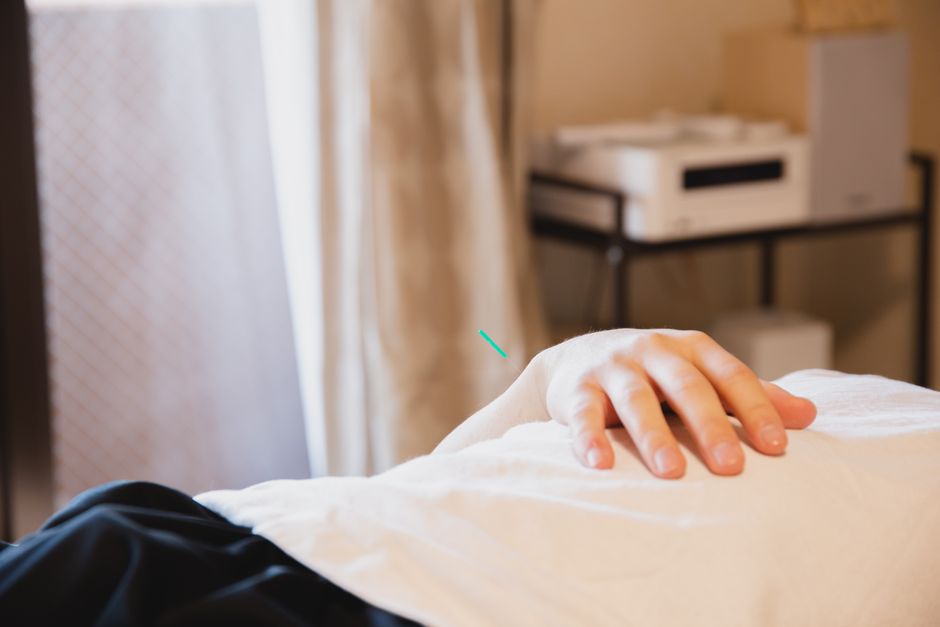
Cover image source: Pexels (photo by Ryutaro Tsukata)
🌿 A gentle note from us
The practices shared here are rooted in Traditional Chinese Medicine traditions that have been passed down for thousands of years. We share them as educational resources — not as prescriptions or medical advice.
Every body is different. What brings balance to one person may not be right for another. Please listen to your body, go gently, and check with a qualified healthcare provider before trying any new wellness practice — especially if you are pregnant, managing a chronic condition, or have specific health concerns.
Some links on this site are affiliate links. If you choose to purchase through them, we may earn a small commission at no extra cost to you. This helps us continue sharing ancient wisdom for modern wellness. Thank you for your trust.
1. Beyond Normal Tiredness: The Reality of ME/CFS
When taking a shower makes tomorrow’s thinking difficult, or a short conversation leaves you aching for days, the word “tired” feels inadequate. Myalgic encephalomyelitis/chronic fatigue syndrome (ME/CFS, also called CFS/ME) can profoundly restrict work, relationships, eating, and personal care. Some people become housebound or bedbound. Ordinary tiredness often improves after sleep or a lighter schedule; ME/CFS involves a persistent loss of function and an abnormal response to exertion. It cannot be explained simply as everyday burnout or insufficient motivation.
The CDC describes the diagnostic framework as requiring all three of these features:
- A substantial reduction in previous activity for more than six months, accompanied by new fatigue that rest does not resolve.
- Post-exertional malaise (PEM).
- Unrefreshing sleep.
At least one additional feature must be present: cognitive impairment, such as trouble concentrating, or orthostatic intolerance, meaning symptoms that appear or worsen while upright. Clinicians also assess symptom severity and frequency. No single laboratory test confirms the diagnosis. See CDC: Fast Facts about ME/CFS.
Care should begin with the symptoms that most disrupt the person’s life, while preventing treatment itself from worsening illness. This patient-led priority setting is central to the CDC’s clinical care guidance. Someone seeking Traditional Chinese Medicine (TCM) deserves the same respect for disability and the same medical safeguards as someone choosing any other supportive treatment.
2. The Critical Medical Window: What to Rule Out First
Persistent exhaustion warrants medical assessment before it is attributed to a TCM pattern. The six-month diagnostic threshold is not a reason to postpone evaluation, symptom support, or help with daily activities. A targeted workup can identify treatable explanations and conditions that coexist with ME/CFS.
Important possibilities include thyroid dysregulation, severe anemia, Addison’s disease or other adrenal insufficiency, autoimmune conditions, obstructive sleep apnea, occult infections, and cardiac disease. Medication effects, nutritional deficiencies, and other sleep disorders may also contribute. The appropriate evaluation depends on the history, examination, and specific symptoms; everyone does not need every possible test.
A clinician may begin with a blood count, thyroid function, iron studies, electrolytes, kidney and liver function, and inflammatory markers. Sleep testing, infection testing, or autoimmune investigations may follow when indicated. Routine results can be normal even when ME/CFS causes severe disability. The CDC’s evaluation guidance supports targeted testing and cautions against indiscriminate investigations that generate misleading positive results.
Suspected adrenal insufficiency requires conventional endocrine assessment; calling it “Kidney exhaustion” cannot establish or exclude Addison’s disease. Similarly, new exertional chest discomfort, abnormal breathlessness, or fainting may require cardiac evaluation. Seek urgent medical care for new chest pain, severe breathing difficulty, stroke-like symptoms, or collapse. Persistent measured fever, unexplained weight loss, and rapidly worsening weakness need prompt review.
TCM’s role here is supportive symptom care. It does not replace treatment of anemia, hormonal deficiency, infection, autoimmune disease, or heart disease, and it has not been shown to eradicate the underlying cause of ME/CFS.
3. Why “Pushing Through” Triggers Crashing: PEM and the NICE NG206 Guidelines
PEM is a disproportionate worsening after physical or mental effort. Symptoms often intensify 12–48 hours later and may persist for days or weeks. Pain, cognitive problems, disturbed sleep, and flu-like symptoms can worsen together. Feeling tolerable during an activity therefore does not establish that the activity was within your limits. The CDC describes pacing as balancing activity and rest within an individual’s “energy envelope.” See CDC: preventing symptom worsening.
NICE guideline NG206 says not to offer graded exercise therapy as it defines it: programs that establish a baseline and then impose fixed incremental increases in physical activity. NICE also rejects exercise as a cure. Its rationale considers reported harms, including deterioration when people exceed their limits, alongside the quantitative evidence and clinical experience. Saying that all movement is prohibited would misrepresent the guideline. Any chosen activity program must be individualized, flexible, and supported by professionals with ME/CFS expertise. See NICE’s rationale on exercise.
The energy envelope is a practical planning model, not a measurable reservoir of Qi or a guarantee against relapse. NICE recommends accounting for physical, cognitive, emotional, and social demands, with changes guided by the person’s fluctuating capacity. Pacing is a management strategy, not a cure. See NG206 energy-management recommendations.
For example, an acupuncture appointment includes more than needle time: dressing, transportation, waiting, conversation, and sensory stimulation all add demands. If the entire visit repeatedly costs several days of function, the treatment plan needs revision even if the session itself feels relaxing. A crash is information about tolerability; it is never evidence that a treatment is “releasing toxins” or must be intensified.
4. The Traditional Chinese Medicine Framework: “Xu Lao” and “Fu Xie”
TCM practitioners often discuss chronic exhaustion within Xu Lao, a traditional category of depletion or consumptive illness. This framework organizes symptom patterns; it is not equivalent to the modern diagnostic criteria for ME/CFS. Capitalized terms such as Spleen, Kidney, and Liver refer to traditional functional systems, not solely to anatomical organs. A TCM pattern does not demonstrate organ failure or a laboratory abnormality.
Spleen Qi and Yang deficiency. In traditional theory, Spleen Qi supports digestion and the distribution of nourishment. Fatigue after meals, poor appetite, bloating, loose stools, and heavy limbs may be interpreted as impaired transformation and transportation. The additional language of Yang deficiency emphasizes coldness and reduced warming function. These descriptions may help structure a consultation, but postprandial symptoms also deserve conventional assessment rather than automatic attribution to “dampness.”
Kidney Jing and Yang depletion. Jing, often translated as essence, represents constitutional reserves in TCM; Kidney Yang denotes warming and activating functions. Bone-deep exhaustion, cold limbs, and weakness or aching in the lower back and knees may fit these traditional descriptions. Jing is not a validated measure of mitochondrial energy or endocrine reserve. A historical review describes Spleen-Kidney Yang and other fatigue patterns, while acknowledging weak research methods: Traditional Chinese Medicine for Chronic Fatigue Syndrome.
Lingering or latent pathogens: Fu Xie. Some contemporary TCM interpretations use this concept to describe illness that persists after an apparent infection has passed. Recurrent feverish or sub-febrile sensations, muscle aches, and fluctuating exhaustion may be interpreted as a lingering pathogenic influence combined with depletion. This is a traditional explanatory model. It does not prove that a virus remains active, identify a hidden infection, or establish biomedical “immune exhaustion.” Viral persistence and immune dysfunction are research questions requiring their own evidence. A measured fever should not be dismissed as a traditional pattern.
Liver Qi stagnation. TCM associates the Liver system with the smooth regulation of Qi. Tension, disrupted sleep, digestive discomfort, and feeling simultaneously restless and exhausted may be discussed in these terms. Relating this pattern to autonomic harmony is an analogy, not a confirmed mechanism or a diagnosis of dysautonomia. It also does not mean emotions caused ME/CFS. A systematic review of traditional and complementary treatments documents substantial variation in the TCM patterns used in studies, including Liver-Spleen and Spleen-Kidney categories.
These categories can overlap and change over time. Their useful clinical role is to support attentive, individualized discussion; their limitation is that they cannot establish which treatment will reliably improve PEM or long-term function.
5. What the Clinical Evidence Actually Shows: Acupuncture and Moxibustion Research
Acupuncture uses needles; moxibustion applies heat from burning moxa near or on selected points. Studies of either intervention cannot automatically establish that finger pressure at home has the same effects.
The 2019 Acupuncture in Medicine review included 16 studies involving 1,346 participants. It reported favorable findings for fatigue measures, including the Chalder Fatigue Scale and Fatigue Severity Scale, and some overall response comparisons. However, most studies had poor methodological quality. The authors cautioned that limited data and potentially exaggerated effects prevented firm conclusions. Improvement in a questionnaire score is a possible symptom signal, not proof that the illness has been cured. Zhang and colleagues, 2019.
The 2017 BMC Complementary and Alternative Medicine review included 31 trials with 2,255 participants. All were conducted in China and published in Chinese; treatments lasted 10–90 days. Findings favored some acupuncture and moxibustion comparisons, but the main outcome was a broadly defined “total effective rate.” Only two trials described allocation concealment, and participant and assessor blinding were uncommon. Such limitations make apparently large benefits difficult to interpret. An “effective” classification does not establish restored work capacity, absence of PEM, or sustained recovery. Wang and colleagues, 2017.
The 2022 Medicine network meta-analysis included 51 trials involving 3,473 participants and assessed response rates and the Fatigue Scale-14. Different treatment combinations ranked best depending on the outcome: moxibustion with herbal medicine for response rate, and moxibustion with acupuncture for fatigue scores. The authors reported low GRADE certainty for the combined findings. Network rankings include indirect comparisons and depend on studies being sufficiently comparable. A high ranking therefore cannot establish the best treatment for an individual patient. Fang and colleagues, 2022.
Across this literature, important questions remain about diagnostic definitions, credible comparison treatments, publication bias, longer follow-up, adverse-event reporting, and applicability to people with severe disease. Several reviews may include overlapping trials; their participant totals should not be added as if they represent independent evidence. Future trials need to measure PEM, everyday function, and sustained outcomes alongside fatigue severity.
If acupuncture is chosen, agree on a concrete symptom goal, such as less pain, and a stopping rule for worsening. Use a licensed practitioner with sterile, single-use needles and understanding of ME/CFS. Needling carries risks, including infection and rare serious injury when performed improperly. Moxibustion adds burn and smoke-related concerns and is unsuitable as unsupervised home experimentation. See NCCIH’s TCM safety overview and the systematic review of moxibustion adverse events.
6. Evidence-Informed Acupressure Points for Gentle At-Home Support
“Evidence-informed” requires a careful distinction: these points appear in traditional practice and acupuncture research, but none of the six constitutes a proven home treatment for ME/CFS or PEM. A published ME/CFS acupuncture trial protocol includes this point set; a protocol describes a planned experiment and is not evidence of benefit.
Use a supported sitting or lying position. If touch is comfortable, an optional starting trial is a few seconds of light fingertip contact at one accessible point. Brief pressure for roughly 10–20 seconds may be tried only if well tolerated; this is a cautious comfort suggestion, not a validated ME/CFS dose. There is no requirement to complete all points, repeat daily, or increase duration. Stop for pain, tingling, dizziness, nausea, or increased fatigue, and check for delayed worsening over the following two days.
A cun is a body-proportional measurement, not an inch. Finger-width estimates are approximate; ask a qualified practitioner to demonstrate locations when uncertain.
| Point | Anatomical location | Traditional indication and gentle technique |
|---|---|---|
| Zusanli ST36 | Front-outside of the lower leg, approximately four of your finger-widths below the depression just lateral to the kneecap ligament, about one middle-finger width outside the shin’s front ridge. | Traditionally supports Spleen-Stomach function and Qi. With the leg supported, use a soft fingertip hold on muscle rather than pressing the shin bone. Skip it if reaching strains your body. |
| Sanyinjiao SP6 | Inner lower leg, about four finger-widths above the highest point of the inner ankle bone, just behind the tibia’s inner border. | Traditionally used for Spleen, Kidney, and Liver patterns and sleep-related complaints. Apply light contact without digging into the bone. Avoid self-stimulation during pregnancy unless an obstetric clinician and qualified practitioner approve it. |
| Guanyuan CV4 | Lower abdominal midline, three proportional cun below the navel: approximately three-fifths of the distance from the navel to the upper border of the pubic bone. | Traditionally associated with replenishing foundational Qi. Prefer resting a relaxed palm over the area without deep abdominal pressure. Avoid during pregnancy and over unexplained pain, a hernia, or recent surgery. |
| Shenshu BL23 | Paired lower-back points, 1.5 proportional cun to either side of the spine at the level of the lower edge of the second lumbar vertebra’s spinous process. | Traditionally associated with Kidney support and lumbar discomfort. Have a practitioner identify the points; do not twist or reach forcefully. A helper may provide feather-light contact with consent. Avoid hard balls or deep pressure. |
| Baihui GV20 | Scalp midline near the crown, approximately where a line connecting the tops of the ears crosses the midline; formally five proportional cun behind the anterior hairline. | Traditionally used to lift clear Yang and settle the spirit. Rest one or two fingertips lightly on the scalp with the arm supported. Skip it if holding the arm up is tiring. |
| Neiguan PC6 | Inner forearm, approximately three finger-widths toward the elbow from the wrist crease, between the central palmaris longus and flexor carpi radialis tendons. | Traditionally used for nausea and calming. Support the forearm and use a gentle hold or small circles. Stop immediately if pressure causes an electric sensation or finger tingling. |
The abdominal, lumbar, and scalp landmarks are consistent with published standardized acupoint locations. PC6 has symptom-specific use for nausea in other clinical contexts, as explained in Memorial Sloan Kettering’s acupressure instructions; that does not establish an effect on ME/CFS itself.
Avoid broken, inflamed, infected, or bruised skin. People with bleeding disorders, fragile skin, reduced sensation, or blood-thinning medication should seek individualized advice. Never needle yourself. For someone with severe sensory intolerance, even gentle touch may be too demanding; choosing no acupressure is entirely reasonable.
7. Nourishing the Spleen and Conserving Vitality: Nutrition and Daily Pacing Protocols
In traditional food therapy, warm, cooked meals are often favored for Spleen deficiency. Slow-cooked stews, congee, cooked vegetables, and a modest serving of jujube dates can be comforting options. Consider congee with egg or tofu, or a stew containing beans, fish, or poultry, so the meal supplies protein as well as fluid and carbohydrate. Dates are food rather than a demonstrated fatigue treatment, and their carbohydrate content still matters for people managing blood glucose.
Some TCM advice recommends avoiding raw salads and iced beverages because they are classified as cold or damp-producing. This is a traditional rationale, not evidence that these foods cause ME/CFS or damage the anatomical spleen. Choose cooked vegetables or room-temperature drinks if they improve comfort, but avoid unnecessary restrictions. Nutritional adequacy, affordability, tolerability, and the effort required to prepare meals are more useful priorities than perfect adherence to a food category.
Huang Qi, or astragalus, needs a separate decision. Although it is sometimes added to broth to “tonify Qi,” a medicinal herb does not become risk-free when served as soup. Reliable evidence does not establish astragalus as an ME/CFS treatment. It may worsen autoimmune disease and interact with immune-suppressing medicines; pregnancy and breastfeeding safety are uncertain. Ask your clinician or pharmacist before using it, and do not begin concentrated extracts or herbal megadoses. NCCIH: Astragalus.
The following are practical examples of reducing daily demands, rather than a fixed rehabilitation schedule:
- Choose a smaller task before starting. Instead of preparing an entire dinner, assemble one component while seated. A caregiver, delivery service, or ready-made meal may conserve more energy than any supplement.
- Build in interval rest. Pause between washing, dressing, and eating rather than waiting until all three are finished. Rest duration depends on symptoms; there is no universal activity-to-rest ratio.
- Reduce competing demands. If eating while listening to a podcast increases symptoms, try a quieter meal. Screen time, paperwork, and conversation belong in the same daily budget as physical chores.
- Treat heart rate as an optional clue. A wearable can help you notice that standing at the sink is demanding. There is no universal safe heart-rate zone for ME/CFS, and a low reading does not exclude cognitive or sensory overexertion. Ask an ME/CFS-informed clinician to interpret patterns, especially with orthostatic intolerance or medication affecting pulse. Do not turn tracking into a fitness target.
- Keep breathing comfortable. If soothing, notice a few ordinary breaths while supported. Avoid breath holds, forceful inhalations, or a pace that causes air hunger or lightheadedness. Relaxation is optional symptom support, not a method for overcoming PEM.
- Review the delayed cost. A short note about today’s activity and tomorrow’s symptoms can reveal patterns. A voice memo or caregiver observation may be easier than a detailed diary. Simplify tracking if it becomes another exhausting task.
The aim is a repeatable day that leaves room for essential care. A better morning does not create an obligation to catch up on every postponed task. During a relapse, reassess the plan with the care team and reduce demands as needed.
8. Summary and Healthcare Safety Boundaries
TCM offers a traditional vocabulary for exhaustion and optional approaches to comfort. Acupuncture research suggests possible symptom benefits, but methodological weaknesses limit confidence; neither acupuncture, moxibustion, acupressure, nor herbs has established a cure for ME/CFS. Pacing and respect for PEM remain essential boundaries around every proposed intervention.
Work closely with a primary care provider and, when available, clinicians experienced in ME/CFS. Before adding treatment, record a simple baseline: sleep quality, pain, upright tolerance, and the delayed effects of essential activities. Introduce one change at a time when feasible, agree on what improvement would mean to you, and stop or reconsider interventions that worsen function.
Share the names and ingredients of every herbal product with your healthcare team. Avoid unverified megadoses, promises of pathogen eradication, and advice to push through a crash. New or changing symptoms deserve medical review even after an ME/CFS diagnosis. You do not need to earn care by tolerating a demanding treatment, and needing more rest is not a personal failure.