TCM for Bone Health and Osteoporosis: Kidney Essence, Gu Bi and Gu Wei Patterns, Food Therapy, Acupressure, and When to See a Doctor (2026 Guide)
Cover image source: Pexels
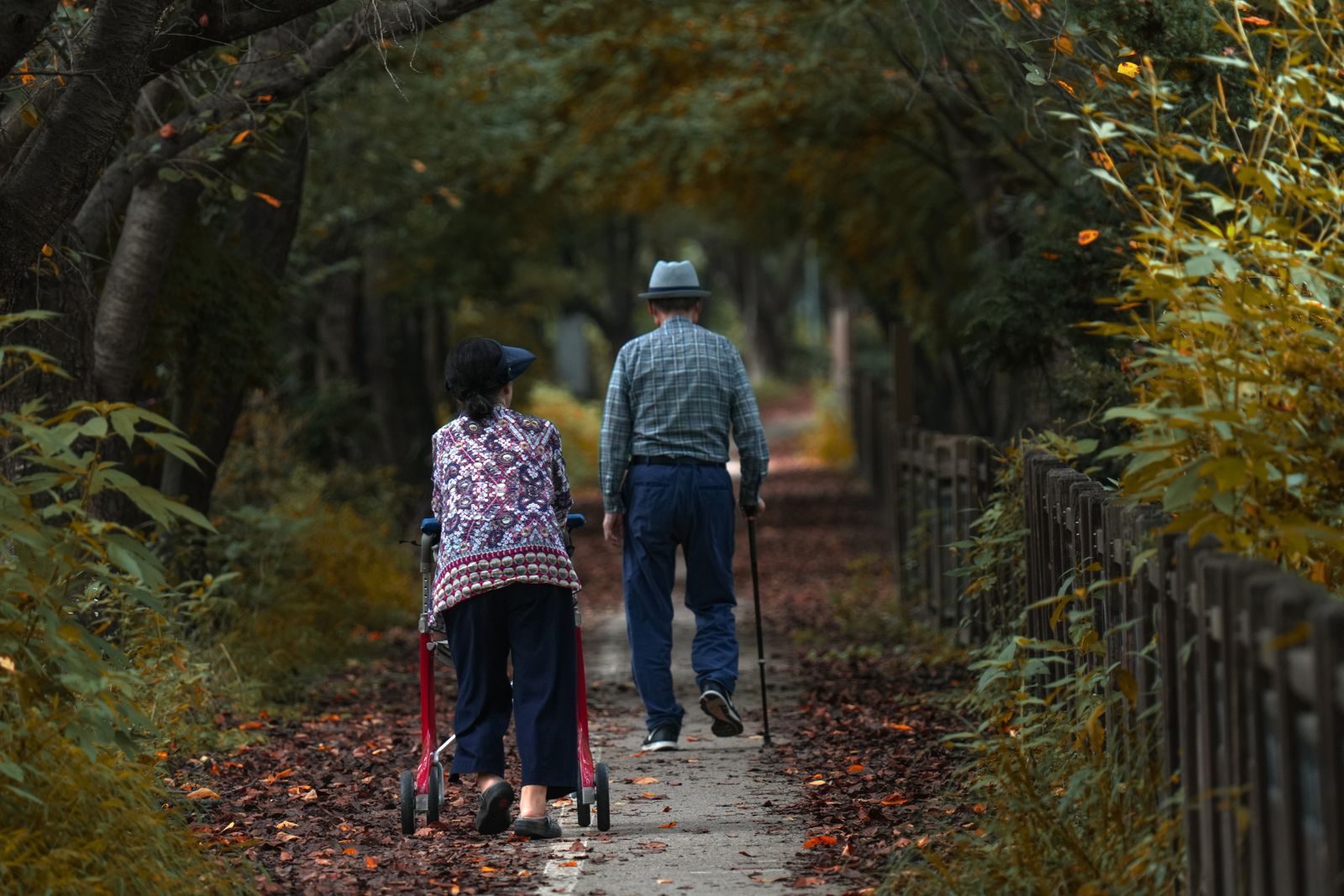
Taipei’s autumn equinox fell on September 23, 2026, and the shortening days invite preparation for winter. Wet leaves on a walking path or a slippery tile outside the bathroom can turn an ordinary step into a wrist or hip fracture. Bone loss usually gives no warning ache before that moment. Alongside your autumn wellness routine, consider whether your bones, balance, and home need attention.
What is happening inside your bones?
Bone constantly remodels: osteoclasts remove older tissue, while osteoblasts build replacement bone. Bone mass generally peaks around age 30; later, removal can outpace formation. Falling estrogen accelerates loss after menopause. Osteoporosis involves both reduced bone mineral density (BMD) and weakened structure, often remaining silent until a fracture. NIAMS explains these underlying changes and risk factors.
A central dual-energy X-ray absorptiometry scan, or DXA, measures hip and spine BMD. The WHO-derived T-score categories compare density with a young-adult reference:
| T-score | Classification |
|---|---|
| ≥ −1.0 | Normal bone density |
| Below −1.0 but above −2.5 | Low bone mass, often called osteopenia |
| ≤ −2.5 | Osteoporosis |
These thresholds primarily guide interpretation in postmenopausal women and older men; younger adults need age-appropriate interpretation. Osteopenia is less severe density loss, but fractures can still occur. A fragility fracture can warrant treatment regardless of the numerical category. See BHOF’s DXA explanation.
Who should arrange screening?
The USPSTF recommendation dated January 14, 2025 gives a B grade to screening women aged 65 or older. For postmenopausal women younger than 65, first identify risk factors, then use clinical risk assessment; those at increased risk should receive DXA, also a B recommendation.
Relevant risks include low body weight, parental hip fracture, smoking, and excess alcohol. FRAX estimates fracture probability from clinical factors, optionally incorporating femoral-neck BMD; it complements DXA rather than replacing the scan or clinical judgment.
For men, the I statement means insufficient screening evidence, not advice to ignore risk. These recommendations concern adults 40 or older without known osteoporosis or previous fragility fractures. Secondary osteoporosis from conditions such as hyperthyroidism or long-term glucocorticoid use lies outside this screening recommendation and needs individualized evaluation. Our menopause guide covers related symptoms without replacing this bone-specific assessment.
Kidney essence, gu bi, and gu wei
Traditional Chinese medicine says the kidney governs bones and generates marrow. Here, “kidney” describes a traditional functional system, not a laboratory diagnosis of kidney disease. The Suwen states: “腎氣熱則腰脊不舉,骨枯而髓減,發為骨痿”—a classical description connecting kidney heat, spinal weakness, and diminished marrow.
Ancient TCM did not contain the modern diagnosis “osteoporosis.” Its association with gu bi (骨痺, bone impediment) and gu wei (骨痿, bone wilting) is a modern interpretive correspondence, not proof that an ancient text described DXA-defined disease.
Four traditional mechanisms discussed in the 2020 primary-osteoporosis consensus are kidney-essence insufficiency (腎精不足), spleen-stomach weakness (脾胃虛弱), liver constraint with blood deficiency (肝鬱血虛), and qi stagnation with blood stasis (氣滯血瘀). These are explanatory mechanisms; the consensus separately specifies six clinical syndrome types. They cannot diagnose low BMD from symptoms. For the broader terminology, see our kidney essence guide.
Herbal evidence: promising signals, limited certainty
Commonly discussed formulas include Zuogui Pill (左歸丸), Liuwei Dihuang Pill (六味地黃丸), Qing’e Pill (青娥丸), Xianling Gubao (仙靈骨葆, XLGB), and Erzhi Pill (二至丸). The 2026 Chinese Medicine review surveys these approaches alongside laboratory mechanisms.
Much clinical evidence comes from small randomized trials with methodological limitations. Changes in BMD or pain are not equivalent to demonstrated prevention of hip fractures. Cell and animal findings about osteoblast signaling cannot establish human benefit. Formulas also differ in composition, preparation, and accompanying conventional treatment, making broad claims about “TCM effectiveness” difficult to apply to an individual prescription.
XLGB has a documented liver-injury warning
A 2024 liver-injury case report discusses the Chinese regulator’s December 2016 adverse-reaction bulletin, issue 72, warning about oral XLGB preparations. It reports 55,388 drug-induced liver-injury cases collected during 2012–2016, including 63 associated with XLGB and 36 involving XLGB alone.
The quoted 0.06% refers to 36/55,388 liver-injury reports, not the probability of liver injury among XLGB users. The authors describe injury without a clear dose or duration relationship, suggesting an idiosyncratic reaction; taking a normal dose does not eliminate the risk.
Herbal formulas require assessment by a qualified TCM clinician and medication review with your usual clinician or pharmacist. Do not buy them for unsupervised long-term use, and do not independently stop prescribed osteoporosis medication. NCCIH’s TCM overview also highlights product-quality and safety concerns.
Acupuncture: what the pooled numbers mean
A 2025 adjunctive-acupuncture meta-analysis reported total-BMD standardized mean difference (SMD 0.47; 95% CI 0.03–0.89; p=0.03; I²=85%), hip BMD 0.55 (0.15–0.95), and lumbar BMD 0.40 (0.21–0.60). SMD expresses standardized differences, not percentage bone gain.
Hip and femoral-neck benefits were clearer at ≤3 months, with nonsignificant findings beyond three months. However, the lumbar subgroup retained a significant longer-duration result. Thus, the paper’s broad short-term conclusion should not be repeated as “all longer-term BMD outcomes were negative.” High heterogeneity and possible publication bias weaken confidence.
A postmenopausal-osteoporosis network meta-analysis favored warm acupuncture plus conventional Western medicine (WA+CWM; reported MD 1.09, 95% CI 1.01–1.17) and electroacupuncture plus conventional medicine (EA+CWM; MD 1.21, 1.12–1.30) over conventional treatment alone for lumbar BMD. These reported comparative estimates are not personal DXA predictions; single-center trials and differing treatments limit interpretation.
NCCIH finds benefits for some pain conditions, while mechanisms remain incompletely understood and nonspecific, including placebo-related, effects contribute. Use a qualified practitioner. These findings do not establish that home acupressure prevents fractures.
Gentle acupressure for comfort
A review of osteoporosis acupuncture prescriptions identifies BL23, ST36, and BL20 as frequently used, with GV4, KI3, and SP6 also prominent. Point frequency is not proof of efficacy.
Finger-width descriptions below are approximate personal landmarks, not ruler measurements. Have a practitioner demonstrate locations. For accessible points, use light fingertip contact for a few comfortable breaths, then release; no validated osteoporosis-specific pressing duration exists. Stop for pain, tingling, bruising, or dizziness.
| Point | Approximate location | Pressing time | Traditional use | Safety reminder |
|---|---|---|---|---|
| BL23 Shenshu, 腎俞 | Lower back, about two finger-widths beside the spine at waist level | Skip self-pressure | Kidney support | No forceful back pressure; practitioner localization |
| ST36 Zusanli, 足三里 | About four finger-widths below the kneecap, just outside the shin crest | A few breaths | Qi and digestive support | Stay off bone and injured skin |
| BL20 Pishu, 脾俞 | Lower thoracic back, about two finger-widths beside the spine | Skip self-pressure | Spleen support | Avoid twisting to reach or deep pressure |
| GV4 Mingmen, 命門 | Lower-back midline near BL23 level | No self-pressure | Warming kidney yang | Never press directly into the spine |
| KI3 Taixi, 太溪 | Hollow between inner ankle bone and Achilles tendon | A few breaths | Kidney nourishment | Avoid swollen or painful tissue |
| SP6 Sanyinjiao, 三陰交 | About four finger-widths above inner ankle, behind shinbone | A few breaths | Spleen, liver, kidney support | Avoid during pregnancy unless professionally advised |
Gentle acupressure is a relatively low-risk comfort practice, not a substitute for fracture prevention. Avoid injured areas and seek advice if you bruise easily or have reduced sensation. Our daily acupressure guide offers broader routine ideas.
Food therapy starts with actual nutrients
NIH ODS calcium recommendations cover total daily intake from food and supplements:
| Adults | Calcium per day |
|---|---|
| Ages 19–50 | 1,000 mg |
| Women 51–70 | 1,200 mg |
| Men 51–70 | 1,000 mg |
| Ages 71 and older | 1,200 mg |
Food sources include dairy, canned sardines or salmon with edible bones, kale, broccoli, bok choy, calcium-set tofu, and fortified beverages. Check labels: tofu and plant drinks vary considerably. Vitamin D helps calcium absorption.
If supplements fill a dietary gap, absorption is best with 500 mg or less at a time. Calcium carbonate belongs with meals; calcium citrate can be taken without food. Review medication interactions and your actual intake before adding pills.
Traditional foods, without nutritional shortcuts
Traditional food therapy associates black sesame, walnuts, mulberries, chestnuts, black beans, Chinese yam, goji berries, and dark leafy greens with nourishing reserves, supporting digestion, or replenishing liver-kidney systems. These are traditional classifications, not modern evidence that those foods treat osteoporosis.
A warming soup before winter can combine beans or tofu, vegetables, and a protein source. Bone broth is not a reliable calcium source; do not count an unmeasured homemade broth as your calcium plan. Our food therapy and medicinal soups guide discusses the culinary tradition.
Include sufficient protein and discuss vitamin D needs when diet or sunlight exposure is limited. Quit smoking, limit alcohol, and avoid excessive caffeine or sodium. A nourishing meal supports care; it cannot substitute for medication when fracture risk warrants treatment.
Strength and balance deserve daily attention
BHOF’s exercise guidance combines weight-bearing activity with muscle strengthening. Higher-impact options include jogging, jumping rope, tennis, stair climbing, and hiking; lower-impact choices include brisk walking, elliptical machines, and step machines. Resistance work can use dumbbells, bands, adapted squats, or controlled chair sit-to-stands.
With osteoporosis, previous fractures, or high fracture risk, ask a clinician or physical therapist which activities fit your situation before starting. Avoid high-impact exercise when unsafe, loaded forward spinal bending, sit-ups, and deep toe-touching. Progress resistance with good form rather than chasing heavier weights.
Tai chi has meaningful fall-prevention evidence
In a 2018 JAMA Internal Medicine randomized trial, 670 adults aged 70 or older at high fall risk trained for six months. Tai Ji Quan: Moving for Better Balance reduced fall incidence 58% versus stretching (IRR 0.42; 95% CI 0.31–0.56) and 31% versus multimodal exercise (IRR 0.69; 0.52–0.94). This supports that structured therapeutic program, not a guarantee from any tai chi video or proof of rebuilding bone.
Practice balance beside a stable counter: supported weight shifts or single-leg standing should never require a risky recovery step. Maintain comfortable hip and ankle mobility. Break up desk time by standing and walking between tasks; regular opportunities to move are more useful than saving every activity for the weekend.
Make autumn routes and your home safer
Clear wet leaves and dry slippery tiles. Replace loose slippers with secure footwear. Light the bedroom-to-bathroom route, install proper bathroom grab bars, secure rug edges, and move electrical cords out of walkways.
When reaching low, hinge at the hips with a long, neutral spine instead of rounding the back. Keep carried objects close, and turn with your feet rather than twisting under load. Ask a therapist to demonstrate adaptations after a vertebral fracture. The MedlinePlus osteoporosis overview explains why movement safety belongs alongside medication and nutrition.
Warning signs: when to seek medical care
The NHS osteoporosis overview describes fractures, back pain, and height loss; do not assume new symptoms are simply aging or a TCM pattern.
| Warning sign | What to do |
|---|---|
| Losing several centimeters of height or developing a stooped posture | Arrange assessment for possible vertebral fractures and bone-density testing. |
| Sudden severe back pain | Seek prompt, same-day assessment; avoid massage or forceful stretching. |
| Suspected fracture after a standing-height fall | Get urgent injury care; inability to bear weight needs emergency assessment. Arrange subsequent osteoporosis evaluation. |
| Unexplained persistent bone pain, night pain, or weight loss | Book prompt medical evaluation for causes beyond osteoporosis. |
| Long-term systemic steroid use | Request a bone-protection review; do not abruptly stop steroids. |
| Periods stopping before expected menopause | Seek assessment for pregnancy, hormonal changes, or nutritional causes affecting bone. |
| Possible medicine or herb reaction, especially jaundice, dark urine, or marked nausea | Stop the suspected nonessential herbal product and seek urgent medical advice; bring all product labels. |
Back pain accompanied by new leg weakness, numbness around the groin, or bladder or bowel changes requires emergency care.
Build a plan that protects independence
Prioritize appropriate DXA assessment, adequate calcium and vitamin D, weight-bearing and resistance exercise, and balance training. Bring your fracture history, medication list, and supplement labels to your next appointment. Use MedlinePlus’s treatment overview to prepare questions about your options.
TCM can contribute food traditions, regular routines, and carefully assessed adjunctive care. Its role should support the practical goal of fewer fractures and safer movement while diagnosis and prescribed treatment remain central.
🌿 A gentle note from us
The practices shared here are rooted in Traditional Chinese Medicine traditions that have been passed down for thousands of years. We share them as educational resources — not as prescriptions or medical advice.
Every body is different. What brings balance to one person may not be right for another. Please listen to your body, go gently, and check with a qualified healthcare provider before trying any new wellness practice — especially if you are pregnant, managing a chronic condition, or have specific health concerns.
Some links on this site are affiliate links. If you choose to purchase through them, we may earn a small commission at no extra cost to you. This helps us continue sharing ancient wisdom for modern wellness. Thank you for your trust.