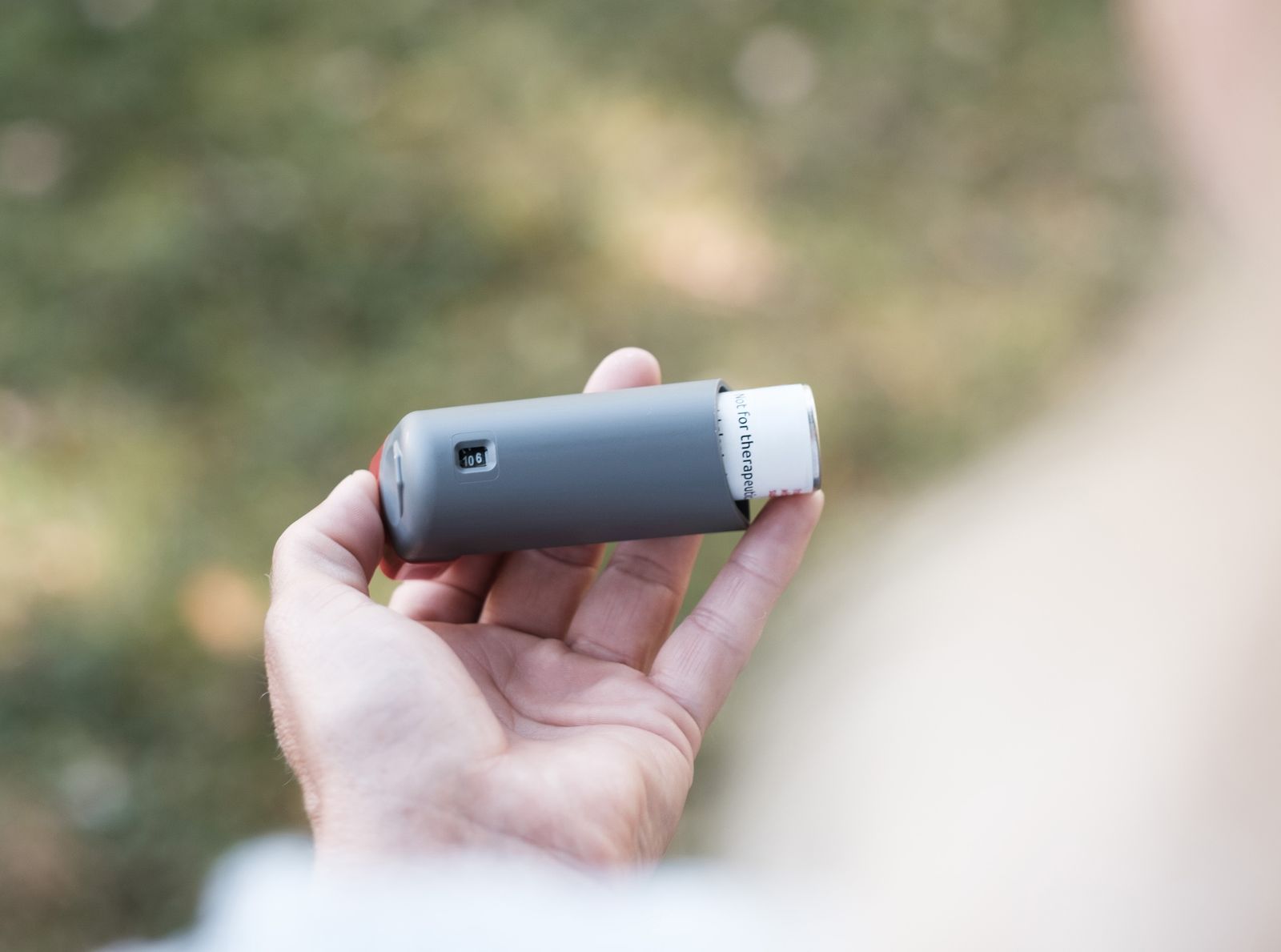
TCM for Asthma in Autumn and Winter: Cold-Air Flare-Ups, Phlegm Patterns, Acupressure, Food Therapy, and What the Research Actually Shows (2026 Guide)
Cover image source: Pexels
It is late September, the first cold morning of the season. You step outside, cold air catches the back of your throat, and the first tight-chest breath interrupts your walk. The inhaler in your pocket suddenly feels more important than the extra sweater you left inside.
That seasonal experience has a medical counterpart: asthma emergency department visits begin climbing in September and continue rising into winter. The exact peak varies by location and age, but “Asthma Peak Season” extends beyond one September week. AAFA explains the seasonal pattern.
Traditional Chinese medicine brings a roughly 2,000-year-old vocabulary to wheezing, phlegm, and cold-triggered chest tightness. Its categories can describe how an illness feels. They do not establish what is happening inside the airways or tell you whether an attack is safe to manage at home.
Start with the medical foundation
Asthma involves chronic airway inflammation, bronchoconstriction, increased mucus production, and airway hyperreactivity: sensitive airways narrow in response to triggers. Cough, wheeze, shortness of breath, and chest tightness are the familiar symptoms. The pediatric review summarizes this physiology.
Reliever inhalers and controller treatment containing an inhaled corticosteroid are the foundation. Bronchodilators open airways; inhaled corticosteroids reduce inflammation and the risk of severe attacks. Your prescribed regimen may use separate or combination inhalers. WHO describes these treatments.
Nothing in this article replaces prescribed asthma treatment. Treat a written asthma action plan as essential, not optional: review it with your clinician and know what to do when symptoms worsen. AAFA recommends an action plan and taking medicines as prescribed.
How TCM organizes wheezing and phlegm
The traditional category xiao chuan (哮喘) describes wheezing and breathlessness. One explanation invokes dormant or “latent phlegm,” su tan (宿痰) or fu tan (伏痰), stirred up by cold, wind, diet, or emotional strain. This is a traditional explanatory model, not proven physiology or a finding on a lung scan.
The classical saying “the lung is the storehouse of phlegm, the spleen is the source of phlegm” (脾為生痰之源,肺為貯痰之器) connects breathing with digestion in that model. “Spleen” here names a traditional functional system; it should not be read as a biomedical diagnosis of spleen disease.
Another principle is “treat the lung during an attack, treat the spleen and kidney between attacks” (發時治肺,平時治脾腎). That describes traditional priorities. During an actual asthma attack, follow your medical action plan immediately.
| Traditional pattern | Features used in traditional pattern assessment |
|---|---|
| Wind-cold / cold asthma (冷哮) | White, watery phlegm; worse in cold air; warm drinks feel comforting |
| Heat asthma (熱哮) | Yellow, sticky phlegm; thirst; symptoms feel worse in heat |
| Phlegm-damp (痰濕) | Heaviness, loose stools, and sensitivity to humidity |
| Lung-spleen qi deficiency (肺脾氣虛) | Fatigue, catching colds easily, and mild shortness of breath |
| Kidney qi not grasping (腎不納氣) | Long-standing illness with exertional breathlessness, traditionally described as difficulty drawing breath inward |
A TCM pattern is not a measurement of airway inflammation. It cannot replace spirometry, a peak-flow reading, or a prescription. Use these labels to discuss the traditional framework, not to grade attack severity.
For related terminology, see our respiratory health and lung support guide and fall wei qi guide. Neither should be used to decide whether to take an inhaler.
What the acupuncture research actually shows
Adults: measurable benefits, with limits
A 2023 systematic review in Complementary Therapies in Medicine pooled 16 randomized sham/placebo-controlled trials in adults. Acupuncture improved FEV1% versus sham: mean difference 6.11, with a 95% confidence interval of 0.54 to 11.68. Asthma quality of life and symptom scores also improved. One trial reported higher Asthma Control Test scores and one fewer exacerbation per year. Other lung-function measures and medication use were not statistically significant. These are positive findings, but the single-trial outcomes should not be mistaken for findings across all 16 trials. Read the 2023 review.
A 2025 umbrella review in the Journal of Asthma brought together 14 systematic reviews covering 167 primary studies and 15,088 participants. Acupuncture therapies improved the reported “total efficacy rate” versus control, with a risk ratio of 1.11 and 95% confidence interval of 1.03 to 1.20. Symptom relief and some lung-function measures also improved. However, only three reviews reported safety outcomes, and AMSTAR-2 assessments were low to moderate. A favorable efficacy measure is not a cure rate. Read the umbrella review.
Children and work still in progress
A 2025 pediatric review included 16 randomized trials and 1,675 children. Acupuncture added to standard therapy improved FEV1 percent predicted in a four-trial pooled analysis and lowered IgE. However, sensitivity analysis was unstable, some immune-marker analyses had high heterogeneity, and nearly all trials took place in China. The paper also notes an earlier Cochrane review finding insufficient evidence to recommend acupuncture for pediatric asthma. Read the pediatric review.
A 2026 randomized sham-controlled study with neuroimaging plans to enroll 72 people with persistent asthma, using the Asthma Control Test as its primary outcome. The cited publication is a protocol, not a results paper. It supplies no outcome evidence yet. Read the published protocol.
NCCIH says acupuncture’s mechanisms remain incompletely understood; expectations and the therapeutic encounter can contribute nonspecific effects. That context belongs beside the positive findings, without erasing them. NCCIH explains the evidence and mechanisms.
None of these findings demonstrates that finger pressure works like acupuncture. None justifies reducing or stopping asthma medication.
A gentle acupressure routine for comfort
The following is an optional comfort practice for a stable day, not asthma treatment. Locations are approximate; finger widths are rough guides, not exact anatomical measurements. Ask a qualified practitioner to demonstrate unfamiliar points. The suggested short timings are comfort limits, not a clinically validated asthma dose.
Dingchuan (EX-B1, 定喘)
Traditionally called “calm the wheezing,” Dingchuan is the best-known traditional asthma point. Find the upper back beside the spine at the seventh cervical vertebra, roughly half a finger width from the midline. Have a partner use a soft fingertip hold for 20–30 seconds on each side during a quiet seated break. Caveat: its name does not mean pressure can stop wheezing; avoid digging around the vertebra.
CV17 Danzhong (膻中)
The approximate landmark is the midline of the breastbone, level with the nipples. Rest two fingertips there with barely perceptible pressure for 20–30 seconds while seated comfortably. Caveat: nipple position varies, so this is an imperfect landmark; do not press hard on the chest or use pressure to investigate chest pain.
LU7 Lieque (列缺)
Look about 1.5 finger widths above the wrist crease on the thumb side, in the small notch above the wrist bone. Support the forearm and make tiny, gentle circles for 20–30 seconds per side during an evening break. Caveat: stop immediately for tingling or numbness. Our cough and sore throat guide provides related traditional context, not evidence of asthma control.
ST40 Fenglong (豐隆)
This traditional “phlegm point” lies roughly two finger widths outside the front edge of the shin, halfway between knee and ankle. With the leg supported, apply mild thumb pressure for 20–30 seconds on each side, once during the routine. Caveat: pressing it has not been shown here to remove airway mucus.
BL13 Feishu (肺俞)
The “lung transport” point is on the upper back, roughly two finger widths beside the spine near the third thoracic vertebra. A partner can rest fingertips lightly for 20–30 seconds on either side while you sit supported. Caveat: it is awkward to locate and reach yourself; a practitioner’s demonstration or a partner’s light touch is more sensible than twisting and pressing hard.
ST36 Zusanli (足三里)
Locate about four finger widths below the outer knee depression and one finger width outside the shinbone. Use small thumb circles for 20–30 seconds per leg during a relaxed daytime pause. Caveat: skip it if the area is injured or unusually tender. See the approximate landmark in our autumn dryness guide.
Never use acupressure during an acute attack or instead of a reliever. Keep pressure mild; stop for pain, bruising, or numbness. Avoid infected skin, rashes, and recent injuries. Ask a clinician first if pregnant, taking blood thinners, or living with a pacemaker; this routine uses manual pressure, not electrical stimulation. Children need adult guidance. There is no need to complete every point.
Breathing practices: useful boundaries
A Cochrane review included 22 studies involving 2,880 adults with mild-to-moderate asthma. Breathing exercises improved quality of life at three months, hyperventilation symptoms at four to six months, and FEV1 percent predicted. But they “probably did not help” asthma symptoms, and adverse effects were not assessed. Read the Cochrane review.
If comfortable, choose one of these gentle practices for up to five minutes. These suggestions are not a claim that each method reproduces the pooled research results.
- Nasal breathing: inhale quietly through your nose, then let the exhale be slightly longer and slower without forcing it.
- Pursed-lip breathing: breathe in gently, then breathe out through loosely pursed lips, as if cooling soup. Avoid straining to empty your lungs.
- Seated lower-rib and abdominal breathing: sit supported, rest your hands around the lower ribs, and allow a small, easy expansion on inhalation. Let the abdomen soften as you exhale.
Practice only when stable, never instead of a reliever, and never with long breath holds or breath-holding games. Stop for dizziness, tightness, or increasing breathlessness and follow your action plan. For another optional movement practice, see our beginner’s Baduanjin guide.
Prepare for autumn and winter first
AAFA lists overlapping fall triggers: back-to-school respiratory viruses, ragweed, outdoor and indoor mold, weather swings, wildfire smoke, and poor indoor air quality. Its seasonal guidance supports these priorities:
- Review your written action plan with a clinician and continue controller medicine through the good months as prescribed.
- Discuss influenza, COVID-19, and RSV vaccination where eligible.
- Reduce ragweed and mold exposure as wet leaves accumulate; address indoor dampness.
- Use suitable indoor air filtration and ventilation, accounting for outdoor pollen and smoke.
For cold-weather activity, cover your nose and mouth with a comfortable scarf or mask to help warm incoming air, and warm up gradually before exercise. Discuss a specific exercise plan if cold air reliably brings on symptoms. Our seasonal allergy guide offers related background.
The AAFA 2026 Asthma Capitals report ranks US locations using asthma prevalence, emergency visits, and mortality. Location matters, but a ranking cannot predict an individual’s next attack.
The often-cited historical estimate of 262 million people affected and 455,000 deaths refers to 2019, not a 2026 count; those figures also appear in the pediatric review. The WHO fact sheet now carries updated estimates and emphasizes that most asthma deaths occur in low- and lower-middle-income countries, where under-diagnosis and under-treatment remain problems.
Food therapy without treatment claims
In the traditional seasonal model, autumn belongs to the Lung and dryness is a central concern. Pear or Asian pear, lily bulb (bai he, 百合), white fungus (yin er, 銀耳), and honey appear in traditional autumn cooking. Our autumn dryness and lung yin guide explains that food vocabulary.
A TCM-leaning menu might include cooked pear, lily-bulb porridge, white-fungus soup, or Chinese yam (shan yao, 山藥) in a meal. For a traditional cold pattern, use small culinary amounts of fresh ginger (sheng jiang, 生薑). Choose familiar foods you enjoy; there is no need to assemble a medicinal recipe.
Never give honey to infants under 12 months, as also cautioned in our cough guide.
Bitter apricot kernel (bei xing, 北杏) contains amygdalin, which can release cyanide. Never eat it raw or in quantity. Sweet apricot kernel (nan xing, 南杏), sold for food use, is the safer culinary choice, but that does not establish an unrestricted safe dose. Our autumn food guide cautions about apricot-kernel toxicity. For home asthma-related recipes, simply omit kernels; do not attempt to make bitter kernels safe yourself.
No food treats asthma or replaces inhaled medication. Anyone with a food allergy should avoid experimenting with new foods during a flare.
When to see a doctor
Use your personalized action plan. Call emergency services for emergency signs; do not wait to try pressure points or food. AAFA directs people to emergency care when symptoms fail to improve after asthma medicine. See its emergency guidance.
EMERGENCY — call emergency services
- The reliever is not working, or relief is short-lived and it is needed again within a few hours.
- You cannot speak in full sentences.
- The chest retracts, or neck and shoulder muscles visibly work to breathe.
- Lips or fingertips turn gray or blue.
- Drowsiness or confusion develops.
- Peak flow enters the red zone of your action plan.
- A child stops playing and cannot catch their breath.
SEE YOUR CLINICIAN — arrange a review
- Asthma wakes you at night more than once a week.
- You need a reliever for symptoms more than twice a week; review frequency against your prescribed regimen.
- Symptoms after a cold will not settle.
- You need repeated courses of oral steroids.
- You are considering changing, reducing, or stopping medication.
Do not wait to cross a weekly threshold if breathing is worsening now. Bring symptom notes, inhaler-use details, and any peak-flow readings to the review.
FAQ
Can acupressure replace an inhaler?
No. The acupuncture findings above do not establish finger pressure as asthma treatment. Use your prescribed inhaler and action plan.
Can acupuncture cure asthma?
No cure has been demonstrated. The reviews report improvements in selected outcomes, with meaningful limitations; they do not establish elimination of asthma. See the adult review.
Is it safe to take Chinese herbs alongside asthma medication?
Do not assume a combination is safe. Ask your clinician and pharmacist to review the exact ingredients and doses before starting, and include a qualified herbal practitioner in that discussion. Keep prescribed asthma medicine in place.
Are breathing exercises enough on their own?
No. The Cochrane findings support possible complementary benefits, while asthma symptoms probably did not improve. They do not support replacing medication. Read the review.
A practical way forward
Start with the inhaler regimen and a reviewed action plan. Prepare for cold air, viruses, and your known triggers. If you enjoy traditional food or gentle pressure, keep it optional and confined to stable days. Judge asthma control with your clinician, symptoms, and appropriate measurements—not by whether a warming meal or pressure point feels reassuring.
🌿 A gentle note from us
The practices shared here are rooted in Traditional Chinese Medicine traditions that have been passed down for thousands of years. We share them as educational resources — not as prescriptions or medical advice.
Every body is different. What brings balance to one person may not be right for another. Please listen to your body, go gently, and check with a qualified healthcare provider before trying any new wellness practice — especially if you are pregnant, managing a chronic condition, or have specific health concerns.
Some links on this site are affiliate links. If you choose to purchase through them, we may earn a small commission at no extra cost to you. This helps us continue sharing ancient wisdom for modern wellness. Thank you for your trust.