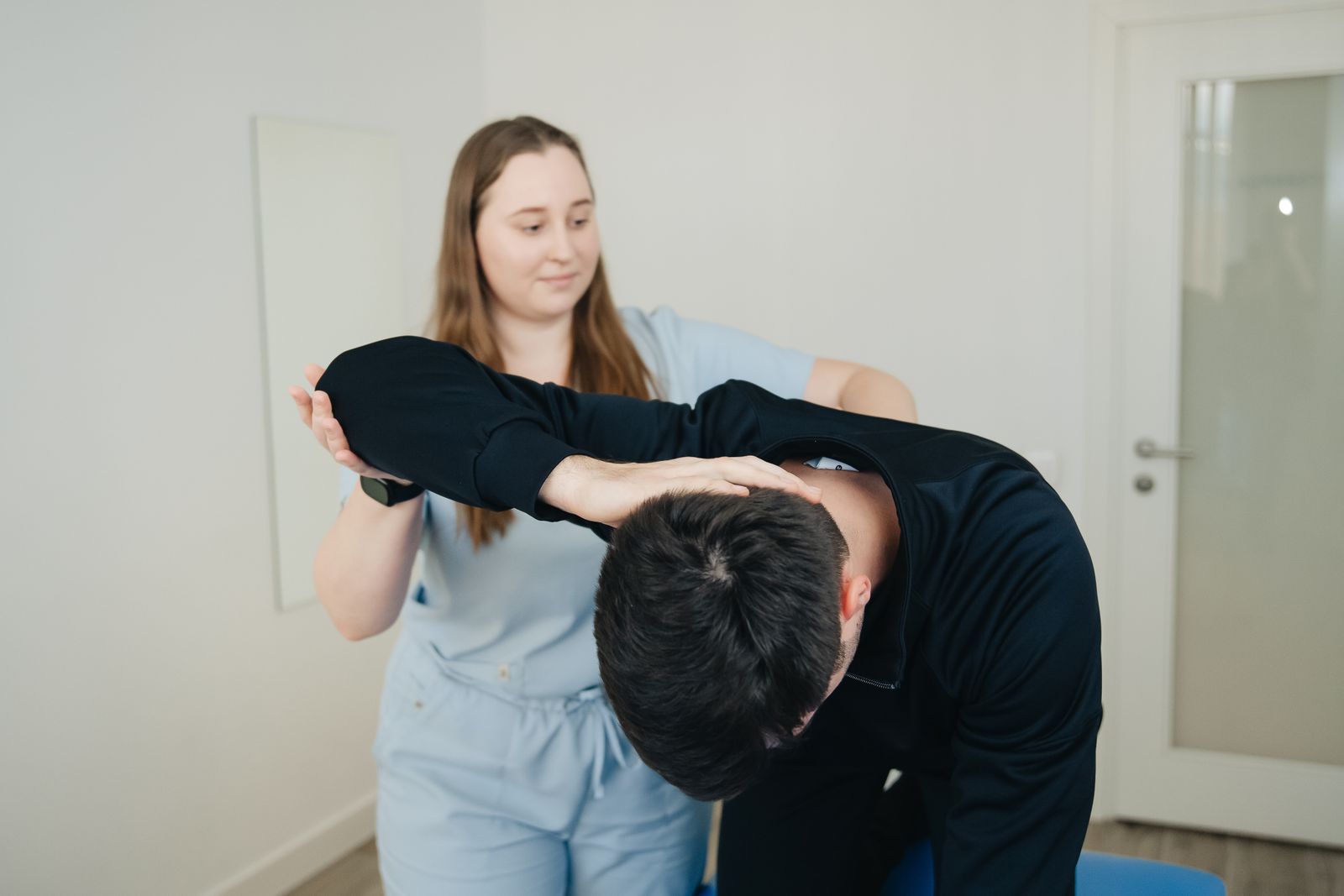
TCM for Ankylosing Spondylitis: Kidney Yang, Cold-Damp, and Why Movement Comes First
Cover image source: Pexels (photo by Funkcinės Terapijos Centras)
🌿 A gentle note from us
The practices shared here are rooted in Traditional Chinese Medicine traditions that have been passed down for thousands of years. We share them as educational resources — not as prescriptions or medical advice.
Every body is different. What brings balance to one person may not be right for another. Please listen to your body, go gently, and check with a qualified healthcare provider before trying any new wellness practice — especially if you are pregnant, managing a chronic condition, or have specific health concerns.
Some links on this site are affiliate links. If you choose to purchase through them, we may earn a small commission at no extra cost to you. This helps us continue sharing ancient wisdom for modern wellness. Thank you for your trust.
Imagine waking at 5 a.m. with your lower back and buttocks so stiff that getting moving takes 30–40 minutes. This is an illustrative scene, not a patient report or a diagnostic time cutoff. When rest makes stiffness worse, movement helps, and pain wakes you overnight or near dawn, think beyond a “thrown-out back”: this pattern suggests inflammatory back pain. Symptoms often begin before age 40, although later onset is possible. These clues deserve assessment, not a diagnosis from an article. MedlinePlus describes this symptom pattern and typical age of onset.
Traditional Chinese medicine offers a language for discussing cold sensitivity and stiffness. Its most useful place here is alongside a clear medical diagnosis, appropriate medication, and a movement plan—not as a promise that a pressure point can release an inflamed or fused spine.
What ankylosing spondylitis actually is
Ankylosing spondylitis, or AS, is an immune-related chronic inflammatory disease affecting the sacroiliac joints, where the pelvis meets the spine, and the spine itself. It belongs within axial spondyloarthritis; AS is also called radiographic axial spondyloarthritis. Persistent inflammation can lead to structural damage and, in some people, fusion.
The disease can extend beyond the back. Uveitis affects the eye, psoriasis affects the skin, and inflammatory bowel disease affects the intestine. There is no cure, but treatment can control inflammation and help preserve function. NIAMS explains these features and treatment goals.
A rheumatology assessment may include examination, X-rays or MRI, and blood tests such as CRP, ESR, and HLA-B27. A genetic result alone does not diagnose AS. MedlinePlus explains the diagnostic workup.
This week’s autumn question: does damp weather matter?
In late October, cooler mornings and damp conditions are a practical concern in many parts of the Northern Hemisphere, although local weather varies. Keep a comfortable indoor movement option ready for days when going outside feels unappealing. Weather can be a planning cue without becoming an explanation for every symptom.
A Hefei time-series study published in BMC Musculoskeletal Disorders in 2021 linked high relative humidity with more AS outpatient visits. Its abstract reports relative risks of approximately 1.11 at a one-day lag and 1.12 at a seven-day lag, comparing high humidity with the study’s reference exposure. The full-text results give slightly different estimates, so these should not be treated as precise personal forecasts. Xin and colleagues’ study.
This was a population-level association with health care use. It did not establish that humidity directly inflames your spine, measure an individual’s flare mechanism, or prove the traditional idea of “dampness.” If symptoms worsen during a wet week, record sleep, activity, medication adherence, and symptoms together; do not automatically blame the weather or change medication.
The TCM map: kidney yang and cold-damp
The following is traditional theory, not a measured biological mechanism. TCM discussions place AS-like presentations under categories including Dà Lóu (大僂, marked spinal stooping) and Gǔ Bì (骨痺, bone-related painful obstruction). These historical categories do not correspond exactly to a modern diagnosis. A Beijing Journal of Traditional Chinese Medicine discussion describes these classifications.
In that framework, the “kidney” governs bones and produces marrow, while the Governor Vessel, or Du Mai (督脈), follows the spinal midline. Kidney yang insufficiency describes inadequate warming and support; cold-damp obstruction describes a pattern of cold sensitivity, heaviness, pain, and restricted movement. A practitioner may combine these patterns when evaluating someone whose back feels better with warmth. A clinical account of traditional pattern differentiation explains this reasoning.
“Kidney deficiency” in this vocabulary does not mean kidney failure, and a preference for heat does not establish the pattern. Other traditional patterns, including damp-heat, are also described. This is a traditional map for organizing observations; it cannot replace MRI findings, CRP measurements, or a rheumatologist’s assessment of disease activity.
What the acupuncture evidence does—and does not—show
Two meta-analyses published in Frontiers in Neurology in January 2026 reported favorable pooled results. Their estimates describe differences between study groups, not the improvement an individual should expect. MD means mean difference; a negative value favors the acupuncture group for these outcomes.
| Outcome | Zhang et al.: 35 randomized trials | Wang et al.: 52 randomized trials |
|---|---|---|
| BASDAI, a disease activity questionnaire | MD −1.55; 95% CI −1.97 to −1.13 | Not summarized here |
| BASFI, a function questionnaire | MD −1.47 | Not summarized here |
| ASDAS, a disease activity score | MD −0.57 | Not summarized here |
| VAS pain score | MD −1.30 | MD −1.26; 95% CI −1.44 to −1.09 |
| CRP, an inflammation marker | MD −7.12 | MD −3.49 |
| ESR, another inflammation marker | MD −7.22 | MD −5.36 |
| Morning stiffness duration | Not summarized here | Reported MD −1.32 |
Sources: Zhang et al. and Wang et al.. Scores, laboratory measurements, and duration are different kinds of outcomes; do not compare their magnitudes directly. The stiffness estimate is reproduced as reported, without translating it into minutes saved for a reader.
Zhang’s review reported no serious acupuncture-related adverse events in the included trials. That means none were reported, not that rare complications are impossible. The evidence comes predominantly from China, blinding is difficult, and heterogeneity is substantial. Many interventions supplemented conventional medication, and the reviews should not be counted as wholly independent bodies of trials. These limitations temper confidence in the pooled benefits. Zhang et al.; Wang et al..
These findings do not establish disease modification: acupuncture cannot be relied on to stop fusion or change the disease’s long-term course. It cannot replace prescribed NSAIDs, biologics, or other disease-modifying antirheumatic drugs. Conventional DMARDs such as methotrexate are generally not effective for purely axial disease; treatment selection depends on the joints and other organs involved. ASAS-EULAR recommendations.
Needling belongs with a qualified, appropriately licensed Chinese medicine or acupuncture practitioner. Finger pressure is a different intervention: the acupuncture effect sizes above cannot be transferred to self-acupressure. The home sequence below is an optional comfort practice, not an evidence-based treatment for spinal inflammation.
Movement first: a gentle morning routine
The ASAS-EULAR 2022 recommendations emphasize regular exercise, smoking cessation, and consideration of physical therapy. They report that supervised exercise is more effective than home exercise. That makes stretching, posture, and an individualized activity program a higher priority than any pressure point. Guideline; freely accessible author manuscript.
The following 10–15-minute example is an editorial scheduling template, not a trial-tested dose or an official guideline sequence. Its counts are starting suggestions to adapt with a physical therapist. NASS provides a physiotherapist-developed exercise resource for building an individualized program.
Before trying spinal movements, get individualized instruction if you have known fusion, osteoporosis, a previous fracture, pronounced stooping, or substantial pain. A fused segment should never be forced to move. If getting onto the floor is difficult, request seated or standing alternatives.
- Warm shower: about 3 minutes. Use comfortable warmth and secure footing. Let yourself relax without treating heat as permission to push farther into a stretch.
- Small cat-cow movements: 5 slow cycles, about 1 minute. On hands and knees, gently alternate a small rounding and easing of the back. Keep the neck comfortable; avoid end-range bending. Skip this if your therapist has restricted spinal flexion.
- Prone press-up: up to 5 small repetitions, about 1 minute. Only if cleared for extension, lie on your stomach and use your forearms or hands to lift the upper chest slightly while keeping the pelvis supported. Do not straighten the arms to force an arch. Stop if back or leg pain increases; supported prone lying may be the better option.
- Thoracic rotation: 3 gentle turns each way, about 1 minute. Sit tall on a firm chair with arms folded loosely. Turn the upper trunk only through an easy range, keeping the pelvis quiet. Do not use your arms as levers or twist through a fused spine.
- Wall angels: 5 easy repetitions, about 1 minute. Stand with your back near a wall and slide your arms upward only as far as comfortable. Your head and arms do not have to touch the wall. Avoid forcing the neck backward or flaring the ribs.
- Hip flexor stretch: 20 seconds per side, allowing about 2 minutes for setup and transitions. Hold a counter in a short split stance. Gently tuck the pelvis and shift forward until the front of the rear hip feels a mild stretch. Keep the lower back from arching; do not bounce.
- Breathing and chest expansion: 5 slow breaths, about 1 minute. Sit comfortably with hands on the lower side ribs. Breathe into the hands, then exhale without straining. Stop if dizzy; new chest pain or breathlessness needs assessment.
Allow another minute or two to stand, walk gently, and notice your response. Shorten the session during a flare rather than forcing the schedule. If exercise leaves symptoms clearly worse afterward, ask your therapist to adjust the range, position, or workload. This routine is a starting point for daily mobility, not your entire weekly activity prescription.
Optional self-acupressure: keep it light and brief
Set aside 3–5 minutes for a relaxed sequence. The timings and pressure ceiling below are conservative comfort suggestions, not validated AS treatment doses. Aim for painless contact or mild tenderness; on a 0–10 pain scale, never exceed 3–4, and use less whenever possible.
The anatomical landmarks below are approximate and vary slightly between sources. Have a qualified practitioner identify back landmarks before attempting them; finger widths are only rough guides. Sit with support, bring a hand or foot within easy reach, and skip any point that requires straining or twisting.
| Point | Location | Suggested contact and sensation |
|---|---|---|
| GV4, Mingmen (命門) | Midline hollow below the L2 spinous process, between L2 and L3. | Rest a warm palm over the area for 30 seconds. Seek gentle warmth, not deep pressure. |
| BL23, Shenshu (腎俞) | Beside the lower border of L2, about two finger widths from midline; formally 1.5 proportional body-cun. | Light fingertip contact for 20 seconds per side; mild local softness or tenderness only. |
| SI3, Houxi (後谿) | Make a loose fist; find the little-finger end of the palm crease where palmar and dorsal skin meet. | Gently press for 20 seconds per hand; expect a small local ache at most. |
| BL62, Shenmai (申脈) | Hollow immediately below the outer ankle bone. | Use a fingertip for 20 seconds per side; comfortable, localized pressure only. |
| GB34, Yanglingquan (陽陵泉) | Hollow just in front of and below the fibular head, outside the upper calf. | Touch lightly for 20 seconds per side; no tingling or shooting sensation. |
| BL40, Weizhong (委中) | Midpoint of the crease behind the knee. | With the knee relaxed, use feather-light contact for 10 seconds per side; never dig into the hollow. |
In traditional teaching, SI3 is associated with opening the Governor Vessel, while GB34 is a meeting point associated with the sinews. These are traditional roles, not proof that pressing the hand or leg changes spinal inflammation.
Never press directly onto a spinal bony prominence or use a hard ball against the spine. At GV4, broad resting contact replaces focal pressure. Stop immediately if pressure causes numbness, an electric sensation, or symptoms traveling down a leg. The back of the knee and the area around the fibular head require particular gentleness.
Get clinical advice before this practice if you have osteoporosis, broken or infected skin, fever, or are pregnant; avoid damaged skin entirely. Do not massage a swollen, hot, or unusually painful leg. A point that hurts is not evidence of “blocked energy” that needs stronger pressure.
Warmth and herbs: comfort with clear boundaries
A comfortably warm foot soak, a shower, or an ordinary ginger drink can make a daily routine feel more pleasant. None should be presented as a way to reverse fusion or remove inflammation. Avoid scalding water, concentrated ginger remedies, and skin applications that sting; choose plain warmth if ginger irritates your stomach or skin.
Moxibustion uses burning mugwort near or on designated areas. Have it performed by a qualified practitioner rather than trying prolonged heating over spinal bony prominences yourself. Burns are a recognized risk, and reduced skin sensation makes judging heat particularly unsafe. Smoke can also be troublesome for sensitive airways. NCCIH’s safety overview discusses moxibustion complications.
Traditional “kidney and bone strengthening” prescriptions may contain du zhong (杜仲), xu duan (續斷), or gou ji (狗脊). These names are not a shopping list: formula selection and dosing belong with a qualified Chinese medicine practitioner who knows your diagnosis and complete medication list. A clinical paper describes these traditional herbal roles.
Before taking a formula, have your prescriber and pharmacist review it alongside NSAIDs, methotrexate, biologics, and supplements. Interaction information can be incomplete, particularly for mixed formulas; absence of a documented interaction is not proof of compatibility. Agree on liver and kidney function monitoring appropriate to the combined regimen. Avoid untraceable patent medicines: contamination with heavy metals and undeclared pharmaceuticals is a documented concern. NCCIH’s TCM safety guidance.
Red flags: when to stop self-care
Sudden severe back or neck pain after even a minor fall or bump needs urgent medical assessment and appropriate imaging. A systematic review cites roughly fourfold greater lifetime fracture risk in AS compared with unaffected people. This is a group estimate, not an individual prediction. A rigid spine can fracture after seemingly trivial trauma; do not stretch or manipulate the pain away. Review of fractures in ankylosing spinal disorders.
New leg weakness, spreading numbness, numbness around the groin, or loss of bladder or bowel control requires emergency care immediately. These can indicate nerve compression, including cauda equina syndrome. New difficulty passing urine is also concerning; do not wait for incontinence. NHS guidance on cauda equina warning symptoms.
A painful red eye, light sensitivity, or blurred vision requires same-day eye assessment. Uveitis is a recognized complication of AS, and a pressure-point routine cannot address it. MedlinePlus guidance.
Fever, unexplained weight loss, or escalating night pain that no longer follows your usual pattern needs prompt evaluation, especially while taking immune-modifying medication. A clearly worsening stoop or decreasing chest expansion also warrants reassessment rather than harder stretching. These changes should not automatically be labeled cold-damp or ordinary aging. NIAMS symptom overview.
Avoid high-impact spinal adjustments and forceful “cracking” maneuvers. The fracture review describes unstable injuries and neurological deterioration associated with manipulation of injured ankylosed spines. Tell anyone providing hands-on care that you have AS and disclose any fusion or osteoporosis. Fracture review.
A weekly schedule you can actually use
This is a planning example, not a minimum effective dose established by research. Keep prescribed medication and follow-up appointments in place, and let your therapist revise the movements and frequency.
| When | Suggested time | Practical plan |
|---|---|---|
| Every morning | About 12 minutes | Warm shower, the adapted mobility sequence, and easy chest-expansion breathing. |
| Every evening | About 5 minutes | Optional gentle acupressure, a comfortable posture reset, and a quick note about symptoms. |
| Twice weekly | Session length set by the provider | Supervised physical therapy or an appropriately led AS exercise group; request individualized modifications. |
On the symptom note, record what matters to you: getting dressed, turning to look behind you, sleeping through the night, or walking comfortably. Bring persistent changes to your care team. A temporary soothing sensation after heat or touch is useful information, but it does not show that disease activity has fallen.
Bottom Line
- Prioritize individualized movement, posture, and supervised exercise over pressure points.
- Continue prescribed treatment; traditional patterns and acupuncture cannot substitute for inflammation control.
- Use gentle touch and comfortable warmth only as optional comfort measures.
- Review herbs and medication combinations with qualified practitioners and a pharmacist.
- Act urgently on injury-related pain, neurological symptoms, or a painful red eye.
Keep reading
- TCM and rheumatoid arthritis
- Bone health, osteoporosis, and the TCM kidney framework
- Lumbar disc herniation and sciatica
- Winter wellness and kidney yang
- Acupressure for lower back pain
For your next appointment, open the free NIAMS ankylosing spondylitis guide or MedlinePlus patient overview. Bring a short symptom record and ask which movements fit your spine, which warning signs need urgent action, and how your treatment plan is controlling inflammation.