TCM for Acid Reflux and GERD: Liver-Stomach Disharmony, Acupressure Points, Food Therapy, and When to See a Doctor (2026 Guide)
Cover image source: Pexels
You finish dinner late, answer one more message, and finally lie down. An hour later, a burning sensation rises behind your breastbone. Your throat tastes sour or bitter, and swallowing does little to clear it. By morning, you are wondering whether yesterday’s coffee, an argument, or the meal itself was responsible. Repeated nights like this can turn eating and sleeping into negotiations with your stomach.
Western medicine asks whether stomach contents are escaping into the esophagus, whether its lining is injured, and which treatment will reduce exposure. Traditional Chinese medicine (TCM) asks how digestive symptoms cluster with appetite, temperature preferences, tension, and bowel habits. Both conversations can be useful, provided their explanations and evidence remain distinct.
This guide explores TCM for acid reflux and gastroesophageal reflux disease (GERD) as supportive care: gentle acupressure, practical food choices, and professionally supervised treatment. It examines research without promising a cure or asking you to abandon prescribed medicine. First, however, chest pain, bleeding, or difficulty swallowing requires medical assessment. A comforting ritual belongs alongside appropriate diagnosis, never ahead of it.
GERD through the medical lens
GERD develops when reflux of stomach contents causes troublesome symptoms or complications. Heartburn and regurgitation are typical; cough and hoarseness can occur but have other causes. The StatPearls GERD overview estimates US prevalence at about 20% and describes non-erosive reflux disease (NERD) as accounting for 60–70% of cases. NERD means visible erosions are absent on endoscopy, not that symptoms are imaginary.
The lower esophageal sphincter (LES) and diaphragm form an antireflux barrier. Low LES pressure or inappropriate relaxation lets stomach contents travel upward. Delayed gastric emptying can contribute by prolonging stomach distension; increased abdominal pressure can also promote reflux. These mechanisms do not occur equally in every patient.
Proton pump inhibitors (PPIs) are first-line medication. For typical symptoms without alarm signs, the 2022 ACG guideline by Katz and colleagues recommends an eight-week trial before a meal. Inadequate response calls for diagnostic endoscopy and reassessment. Alarm symptoms justify earlier investigation; eight weeks is not a mandatory waiting period. Persistent symptoms may also require reflux testing rather than automatically escalating treatment.
The TCM framework: patterns behind upward discomfort
Classical TCM has no diagnosis identical to GERD. Related descriptions include sour regurgitation (tun suan, 吞酸), belching (ai qi, 噯氣), and plum-pit qi (mei he qi, 梅核氣), a globus-like sensation of something lodged in the throat.
A central framework is liver-stomach disharmony (gan wei bu he, 肝胃不和). Here, “liver” and “stomach” describe traditional functional relationships. Liver disharmony does not mean liver damage. The pattern review in the Journal of Traditional Chinese Medical Sciences explains this relationship and its use in digestive complaints.
| Traditional pattern | Features considered during assessment |
|---|---|
| Liver qi invading the stomach (gan qi fan wei, 肝氣犯胃) | Belching, distension, and reflux associated with emotional strain or anger. Long sedentary days may accompany this presentation; they do not establish the diagnosis. |
| Qi stagnation transforming into fire (qi yu hua huo, 氣鬱化火), also described as liver-stomach constrained heat (gan wei yu re, 肝胃鬱熱) | Bitter taste, sour regurgitation, irritability, a red tongue with yellow coating, and a wiry, rapid pulse. |
| Spleen-stomach deficiency cold (pi wei xu han, 脾胃虛寒) | Regurgitation even when hungry, fatigue, feeling cold, and poor appetite. Middle deficiency with upward qi (zhong xu qi ni, 中虛氣逆) describes an overlapping traditional mechanism. |
| Qi-phlegm stagnation (qi zhi tan zu, 氣滯痰阻) | Throat fullness or globus, often accompanying tension. Actual difficulty swallowing needs medical evaluation. |
The shared endpoint is stomach qi rebelling upward (wei qi shang ni, 胃氣上逆): digestion is described as moving in the wrong direction. This resembles the experience of regurgitation, but it is not a measurement of LES function. Stress-related symptoms can be discussed in either system; a tongue or pulse assessment cannot establish esophageal acid exposure. Our spleen and stomach guide explains the broader traditional vocabulary.
What the evidence supports—and where it stops
GERD trials suggest an adjunctive role
The 2025 Journal of Clinical Gastroenterology network meta-analysis by Huang and colleagues reports 34 randomized controlled trials in its study-selection section and 2,985 participants in its characteristics section. Its abstract and characteristics paragraph give different study counts, an inconsistency worth acknowledging.
Acupoint stimulation combined with Chinese herbal medicine improved LES pressure and reduced esophageal acid exposure compared with conventional treatment in the analysis. These findings support further study, not a claim that TCM cures GERD. Evidence quality was generally limited, with certainty varying across comparisons and methodological weaknesses restricting confidence. The combination did not demonstrate significant improvement in GERD-specific quality-of-life scores.
A network analysis also includes indirect comparisons between treatments. Different stimulation methods and herbal prescriptions cannot be treated as one reproducible home remedy. In particular, these results do not establish that pressing your wrist reproduces an acupuncture-and-herbal treatment protocol.
Chronic cough is a narrower question
A 2026 Frontiers in Medicine review included five randomized trials involving 390 people with GERD-related chronic cough. Acupuncture-related treatment significantly improved daytime and nighttime cough scores compared with Western medicine alone. The review discusses ST36, PC6, and CV12 among relevant points, but limited trials and concerns about blinding and allocation constrain confidence.
This is evidence about a selected cough population. It does not establish that every persistent cough comes from reflux or that acupuncture heals esophagitis.
NCCIH’s acupuncture assessment adds an essential caution: mechanisms remain incompletely understood, and benefits can include nonspecific effects from expectations and the therapeutic encounter. Its overview is not an endorsement of acupuncture for GERD. Supportive treatment should have clear goals, such as fewer disturbed nights, with continued medical review.
Four acupressure points for a gentle routine
Home acupressure is best approached as a comfort practice. Evidence for professional acupuncture cannot automatically be transferred to finger pressure. These points are traditionally used for digestive discomfort or tension; none is a proven acid-off switch.
Use a thumb or finger pad rather than a hard tool. On the limbs, aim for mild, dull fullness or aching without pain. Abdominal contact should remain lighter. Stop for pain, bruising, dizziness, tingling, or increased reflux. The measurements below use your own fingers as approximate guides; a practitioner can demonstrate accurate placement.
PC6: Inner Pass (Neiguan, 內關)
Location: Turn your palm upward. From the inner wrist crease, measure about three finger widths toward the elbow. PC6 lies between the two prominent tendons on the inner forearm.
Method and timing: Press with the opposite thumb for one to two minutes, then repeat on the other wrist. Use gentle steady pressure or small circles before a meal or during emotional tension. PC6 is commonly used for nausea and upper-stomach discomfort; relief of nausea does not prove reduced acid reflux.
CV12: Central Venter (Zhongwan, 中脘)
Location: Find the midpoint of the line between your navel and the lower tip of the breastbone, the xiphoid process. Avoid pressing on the breastbone tip itself.
Method and timing: Rest two finger pads on the point with very light contact for one to two minutes before eating, when the stomach is not full. CV12 is a single midline point, so there is no opposite side. Do not dig into the abdomen or seek an aching sensation here. Skip it if the area is tender or symptoms worsen.
ST36: Leg Three Miles (Zusanli, 足三里)
Location: On the outer front of the lower leg, approximately three proportional body inches, or cun, below the outer knee depression—roughly four finger widths—and one finger width outside the shinbone’s front edge.
Method and timing: Sit comfortably and use a thumb for one to two minutes on each leg. Work in the muscle rather than on bone, using pressure that produces mild fullness without pain. Try it before a meal or during a quiet break; it is traditionally used for digestive support.
LV3: Great Rushing (Taichong, 太沖)
Location: On the top of the foot, slide a finger from the gap between the first and second toes toward the ankle. Find the depression between the first two metatarsal bones, just before they converge.
Method and timing: Apply gentle thumb pressure for one to two minutes on each foot. Use it when emotionally tense or before eating. Its traditional association is with constrained liver qi, not direct neutralization of stomach acid.
Avoid a routine immediately after eating: abdominal pressure, bending, or forceful massage may aggravate symptoms. Pregnant people and those with pacemakers, bleeding disorders, recent surgery, or significant illness should ask their clinician first. Pacemaker concerns particularly involve electrical stimulation, which this manual routine does not use. Avoid abdominal self-pressure during pregnancy. Our digestive acupressure guide provides additional context.
Food therapy that respects reflux physiology
Traditional food therapy (shi liao, 食療) offers a way to organize meals, but “warming” and “cooling” labels do not demonstrate antireflux effects. Start with regular mealtimes, comfortable portions, and a record of what actually precedes symptoms.
For a liver-qi stagnation presentation, traditional choices include rose tea (mei gui hua, 玫瑰花), aged citrus peel (chen pi, 陳皮), and mint (bo he, 薄荷). Mint tea can worsen reflux by relaxing the LES, so it is a poor default for heartburn. Rose or citrus-peel preparations also lack established GERD efficacy. More useful priorities are unhurried meals, breaks from sitting, and stress management. The TCM stress guide explores supportive relaxation practices.
For a constrained-heat presentation, traditional advice reduces spicy dishes, alcohol, coffee, and fried foods. These are reasonable triggers to assess, rather than proof that everyone needs permanent restriction. Small portions of bitter vegetables may fit a traditional “heat-clearing” menu; concentrated bitter herbal preparations need professional review.
For a deficiency-cold presentation, warm, easily digested meals might include millet porridge, Chinese yam (shan yao, 山藥), pumpkin, and small culinary amounts of fresh ginger (sheng jiang, 生薑). Warm means comfortably warm, not scalding. Our food therapy and medicinal soups guide offers background; keep reflux meals modest rather than adding a large bowl late at night.
Ginger: faster emptying does not mean reflux relief
In a small double-blind crossover trial in functional dyspepsia, 1.2 g of ginger powder accelerated gastric emptying: median half-emptying time was 12.3 minutes versus 16.1 minutes with placebo. Gastrointestinal symptoms did not significantly improve.
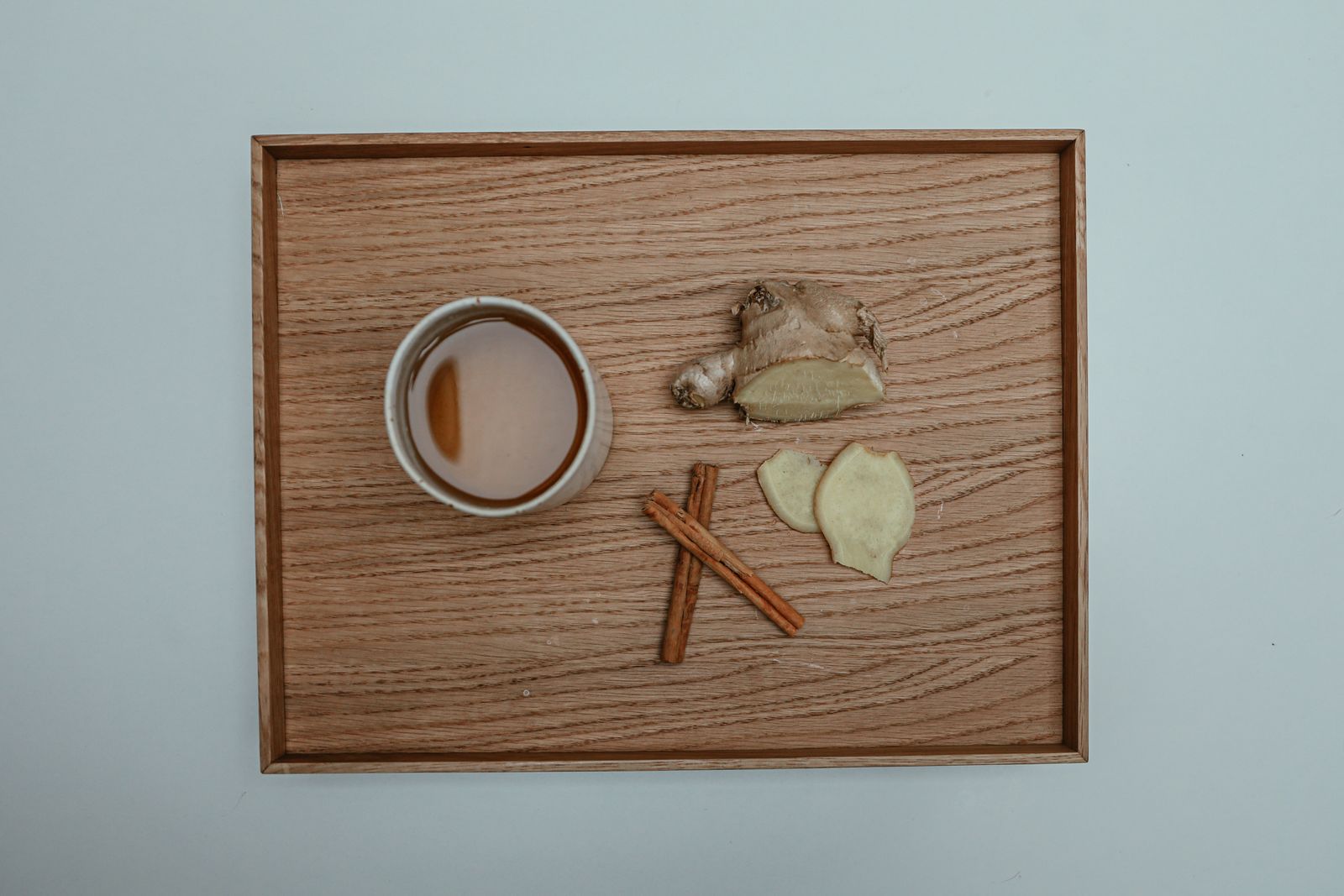
That was a dyspepsia experiment, not proof of GERD treatment, and the study amount is not a self-treatment recommendation. Ginger tea and ginger powder are also different preparations. Stop ginger if it increases burning; its appearance on the cover is not an efficacy claim.
Daily measures with stronger clinical footing
Weight reduction when overweight, finishing meals two to three hours before bed, elevating the head of the bed for nighttime symptoms, and stopping smoking align with ACG recommendations. Use a wedge or bed elevation that raises the upper torso. Limit alcohol, especially when it provokes symptoms; evidence does not support assuming every dietary restriction works equally well.
A practical starting point is an earlier dinner and a brief symptom diary. Record night waking, regurgitation, meal timing, and medication use. Bring the record to follow-up instead of repeatedly adding remedies without a way to judge them.
Herbal formulas belong in supervised care
Left Metal Pill (Zuojin Wan, 左金丸) and Bupleurum Liver-Soothing Powder (Chaihu Shugan San, 柴胡疏肝散) appear in the liver-stomach disharmony literature. Pinellia and Magnolia Bark Decoction (Banxia Houpo Tang, 半夏厚朴湯) is traditionally associated with plum-pit qi. All require pattern assessment and prescribing by a qualified Chinese medicine practitioner, coordinated with your medical team.
In a Taiwan randomized trial of Banxia Houpo Tang for globus, adding the formula to Western treatment produced greater improvement in laryngoscopic reflux-finding scores. Both groups improved on symptom measures. This specific globus population does not establish effectiveness for GERD generally, and short-term safety observations cannot guarantee long-term safety.
Do not buy ingredients and assemble these formulas yourself. Tell every treating clinician about prescriptions, supplements, and herbs so that interactions and overlapping treatment can be reviewed.
When to see a doctor
Exclude serious problems before experimenting with complementary care.
- Seek emergency care for new or severe chest pain, especially with breathlessness, sweating, faintness, or pain spreading to the arm or jaw. Heart disease must be excluded before calling it reflux.
- Vomiting blood or passing black, tarry stools needs urgent assessment. Do not wait for an acupressure session or herbal appointment.
- Difficulty swallowing, unexplained weight loss, or anemia warrants prompt medical review, with endoscopy considered according to the findings.
- Persistent hoarseness or cough needs assessment; symptoms lasting beyond eight weeks definitely require review. Hoarseness should be assessed sooner if persistent or worsening. Reflux is only one possible explanation.
- New symptoms after age 45 deserve a medical appointment. Age 45 alone is not an ACG rule requiring endoscopy; clinicians also consider alarm features and other risks.
- Symptoms continuing despite an appropriate eight-week PPI trial call for diagnostic endoscopy and reassessment, as the ACG guideline recommends. Your clinician should manage any medication changes before testing.
Frequently asked questions
Can pressing PC6 actually stop acid?
It may provide comfort, particularly for nausea, but home pressure has not been established as a reliable way to suppress acid or prevent reflux. Keep prescribed treatment and follow-up in place.
Can Chinese herbs be taken with a PPI?
Do not combine them on your own. Every treating clinician needs your complete medication and supplement list. A qualified practitioner and pharmacist should review the actual ingredients before combined treatment begins.
Is ginger tea good for heartburn?
It is not an established heartburn treatment. The dyspepsia trial found faster emptying without significant symptom improvement. A mild culinary preparation may be pleasant, but discontinue it if burning increases.
Can TCM cure GERD permanently?
There is no sound basis for promising a permanent cure. Traditional constitution-focused care can organize supportive routines; meaningful goals are symptom management, better sleep, and appropriate medical monitoring.
A practical way forward
Begin with medical assessment when needed, consistent medication use as prescribed, and changes to meal timing and sleep position. Add gentle acupressure for comfort, and discuss professional TCM care if symptoms remain troublesome. Judge progress by daily function and follow-up findings. This article provides general education, not diagnosis or an individualized treatment plan.
🌿 A gentle note from us
The practices shared here are rooted in Traditional Chinese Medicine traditions that have been passed down for thousands of years. We share them as educational resources — not as prescriptions or medical advice.
Every body is different. What brings balance to one person may not be right for another. Please listen to your body, go gently, and check with a qualified healthcare provider before trying any new wellness practice — especially if you are pregnant, managing a chronic condition, or have specific health concerns.
Some links on this site are affiliate links. If you choose to purchase through them, we may earn a small commission at no extra cost to you. This helps us continue sharing ancient wisdom for modern wellness. Thank you for your trust.