Pediatric Tuina for Kids' Tummy Troubles and Bedtime Wind-Down: A Parent's Guide to Safe, Evidence-Aware Home Massage (2026)
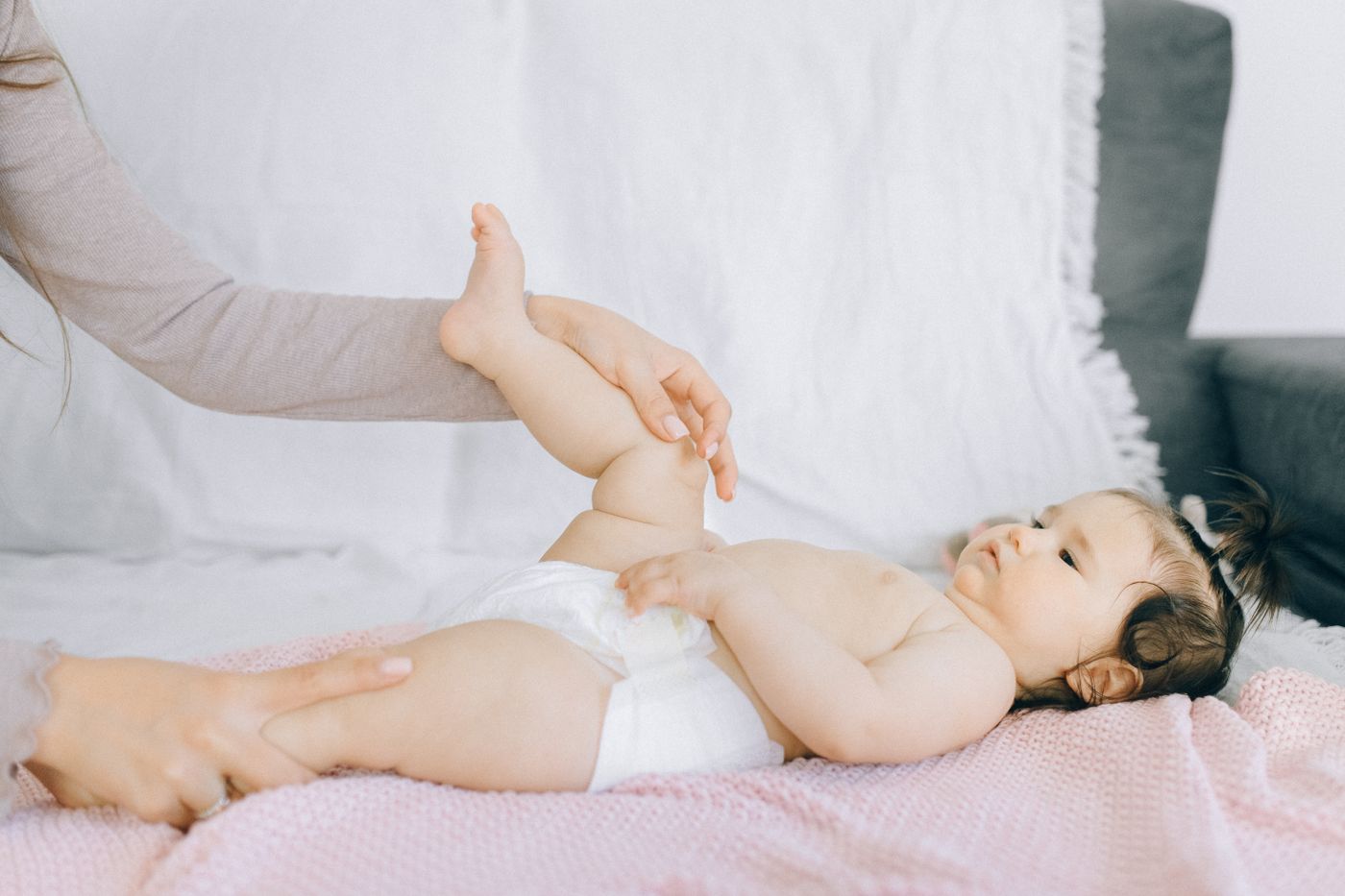
Cover image source: Pexels (photo by Nataliya Vaitkevich)
🌿 A gentle note from us
The practices shared here are rooted in Traditional Chinese Medicine traditions that have been passed down for thousands of years. We share them as educational resources — not as prescriptions or medical advice.
Every body is different. What brings balance to one person may not be right for another. Please listen to your body, go gently, and check with a qualified healthcare provider before trying any new wellness practice — especially if you are pregnant, managing a chronic condition, or have specific health concerns.
Some links on this site are affiliate links. If you choose to purchase through them, we may earn a small commission at no extra cost to you. This helps us continue sharing ancient wisdom for modern wellness. Thank you for your trust.
Your four-year-old eats three bites of dinner, pushes the plate away, and twenty minutes later is lying on the sofa holding his stomach. Or your seven-year-old has not had a comfortable bowel movement since Tuesday and is now afraid of the toilet. These are ordinary childhood complaints, and most of them resolve with time, fluids, fibre, and a routine. But they are exactly the complaints that send parents looking for something to do with their hands at nine o’clock at night.
Pediatric tuina — often written tui na, and sometimes described in English as Chinese pediatric massage — is that something. It is a structured form of gentle manual therapy used in China for centuries for exactly these problems. It is also one of the better-studied complementary therapies in children, which means we can talk about it with numbers instead of adjectives. Those numbers come with real limits, and this guide states them plainly.
What pediatric tuina is, and what it is not
Tuina is manual therapy: pressing, rubbing, kneading, and stroking specific areas, points, and channels. Pediatric tuina is its own tradition, not a scaled-down version of the adult technique. Pressure is light, sessions are short, and the work is usually done by a parent at home or by a trained practitioner in a clinic. It involves no needles, so it is not acupuncture.
The traditional framework will be familiar to anyone who has read about Chinese medicine. Children are described as having immature Spleen and Stomach function — meaning digestion and fluid handling, not the anatomical organs — and a tendency to develop “food stagnation” when they overeat or eat when tired. Tuina is applied to move qi, warm the middle, and settle the spirit at bedtime. Treat that as a historical explanatory model, not a mechanism proven in a laboratory.
What tuina is not: a treatment for an undiagnosed illness, a substitute for antipyretics in a febrile child, or a replacement for a pediatric assessment when something is genuinely wrong. Keep that hierarchy in mind for the rest of this article.
What the research actually shows
The evidence is better than most complementary therapies can offer, and weaker than the confident tone of most parenting blogs.
Indigestion and functional dyspepsia. A 2025 systematic review of ten randomized trials covering 1,336 children found that tuina alone, or alongside conventional treatment, improved the clinical effective rate compared with conventional treatment alone: relative risk 1.16, 95% confidence interval 1.11 to 1.21. No adverse events were reported in the tuina groups. The same authors noted clear methodological weaknesses in the underlying trials. Pediatric Tuina for functional dyspepsia, Complement Ther Med 2025.
A second, independent review of twelve trials and 1,161 children reached a near-identical estimate — response rate relative risk 1.19 (1.13 to 1.25) — and rated the certainty of the evidence as moderate to low. Therapeutic massage plus conventional therapy in pediatric functional dyspepsia, 2025.
Constipation. A 2026 meta-analysis of sixteen trials and 1,387 children found adjunctive tuina improved the overall response rate (relative risk 1.18, 1.10 to 1.25) and cut recurrence (0.27, 0.16 to 0.47). Then the authors did something the internet rarely does: they told you not to trust it too much. Heterogeneity reached I² of 96%, the prediction intervals crossed the null, and follow-up was mostly two months or less. They called the findings exploratory. Tuina as an adjuvant for functional constipation in children, Healthcare 2026.
Acute diarrhoea. A review of 26 studies and 2,644 children under five reported that massage outperformed drug therapy on clinical effective rate (relative risk 1.20, 1.14 to 1.27), while grading the evidence as low quality. Pediatric Tui Na for acute diarrhea, Complement Ther Med 2018.
Fever — read this one twice. A 2025 review of fifteen trials and 1,661 children found that massage alone was not significantly different from antipyretic medication (standardized mean difference 0.68, confidence interval −0.31 to 1.67). Combined with antipyretics, it did reduce fever (0.90, 0.50 to 1.30). In plain terms: massage does not replace fever treatment and does not tell you why a child is febrile. Tuina for paediatric fever, BMC Pediatrics 2025.
Two honest conclusions follow. First, the direction of effect is consistent across reviews — parents and clinicians report calmer, more comfortable children. Second, nearly all of these trials were conducted in China, few were blinded, and outcome measures like “clinical effective rate” are soft. Expect help with comfort and routine, not a cure.
The four techniques worth learning
Work on a warm room, a flat surface, and clean hands with short nails. A plain carrier oil or baby-safe lotion is enough. The right pressure is the pressure you would use to spread lotion on your own eyelid — if the child squirms away, you are pressing too hard.
1. Abdominal circles (mo fu, 摩腹), 3–5 minutes. Lie the child on their back with knees slightly bent. Place your palm flat over the navel, warm it first by rubbing your hands together, and make slow clockwise circles roughly the width of the child’s abdomen. Clockwise follows the direction of the colon. Keep the contact broad and the movement continuous rather than pressing and releasing. This is the technique the traditional literature associates with moving stagnation and easing bloating.
2. Thumb-edge stroke (bu pi jing, 補脾經), 1–2 minutes. Take the child’s thumb and stroke the outer, thumb-side edge from the tip down toward the base of the thumb with your own thumb tip — around 100 to 200 light, even strokes. Schools differ on naming and direction, so follow whichever your practitioner teaches; consistency matters more than the argument.
3. Pinch-and-roll along the spine (nie ji, 捏脊), 3–5 passes. Best for children past toddler age. With both hands, gently lift a fold of skin over the lower back and roll it upward toward the neck in small increments, keeping the skin lifted rather than pinched hard. Three to five passes. Never force it, never do it over a rash or a bruise, and skip it entirely if the child is unwell or distressed.
4. The bedtime wind-down, 5 minutes. Two minutes of slow palm circles over the upper back, three or four long strokes down the spine from neck to lower back with a flat hand, then one minute of abdominal circles. Pair it with the same three sentences every night. The predictability, not the technique, is doing a large part of the work here.
Timing, dosage and the things people get wrong
- Wait at least 30 to 60 minutes after a meal. Never work on a full stomach.
- Ten to fifteen minutes total is plenty. Longer is not better with children.
- Stop the moment a child says stop, pulls away, or starts crying in pain. Discomfort is a signal, not a hurdle.
- Avoid broken skin, rashes, bruises, recent injuries, and any area a doctor has told you to leave alone.
- Skip the session entirely on days with fever, vomiting, or obvious illness and get the child assessed instead.
- Do not massage an infant under three months for abdominal complaints. See a clinician.
The safety data deserves this much space. A systematic review of sixty studies of paediatric massage found that most studies did not report adverse events at all, which is itself a problem. Among the events that were reported, 20 were mild, 26 moderate and required medical intervention, and 18 were severe enough to require hospital admission. Seventeen of those severe cases were volvulus in premature infants, four of them fatal. The reviewers explicitly called for caution with abdominal massage in preterm infants. Adverse events associated with paediatric massage therapy, BMJ Paediatrics Open 2020.
If your child was born prematurely, has a known abdominal condition, or has had abdominal surgery, ask their pediatrician before doing any abdominal work at all.
Red flags: stop and get medical care
Do not massage, and do not wait, if your child has any of the following:
- Green or bilious vomiting, or vomiting that will not stop.
- Blood in the stool, or black tarry stool.
- Severe, localized, or worsening abdominal pain; a hard, swollen, or tender abdomen.
- Pain that wakes the child at night, or pain with fever.
- Fever in an infant under three months, or fever with a stiff neck, confusion, or a rash that does not fade when pressed.
- Unexplained weight loss, poor growth, or persistent loss of appetite.
- Signs of dehydration: no urine for eight hours, dry mouth, no tears, unusual drowsiness.
- Constipation in a newborn, or constipation with vomiting, distension, or failure to thrive.
These are not reasons to try harder with massage. They are reasons to make a phone call.
A realistic seven-night routine
Pick one complaint and one week. Nights one and two: abdominal circles only, five minutes, after bath. Nights three and four: add the thumb-edge stroke. Nights five and six: add the bedtime wind-down sequence and keep a one-line note about sleep and bowel movements. Night seven: compare with the first night and decide whether to continue, adjust, or stop. If nothing has changed, or if the pattern worries you, that is the moment to book an appointment rather than to extend the experiment.
Alongside all of this, do the unglamorous mainstream things first. For constipation, the American Academy of Pediatrics guidance and the NHS constipation page both emphasise fluids, fibre, regular toileting after meals, and not turning the toilet into a battleground. For a crying infant, the AAP’s colic guidance is the place to start. And keep the general caution about Chinese medicine in view: the National Center for Complementary and Integrative Health notes that the evidence across TCM is mixed and that herbal products in particular carry contamination and adulteration risks. Massage avoids that category of risk entirely, which is one reason it is the sensible entry point for families.
What tuina can reasonably offer is a structured, low-risk routine that helps a child feel attended to and may ease everyday digestive discomfort. What it cannot do is diagnose, replace treatment, or explain away a symptom that deserves investigation. Ten quiet minutes a night, a warm hand, and a pediatrician’s number in your contacts is a good combination.