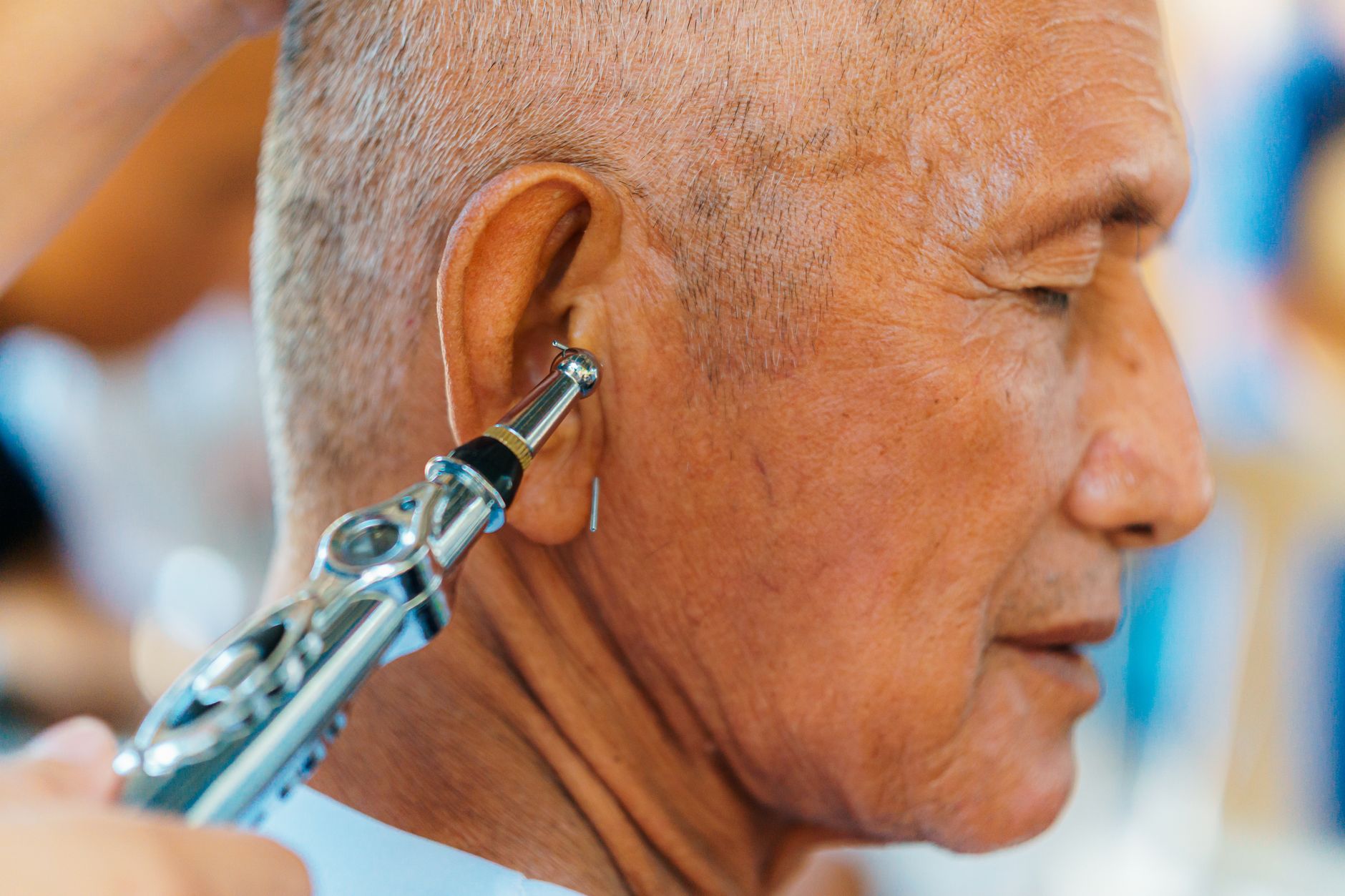
Ear Seeds 101: A Beginner's Guide to Auriculotherapy for Stress, Focus, and Everyday Wellness
Medical Disclaimer: This article is for informational and educational purposes only. It does not constitute medical advice and is not a substitute for professional medical consultation, diagnosis, or treatment. Always consult a qualified healthcare provider before starting any new wellness practice, especially if you have an existing health condition.
Introduction
You may have scrolled past them on TikTok or Instagram — tiny metallic beads clustered on someone’s ear, looking somewhere between futuristic body jewelry and a wellness experiment. These are ear seeds, and they belong to a practice called auriculotherapy: the stimulation of specific points on the ear to support overall well-being.
Auriculotherapy is not new. It is rooted in Traditional Chinese Medicine (TCM), where the ear is seen as a microsystem — a miniature map of the entire body. But in the last few years, ear seeds have broken out of acupuncture clinics and into the mainstream wellness world. They are portable, needle-free, and easy enough that you can apply them at home after a short learning curve.
This guide covers everything a beginner needs to know: what ear seeds actually are, the key ear points worth learning, how to apply them safely, and how to pick the right kit for your needs.
What Is Auriculotherapy?
Auriculotherapy translates literally to “ear therapy.” In TCM theory, the external ear contains over 200 acupoints that correspond to different organs, systems, and functions of the body. Stimulating these points — whether with fine needles (ear acupuncture), gentle pressure (ear acupressure), or tiny seeds — is thought to influence the corresponding areas through the meridian network.
The modern Western version of ear mapping was developed in the 1950s by French physician Dr. Paul Nogier, who noticed that patients of a local healer had small burn marks on specific ear locations that corresponded to their sciatica. His research led to a somatotopic map of the ear: an inverted-fetus shape where the earlobe represents the head, the upper ear maps the lower body, and internal organs are distributed through the concha.
Today, ear seeds occupy the sweet spot between clinical auriculotherapy and everyday self-care. They apply the same principles — stimulating specific ear points — without needles, making them accessible to anyone.
Ear Seeds vs. Acupuncture vs. Acupressure
| Modality | How It Works | At-Home Friendly |
|---|---|---|
| Ear Seeds | Tiny seeds or beads taped to ear points, left in place for 3–5 days with periodic pressing | ✅ Yes, with basic guidance |
| Ear Acupuncture | Fine needles inserted by a licensed practitioner | ❌ Practitioner-only |
| Body Acupressure | Finger pressure on body points (e.g., LI4 on the hand, PC6 on the wrist) | ✅ Yes |
Ear seeds essentially bring the concept of acupressure to a highly concentrated, convenient location. Unlike body acupressure — which requires you to stop what you are doing and apply pressure — ear seeds work passively: you press them a few times a day, and they stay in place the rest of the time.
Key Ear Points and What They May Support
You do not need to memorize all 200+ points. A handful of well-known ones cover the most common wellness goals. Here are the heavy hitters:
Shen Men (神門) — “Spirit Gate”
- Location: Upper third of the ear, in the triangular fossa (the small triangular depression near the top)
- Traditionally associated with: Stress relief, calming the mind, general relaxation
- Why it matters: Shen Men is often the first point beginners learn, and for good reason — it appears in nearly every auriculotherapy protocol. Many people describe pressing Shen Men as a quick “reset button” for tension.
Point Zero
- Location: Where the helix root meets the concha ridge, roughly at the center of the ear
- Traditionally associated with: Bringing the body back to a state of balance (homeostasis)
- Why it matters: In TCM and Nogier’s system alike, Point Zero is considered a master balancing point. It is commonly paired with Shen Men for a calming combination.
Sympathetic Point
- Location: Inside the upper portion of the concha, near the helix root
- Traditionally associated with: Nervous system regulation, easing sympathetic overdrive (the “fight or flight” state)
- Why it matters: If stress keeps you wired at night, this is a point worth knowing.
Kidney Point
- Location: Inside the upper concha
- Traditionally associated with: Energy reserves, vitality, and in TCM, the “root of life”
- Why it matters: TCM views the Kidney system as foundational to overall energy. Many ear seed routines for fatigue include the Kidney point.
Liver Point
- Location: Inside the upper-mid concha
- Traditionally associated with: The smooth flow of qi, emotional balance, and detoxification
- Why it matters: If you feel irritable, stuck, or emotionally tense, the Liver point is often suggested.
Forehead / Temple Point
- Location: On the earlobe itself
- Traditionally associated with: Head tension, mental clarity
- Why it matters: A convenient and intuitive point — many people press their earlobes instinctively when concentrating.
Note: These descriptions reflect traditional TCM and auriculotherapy frameworks. They are not medical claims and are not intended to diagnose or treat any condition.
How to Apply Ear Seeds at Home: Step by Step
Applying ear seeds takes about five minutes once you know the points. Here is the process:
What You Will Need
- An ear seed kit (includes seeds or beads, pre-cut adhesive tape, and usually an ear map or point locator tool)
- Rubbing alcohol or a clean, damp cloth
- A mirror (a magnifying mirror helps)
- Clean hands
Step 1: Clean Your Ear
Use a small amount of rubbing alcohol on a cotton ball to gently clean the outer ear. This removes oil and bacteria, helping the adhesive tape stick better and reducing the chance of skin irritation.
Step 2: Locate Your Points
Use the ear map that comes with your kit, or a reliable reference chart. Spend a moment finding each point with a gentle probing tool (many kits include a small metal probe). When you hit the right spot, you may feel a slight tenderness — that is a good sign.
Beginner protocol suggestion:
- Shen Men — for calm
- Point Zero — for overall balance
- Sympathetic — for nervous system support
Start with 2–3 points per ear. More is not better, especially when you are learning.
Step 3: Apply the Seed
- Remove one pre-cut adhesive square from the sheet using tweezers (included in most kits).
- Center the seed or bead on the point.
- Press down gently and hold for 2–3 seconds to secure adhesion.
Step 4: Press and Activate
Throughout the day, press each seed gently for 10–30 seconds, 2–3 times per day. The pressure should be firm but comfortable — not painful. Many people build this into their routine: once in the morning, once after lunch, and once before bed.
Step 5: Replacement and Aftercare
- Ear seeds typically stay on for 3–5 days.
- Remove them if the skin becomes red, itchy, or irritated.
- After removing, let the skin rest for at least 24 hours before applying new seeds to the same spot.
- Do not reuse seeds — they are single-use.
Choosing an Ear Seed Kit: What to Look For
Walking into the ear seed aisle (or, more likely, scrolling an online marketplace) can be confusing. Here is what to look for:
Seed Type
| Type | Characteristics | Best For |
|---|---|---|
| Vaccaria seeds (王不留行籽) | Traditional plant seeds, small, matte black, the classic option | Beginners, purists, anyone wanting the traditional experience |
| Metal beads (stainless steel or gold-plated) | Smooth, slightly heavier, often magnetized | Experienced users who want a stronger sensation |
| Swarovski crystal | Flat-backed crystals, metallic coating, cosmetic appeal | People who want ear seeds to look like jewelry |
For most beginners, Vaccaria seeds are the ideal starting point. They are affordable, traditional, and gentle.
What a Good Kit Should Include
- At least 100–200 seeds (enough for weeks of use)
- Pre-cut adhesive tape squares (saves immense frustration)
- Tweezers (for hygienic application)
- An ear point chart or map
- A point locator probe (optional but helpful)
Product Recommendations
Here are a few well-reviewed options to get you started:
- Traditional Vaccaria Ear Seed Kit — Look for kits that include 200+ seeds, pre-cut tape, tweezers, and a clear ear map. These are widely available on Amazon and other wellness marketplaces. Search for “vaccaria ear seed kit” and check the review count — kits with 500+ reviews tend to be reliable.
- Ear Seeds by WTHN — A well-known brand in the modern wellness space, offering pre-packaged kits with an intuitive guide. Good for aesthetic-conscious beginners.
- Magnet Ear Bead Set — If you want to experiment with magnetic beads, look for gold-plated or surgical-grade stainless steel options with pre-cut tape.
We do not sell these products and have no financial relationship with the brands mentioned. These are suggestions based on product reviews and community feedback.
Safety and Precautions
Ear seeds are generally well-tolerated, but they are not for everyone. Take these precautions seriously:
Do Not Use Ear Seeds If:
- You have broken skin, cuts, or active infections on the outer ear
- You have a known adhesive allergy or sensitive skin that reacts to tape
- You are pregnant — certain ear points (like the Uterus or Endocrine points) are traditionally avoided during pregnancy. Consult your healthcare provider.
Best Practices
- Test first: Apply one seed to a less sensitive area of skin for a few hours before putting multiple seeds on your ear.
- Do not sleep with brand-new seeds if it is your first time — give your skin a trial day.
- Rotate points: Avoid using the exact same spot repeatedly. Give each point at least a full day of rest between applications.
- Remove immediately if you experience redness, swelling, itching, or pain.
- Keep them dry: Short showers are usually fine, but prolonged soaking (baths, swimming) may loosen the adhesive and trap moisture.
If you have a chronic health condition or persistent symptoms, ear seeds are not a replacement for professional medical evaluation. See a licensed acupuncturist or healthcare provider for personalized guidance.
Building a Simple Daily Routine
One of the reasons ear seeds work well as a wellness habit is that they require almost no ongoing effort. Once applied, they stay in place and serve as a subtle nudge throughout the day.
Here is a sample routine that pairs well with other self-care practices:
| Time of Day | Action |
|---|---|
| 🌅 Morning | Press each seed 10–20 seconds while taking 3 slow breaths. This can pair with a morning acupressure routine if you already have one. |
| ☀️ Afternoon | Press Shen Men during a work break or whenever tension builds. Many people find this helps them reset before the second half of the day. |
| 🌙 Evening | Press seeds lightly before bed as part of a wind-down ritual. For sleep-specific support, see our guide on acupressure for insomnia. |
You can leave seeds on for 3–5 days, then take a day off before applying a fresh set. Some people use seeds continuously; others use them during high-stress periods (deadlines, travel, life transitions). There is no single right way — it is about what feels supportive.
Frequently Asked Questions
Do ear seeds hurt? No. You may feel a slight dull ache or tenderness when pressing a seed (especially on the first day), but it should not be sharp or painful. If it hurts, the placement may be slightly off, or the seed is being pressed too hard.
Can I wear ear seeds in both ears? Yes. Most protocols use both ears. Some practitioners suggest alternating sides with each new application.
Can I exercise with ear seeds on? Yes. Sweat may loosen the adhesive slightly, so pat the area dry after a workout. If a seed falls off during exercise, you can replace it afterward.
How long until I notice a difference? This varies widely. Some people report feeling more relaxed within a day; for others, it takes a full 3–5-day cycle to notice subtle shifts. Ear seeds are not designed to produce dramatic, immediate results — they are a gentle, cumulative practice.
Can I combine ear seeds with acupuncture or body acupressure? Yes. Ear seeds are commonly used alongside other TCM modalities. In fact, an acupuncturist may apply ear seeds to extend the effects of a session between visits.
Conclusion
Ear seeds sit at an interesting intersection: they are rooted in an ancient medical system, validated by modern ear-mapping research, and packaged in a form that fits a busy, modern lifestyle. They require no needles, no appointments, and no special equipment beyond a small kit.
If you have been curious about acupressure for stress or pressure points for focus but want something you can “set and forget,” ear seeds are a natural next step. Start with two or three points, give yourself a few days to get used to the sensation, and pay attention to how your body responds. As with any wellness practice, consistency matters more than perfection.
Have you tried ear seeds? We would love to hear about your experience.
Further Reading: