5 Acupressure Points for Desk Workers (Relieve Neck & Shoulder Tension)
You know that familiar sensation around hour three of a workday — your shoulders have crept up toward your ears, your neck feels stiff, and there’s a dull ache between your shoulder blades that no amount of stretching seems to shift.
It’s not just you. Hours of sitting, staring at a screen, and holding stress in your upper body create a pattern that TCM practitioners have understood for centuries: when Qi gets stuck, tension follows.
The fix doesn’t require a massage appointment or fancy equipment. These five acupressure points can be done right at your desk, in under a minute each, without anyone noticing.
1. GB-21 (Jianjing) — The Shoulder Relaxer
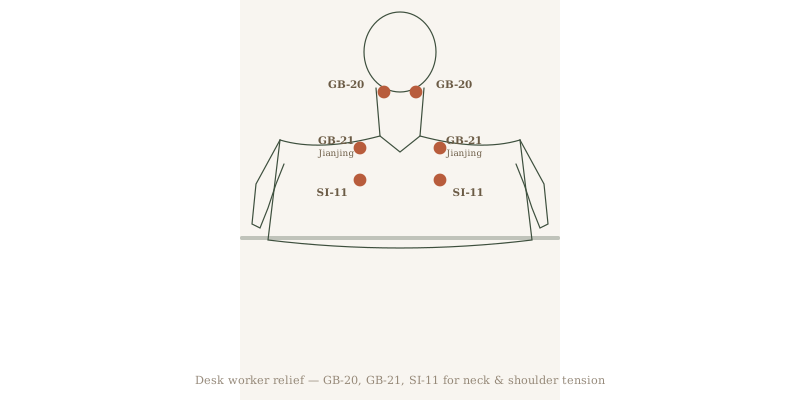
Location: At the highest point of your shoulder — about halfway between the base of your neck and the outer edge of your shoulder. You’ll find it by pinching the thick shoulder muscle; it’s in the most prominent part.
How to press: Use your opposite hand to reach across your body. Press firmly with your thumb or middle finger into the shoulder muscle. Hold for 30 to 60 seconds while breathing deeply. You may feel a sensation traveling down your arm — that’s normal and a good sign you’ve found the spot. Switch sides.
What it may help support: GB-21 is one of the most effective points for releasing shoulder tension. It’s traditionally used to ease tightness that builds up from long hours at a desk, carrying bags, or holding stress in your upper body.
Note: Avoid pressing GB-21 too firmly during pregnancy. Gentle pressure only.
2. GB-20 (Fengchi) — The Neck Release
Location: In the hollows at the base of your skull, between the two large vertical neck muscles.
How to press: Hook your thumbs into the hollows beneath your skull, with your fingers resting gently on top of your head. Tilt your head back slightly and press upward into the base of your skull. Close your eyes and hold for 30 to 60 seconds.
What it may help support: This is your go-to point for that stiff, achy feeling at the very top of your neck. It helps release tension that radiates from the neck into the shoulders and head. Many desk workers find this point feels like a small relief the moment they press it.
3. SI-11 (Tianzong) — The Upper Back Release
Location: In the middle of your shoulder blade, about halfway between your spine and the edge of your shoulder blade. It can be a bit tricky to reach on your own — try pressing your shoulder blade area against the back of your chair, or ask a partner to help.
How to press: If you’re on your own, lean back against a firm chair and place a massage ball or tennis ball between your shoulder blade and the chair. Roll gently to find the tender spot, then lean into it and breathe. Hold for 30 to 60 seconds. Switch sides.
What it may help support: This point targets the deep tension between your shoulder blades — that area that gets tight from rounded shoulders and forward head posture. It’s a common trouble spot for anyone who spends hours typing.
4. LI-15 (Jianyu) — The Shoulder Joint Soother
Location: On the outer point of your shoulder, in the depression that forms when you lift your arm to the side. It’s right at the top of your shoulder joint, where your arm meets your shoulder.
How to press: Use the thumb or fingers of your opposite hand to press into this hollow. Rotate your arm gently or roll your shoulder as you press, exploring the area around the joint. Hold for 30 seconds and switch sides.
What it may help support: LI-15 is wonderful for easing tension around the shoulder joint itself. If your shoulders feel tight when you roll them or if you carry a lot of tension right at the top of your arms, this point offers gentle relief.
5. LI-4 (Hegu) — The All-Around Tension Easer
Location: In the web between your thumb and index finger, on the highest point of the muscle when you squeeze your thumb against your finger.
How to press: Use the thumb of your opposite hand to press firmly into the webbing. You should feel a deep, mild ache — that means you’ve found it. Hold for 30 seconds and repeat on the other hand. You can also massage this point in small circles throughout the day whenever you feel tension building.
What it may help support: LI-4 is known as one of the most versatile acupressure points. For desk workers specifically, it’s excellent for releasing tension in the head, neck, and upper body. It’s also a great point to press during a mid-afternoon energy dip.
Important: Avoid LI-4 during pregnancy.
A Quick Desk Routine (3 Minutes)
Set a midday reminder on your phone and try this quick sequence:
- Press GB-21 (shoulder) — 30 seconds each side
- Press GB-20 (base of skull) — 45 seconds
- Roll your shoulders back slowly 5 times
- Press LI-4 (hand web) — 30 seconds each hand
- Stand up, reach your arms overhead, and take 3 deep breaths
Do this once in the morning and once in the afternoon, and you’ll notice a real difference in how your body feels at the end of the day.
Supporting Your Desk Practice
A small spiky massage ball kept in your desk drawer makes points like SI-11 (between the shoulder blades) much easier to reach on your own. Simply place it between your back and your chair, lean into the tender spots, and breathe.
A cervical pillow can also make a meaningful difference. If you wake up with neck stiffness that carries into your workday, the right pillow support helps your neck reset overnight so you start each day with less tension to manage.
Your desk doesn’t have to be a place where tension lives. With these five points and a moment of intention, you can bring ease back into your body — without leaving your chair.
🌿 A gentle note from us
The practices shared here are rooted in Traditional Chinese Medicine traditions that have been passed down for thousands of years. We share them as educational resources — not as prescriptions or medical advice.
Every body is different. What brings balance to one person may not be right for another. Please listen to your body, go gently, and check with a qualified healthcare provider before trying any new wellness practice — especially if you are pregnant, managing a chronic condition, or have specific health concerns.
Some links on this site are affiliate links. If you choose to purchase through them, we may earn a small commission at no extra cost to you. This helps us continue sharing ancient wisdom for modern wellness. Thank you for your trust.