5 Acupressure Points for Better Sleep (A Bedtime Ritual)
There’s a certain kind of tired that isn’t sleepy — when your body is exhausted but your mind is still running a mile a minute.
You lie down. The lights are off. And yet, your brain has other plans.
If this sounds familiar, you’re not alone. The good news? A simple acupressure ritual, done right before bed, can help your nervous system understand that it’s time to downshift. No screens, no supplements — just your own hands and five gentle points.
Creating Your Bedtime Acupressure Ritual
Think of this as a wind-down practice, not a task to check off. Set the mood however you like: dim lights, a cozy blanket, perhaps a cup of warm tea. The acupressure itself takes about 5 to 7 minutes.
You can do this in bed, sitting cross-legged or lying down. The key is to move slowly and breathe deeply between each point.
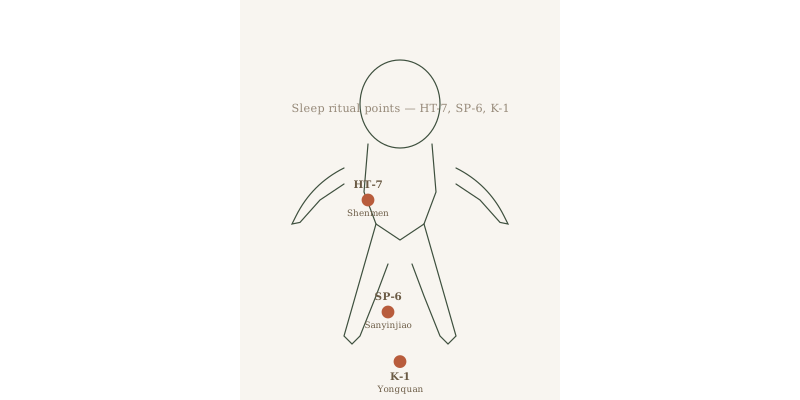
1. HT-7 (Shenmen) — The Sleep Gate
Location: On the inner wrist, in the small hollow on the pinky-finger side, just below the wrist crease.
How to press: Rest your arm palm-up and use your opposite thumb to press gently into this soft hollow. Breathe slowly and hold for 30 to 60 seconds. Notice how your pulse feels beneath your finger. Switch wrists.
What it may help support: HT-7 is traditionally known in TCM as the point that calms the spirit and settles the mind. It’s one of the most beloved points for encouraging restful sleep, especially when worries are keeping you awake.
2. Yin Tang (Third Eye Point) — The Quiet Mind
Location: Between your eyebrows, in the small indentation where the bridge of your nose meets your forehead.
How to press: Use your index or middle finger to apply gentle, steady pressure. Close your eyes and imagine your breath moving in and out through this point. Hold for 30 to 60 seconds.
What it may help support: This point has a wonderfully grounding quality. When your thoughts are racing, Yin Tang acts like a gentle hand on your shoulder, reminding your mind that it’s safe to rest now.
3. SP-6 (Sanyinjiao) — The Deep Relaxer
Location: About four finger-widths above your inner ankle bone, just behind the shin bone. It’s on the inner side of your lower leg.
How to press: Sit with your leg bent and knee dropped to the side. Use your thumb to press firmly into this spot. You may feel a mild ache or a sensation traveling up your leg — that’s normal. Hold for 30 seconds on each leg.
What it may help support: SP-6 is a powerful point for deep relaxation. In TCM, it’s associated with nurturing your body’s foundational energy and encouraging restful, uninterrupted sleep.
Important: Avoid this point during pregnancy, as it’s traditionally considered stimulating to the uterus.
4. GB-20 (Fengchi) — The Tension Release
Location: In the hollows at the base of your skull, between the two vertical neck muscles.
How to press: Hook your thumbs into these natural depressions, fingers resting on top of your head. Tilt your head back slightly and press upward with steady pressure. Close your eyes and take slow, deep breaths for 30 to 60 seconds.
What it may help support: Tension often accumulates in the neck and shoulders throughout the day, and carrying that into bed makes it harder to settle in. GB-20 helps release that held tension, signaling to your whole body that it’s time to let go.
5. K-1 (Yongquan) — The Grounding Point
Location: On the sole of your foot, in the natural depression that forms when you curl your toes — about one-third of the way from your toes toward your heel.
How to press: Sitting up in bed, cross one leg over the other. Use your thumb to press firmly into the center of your arch. You can also massage the entire sole of your foot in slow circles. Spend 30 to 60 seconds on each foot.
What it may help support: K-1 is called the “Gushing Spring” in TCM, and it’s believed to help draw energy downward — away from a busy mind and into the earth. It’s incredibly grounding and can help ease that restless, wired feeling that keeps you from drifting off.
Your Wind-Down Sequence
Here’s a simple sequence to follow each evening:
- Dim the lights and get comfortable in bed
- Press HT-7 (inner wrist) — 30 seconds each side
- Press Yin Tang (third eye) — 45 seconds
- Press SP-6 (inner leg) — 30 seconds each side
- Press GB-20 (base of skull) — 45 seconds
- Press K-1 (sole of foot) — 30 seconds each foot
- Lie down, place one hand on your belly, take five slow breaths
Let your body sink into the mattress. Notice any warmth or heaviness in your limbs. This is your body telling you it’s ready to rest.
Building Your Bedtime Sanctuary
A few simple additions can make this ritual even more inviting. A warm eye mask helps block out light and adds gentle pressure around the eyes, which many people find deeply calming. If you have an acupressure mat, spending 10 minutes lying on it before your point work can prepare your body for a deeper state of relaxation.
The goal isn’t perfection. Some nights you’ll press every point. Other nights you’ll only manage one or two before drifting off. Both are perfect. Your body knows what it needs — and now you have the tools to help it find the rest it deserves.
🌿 A gentle note from us
The practices shared here are rooted in Traditional Chinese Medicine traditions that have been passed down for thousands of years. We share them as educational resources — not as prescriptions or medical advice.
Every body is different. What brings balance to one person may not be right for another. Please listen to your body, go gently, and check with a qualified healthcare provider before trying any new wellness practice — especially if you are pregnant, managing a chronic condition, or have specific health concerns.
Some links on this site are affiliate links. If you choose to purchase through them, we may earn a small commission at no extra cost to you. This helps us continue sharing ancient wisdom for modern wellness. Thank you for your trust.