Acupressure 101: How to Use Pressure Points for Daily Self-Care
Imagine having a toolkit for relaxation that you always carry with you — no apps to download, no batteries to charge, nothing to buy. Just your own two hands.
That’s the simple magic of acupressure. Rooted in Traditional Chinese Medicine and practiced for thousands of years, acupressure is the gentle art of applying pressure to specific points on your body to restore balance and ease tension. And it might be the most accessible self-care practice you’ll ever learn.
What Is Acupressure, Exactly?
Acupressure works on the same principles as acupuncture — without the needles. Instead, you use your fingers, thumbs, or palms to apply steady, gentle pressure to specific points along your body’s energy pathways (meridians).
When you press on an acupressure point, you’re sending a signal to your nervous system. Research suggests this can help encourage your body to shift from a “go-go-go” state (sympathetic) to a “rest-and-digest” state (parasympathetic). In TCM terms, you’re helping Qi — your vital energy — flow more freely.
The best part? You can do it anywhere. At your desk, on the couch, in line at the grocery store. No one even has to know.
How to Practice Acupressure
Here’s the technique in three simple steps:
- Find the point using the descriptions below (a tender or slightly achy sensation means you’ve found the right spot)
- Apply firm, steady pressure with your thumb or fingertip — not painful, just noticeable
- Breathe slowly while holding the pressure for 30 to 60 seconds, then release
You can press in small circles if that feels good, or hold a steady press. There’s no wrong way as long as it’s comfortable.
3 Beginner-Friendly Acupressure Points
These three points are incredibly accessible and cover a wide range of everyday needs — tension, digestion, and overall energy.
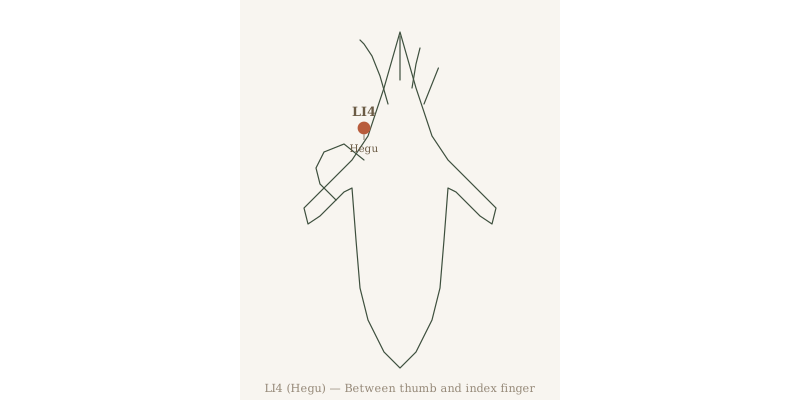
LI-4 (Hegu) — The “Let Go” Point
Location: In the web between your thumb and index finger. Squeeze your thumb against your index finger; the point is on the highest spot of the muscle that rises.
What it’s traditionally used for: Releasing tension in the head, neck, and face. It’s a go-to point for easing headaches and jaw tightness.
How to press: Use the thumb of your opposite hand to press firmly into the web, breathing deeply for 30 seconds. Switch hands and repeat.
Note: Avoid this point during pregnancy, as it’s traditionally considered stimulating to the uterus.
ST-36 (Zusanli) — The Energy Booster
Location: Four finger-widths below your kneecap, about one finger-width outside the shin bone (tibia).
What it’s traditionally used for: Supporting digestion and overall vitality. In TCM, this point is known to help strengthen your body’s foundational energy.
How to press: Sit with your leg bent and use your thumbs or middle fingers to press firmly into both legs simultaneously. Hold for 30 seconds while taking slow, deep breaths.
GB-20 (Fengchi) — The Neck & Head Relaxer
Location: In the hollows at the base of your skull, between the two large vertical neck muscles. You’ll feel two natural depressions about two inches apart.
What it’s traditionally used for: Easing tension in the neck, shoulders, and head. It’s lovely for the end of a long day at a screen.
How to press: Hook your thumbs into the hollows beneath your skull, fingers resting gently on top of your head. Tilt your head back slightly into your thumbs and press upward for 30 to 60 seconds. Close your eyes and breathe.
Building a Simple Acupressure Routine
You don’t need a long practice to feel the benefits. Start with one or two points and see how your body responds.
A gentle evening routine might look like this:
- Sit comfortably and take three deep breaths
- Press LI-4 on both hands (30 seconds each)
- Press GB-20 at the base of your skull (30 seconds)
- Rest your hands on your knees and breathe for another minute
That’s it. Three minutes, and you’ve done something meaningful for your nervous system.
Tools That Can Deepen Your Practice
While your hands are all you really need, a few simple tools can make acupressure even more enjoyable — especially if you want to work on larger areas like your back or feet.
An acupressure mat can deepen this practice — especially before bed. Look for one with a cotton cover and carefully spaced spikes. Many people find that lying on one for 10 to 15 minutes creates a deeply relaxed state similar to a full-body acupressure session.
For more targeted work, small massage balls (sometimes called spiky balls) let you apply pressure to specific points on your shoulders, feet, or palms with ease. They’re especially helpful for reaching areas your thumbs can’t.
Start Where You Are
Acupressure invites you to slow down and listen — to notice where your body is holding tension, and to give it exactly what it needs. Your hands already know how. You just needed a little guidance on where to press.
🌿 A gentle note from us
The practices shared here are rooted in Traditional Chinese Medicine traditions that have been passed down for thousands of years. We share them as educational resources — not as prescriptions or medical advice.
Every body is different. What brings balance to one person may not be right for another. Please listen to your body, go gently, and check with a qualified healthcare provider before trying any new wellness practice — especially if you are pregnant, managing a chronic condition, or have specific health concerns.
Some links on this site are affiliate links. If you choose to purchase through them, we may earn a small commission at no extra cost to you. This helps us continue sharing ancient wisdom for modern wellness. Thank you for your trust.